Barren Ground Nature Reserve
As part of any trip to Sydney, it is essential to go birdwatching at Barren Grounds Nature Reserve and the nearby Budderoo National Park.
Approximately 2000 ha, Barren Grounds was originally gazetted a fauna reserve in 1956 to protect the habitat of the endangered Eastern Bristlebird and Eastern Ground Parrot. In 1967, it formally became Barren Grounds Nature Reserve, while in 2009 it was declared an Important Bird Area (IBA) by Birdlife International. It’s also one of only four large areas of heathland on the NSW south coast, the others being Royal National Park, Jervis Bay National Park, and Nadgee Nature Reserve. It was once managed under lease by the RAOU (Birdlife Australia) and had an operating bird observatory that consisted of a visitor information centre, a warden’s house, and accommodation.
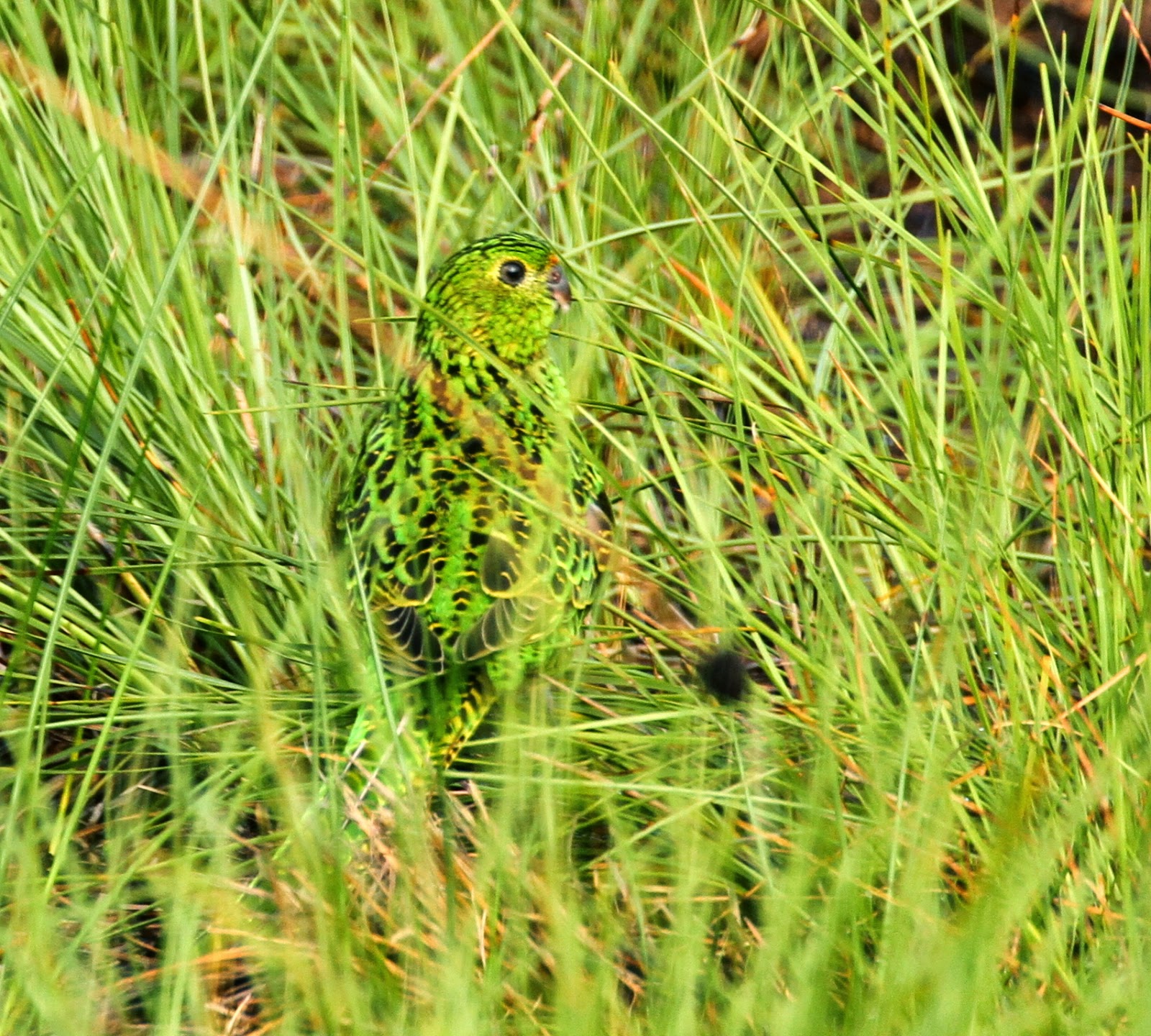 Eastern Ground Parrot along the Service Track
Barren Grounds sits on the south-easterly spur of the Illawarra Range and is almost completely encircled by rocky cliffs at the top of Jamberoo Pass. Testament to this, just after World War 11, a flying fox (a suspended cable-and-pulley system) located at the end of the Flying Fox Pass walk was used to transport timber from the valley below up the escarpment to the entrance of the reserve. At the time, it was easier to do this than to drive up and down the extremely steep slopes to the reserve.
 |
| The spectacular heath of Barren Grounds Nature Reserve. |
Barren Grounds habitat type is classified as a ‘hanging swamp plateau’. This is because 1) it contains large areas of heath and swamp in an elevated position, being approximately 600 m above sea level, and 2) it has high levels of rainfall. The weather at Barren Grounds is unpredictable, to say the least. Typically, when visiting, the whole plateau is often shrouded in swirling mists and drizzle. The roadside advice given when driving up the escarpment to the reserve is to turn on your headlights, even during the day. Despite this, and in fact, because of this, it is a wonderful place. This is because you can see some rare birds with relative ease. It is a time capsule, like Conan Doyle’s Lost World—a hanging garden on top of an ancient escarpment!
 |
| Christmas Bell. Must be one of our most beautiful heathland flowers. |
Getting there and camping options
The entrance to Barren Grounds is 19 km west of Kiama off the Jamberoo Mountain Rd. Facilities are basic; there’s a picnic shelter, toilets, and barbecues. Being a nature reserve, there’s no camping allowed on Barren Grounds. However, walk-in or bush camping is permitted nearby in Budderoo National Park and Macquarie Pass National Park. If you do plan to bush camp, probably the best spot is along the Budderoo Track, driving down about 500 m or so—perhaps camping just after the gate. There are formal camping areas nearby in Morton National Park, Seven Mile Beach National Park, the Bendeela area in Kangaroo Valley, Carrington Falls Reserve, and a number of privately operated camping areas.
The flora of Barren Grounds: a unique habitat
The flora of the Barren Grounds heathlands has an unmistakable Gondwandan heritage, with virtually every common species belonging to southern-hemisphere families and orders. Australian heathlands are among the richest in plant species in the world. For instance, 500 species of plants have been recorded in the reserve.
 |
| Austral Ladies’ Tresses, a gorgeous terrestrial orchid |
Barren Grounds sits on an exposed coastal sandstone plateau with shallow and moderately damp sandy soils. These soils are low in nutrients, particularly those vital for plant growth, such as phosphorus, nitrogen, potassium, and magnesium. The unproductiveness of the soils has largely protected the heath from agricultural development. However, far from being barren, as the name suggests, it is a spectacular environment! Its biodiversity is a testament to Australian native plants adaptability to poor soils. Plants we have all come to love, such as the nectar-rich Heath Banksia (Banksia ericifolia) and the beautiful Christmas Bell (Blandfordia nobilis). Native wildlife also loves them—birds, mammals, and insects—and as birdwatchers and natural historians, we really like that!
Hanging swamp plateaus are a habitat unique to New South Wales. Furthermore, it is a fragile landscape with some of Australia’s most distinctive and inspirational coastal and mountain scenery. In such a habitat, fire is an important component of the environment, significantly influencing vegetation patterns. As discussed below, fire is particularly important for the ongoing survival of species such as the Eastern Ground Parrot.
Trees
From what I can see, the main trees around the reserve are Red Bloodwood (Corymbia gummifera), Silver-top Ash (Eucalyptus sieberi), Heart-leaved Stringybark (E. camfieldii), Yellow-top Ash (E. luehmanniana), Sydney Blue Gum (E. saligna), and Port Jackson Mallee (E. obstans). That’s a nice selection of gums.
Smaller trees include Dwarf Apple (Angophora hispida), Scrub Sheoak (Allocasuarina distyla), Stiff-leaf Wattle (Acacia obtusifolia), Coast Wattle (A. longifolia), Finger Hakea (Hakea dactyloides), Dagger Hakea (H. teretifolia), Scented Paperbark (Melaleuca squarrosa), and tea-trees such as Flaky-barked Tea Tree (Leptospermum trinervium), Pink Tea Tree (L. squarrosum), and Round Leaf Tea Tree (L. rotundifolium).
Significantly, there’s a wonderful variety of Banksia, including Heath Banksia (Banksia ericifolia), Old Man Manksia (B. serrata), Dwarf Banksia (B. oblongifolia), and Swamp Banksia (B. paludosa). These are all important food sources for honeyeaters such as the Tawny-crowed Honeyeater, and possums such as the Eastern Pygmy Possum. There are also a couple of grass trees, Spear Grass Tree (Xanthorrhoea resinifera) and Grass Tree (X. resinosa). Both are used as nest sites for birds such as Golden Whistler and Grey Shrike-thrush.
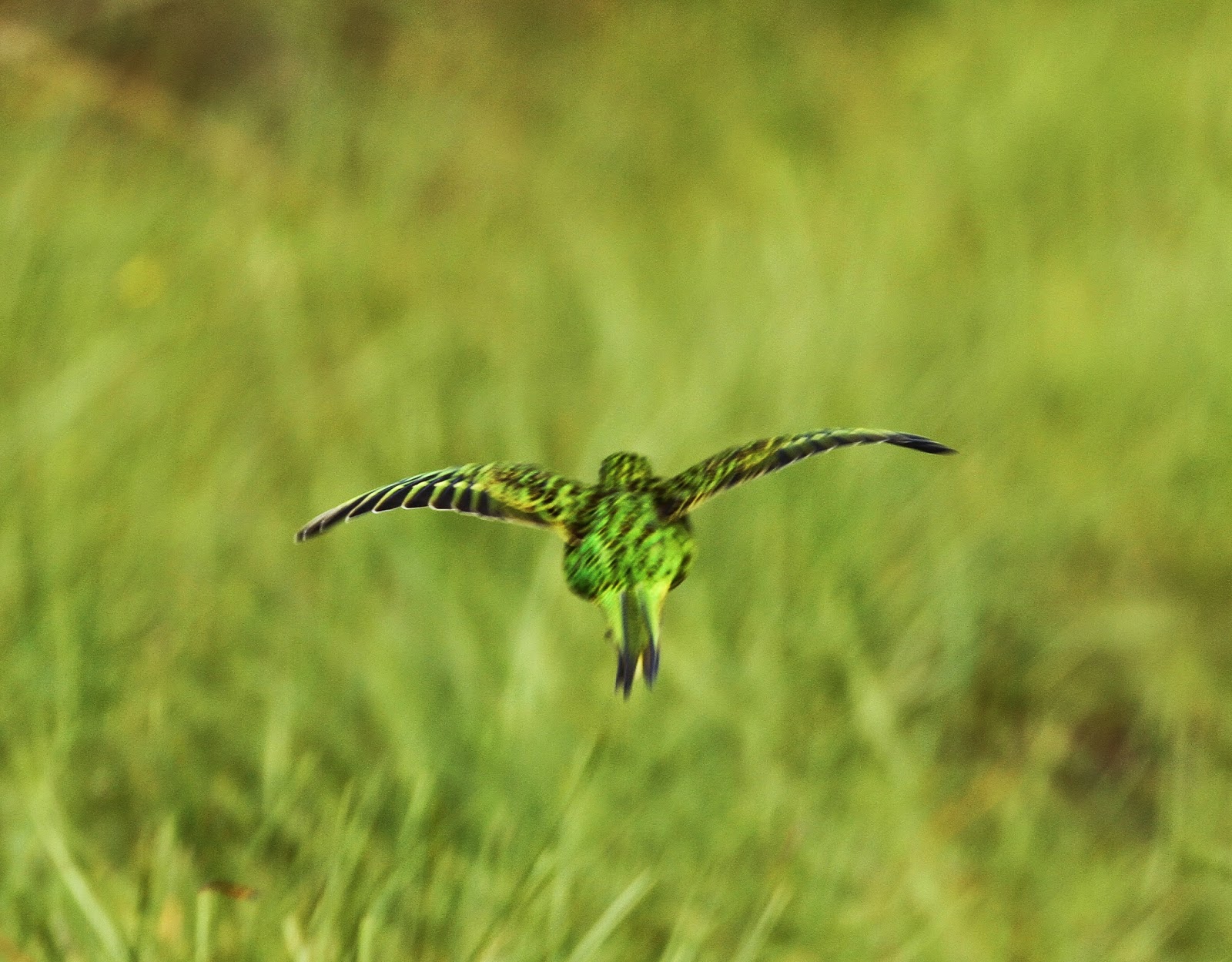 |
| My typical view of Eastern Ground Parrot. |
Heathlands
Ah, the heath! A jewel in any birderwathcers crown! Heath being heath, there are spectacular shrubs and flowers, particularly in spring, when the wildflowers burst with colour. Some of the most spectacular and best known are the Mountain Devil (Lambertia formosa), Broad-leafed Drumstick (Isopogon anemonifolius), Native Fuchsia (Epacris longiflora), Common Fringe-lily (Thysanotus tuberosus), and, of course, the wonderful Christmas Bells (Blandfordia nobilis).
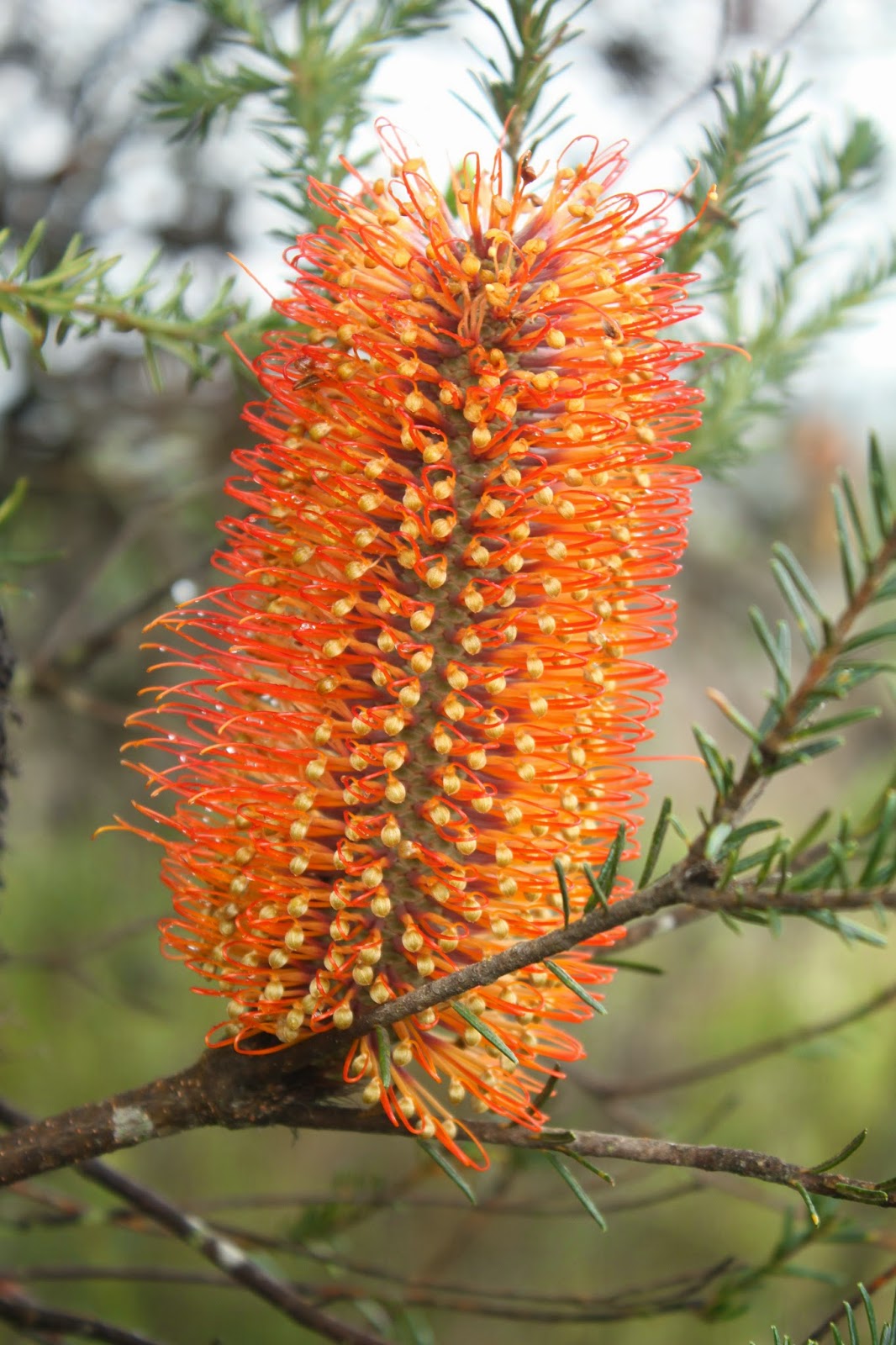 |
| Heath Banksia (Banksia ericifolia) |
But these are only part of the story, with the variety and beauty continuing. Others include Egg and Bacon Pea (Dillwynia floribunda), another Egg and Bacon Pea (D. retorta), Wreath Bush Pea (Pultenaea tuberculata), Dwarfed Darwinia (Darwinia diminuta), Coral Heath (Epacris microphylla), Blunt-leaf Heath (E. obtusifolia), Red Spider Flower (Grevillea oleoides), Green Spider Flower (G. sphacelata), Small-leaved White Beard (Leucopogon microphyllus), Lance-leaved Geebung (Persoonia lanceolata), Coneseed (Conospermum taxifolium), Lesser Flannel Flower (Actinotus minor), Wallum Dampiera (Dampiera stricta), Wallum Goodenia (Goodenia stelligera), Fairy Aprons (Utricularia dichotom), and Austral Ladies Tresses (Spiranthes sinensis). Now that is a diverse list.
All these flowering plants produce copious amounts of pollen and nectar that attract a diverse array of nectar-feeding birds, which also feed on insects drawn in by the abundance of wildflowers. Like most heathland areas, a good time for birding is the early morning when there is plenty of nectar on the heath.
The rushes, sedges, grasses, ferns and sundews
Native rushes, grasses, and sedges include Sheath Rush (Cyathochaeta diandra), Wiry Panic (Entolasia stricta), Common Rapier-sedge (Lepidosperma filiforme), Stiff Rapier-sedge (L. neesii), Slender Twine Rush (Leptocarpus tenax), Ptilothrix (Ptilothrix deusta), and, of course, Button Grass (Gymnoshoenus sphaerocephalus), which has a preference for wetter areas. All good food for birds such as Eastern Ground Parrot and Beautiful Firetail.
Pouched Coral Fern (Gleichenia dicarpa) is common in the reserve. In places, such as along the sides of the walking tracks, it is the dominant ground cover. Here it forms tangled thickets, a good habitat for the Eastern Bristlebird. Its tangled roots are also important for the prevention of erosion along the tracks in the reserve. Pouched Coral Fern is considered a ‘pioneer species’. These are hardy species that first colonize previously disrupted or damaged ecosystems, a process that begins the chain of ecological succession that leads to a more biodiverse steady-state ecosystem. So, obviously, Pouched Coral Fern is a very important plant at Barren Grounds.
Sundews, such as Shield Sundew (Drosera peltata) and the intriguing Forked Sundew (Drosera binata), do what sundew do: trap and eat insects for extra nutrients. Forked Sundew is known for its ability to become a large, insect-catching “bush”.
 |
| An intriguing Forked Sundew (Drosera binata) |
The birds of Barren Grounds and where to see them
With around 180 different species of birds recorded at Barren Grounds, it was declared a special reserve because of the presence of two endangered species, the Eastern Bristlebird and the Eastern Ground Parrot. It’s also particularly good for seeing other heathland specialists such as Beautiful Firetail, Southern Emu-wren, and Tawny-crowned Honeyeater. While more generalist birds in the reserve include the Superb Lyrebird, Pilotbird, Rock Warbler, Brown Cuckoo-Dove, Topknot Pigeon, Black-faced Monarch, Eastern Whipbird, Painted Button-quail, Brown Quail, Bassian Thrush, Red-browed Treecreeper, Variegated Fairy-wren, Large-billed, and Yellow-throated Scrubwren.
Fourteen species of honeyeaters have been recorded, including Crescent, Lewin’s, Fuscous, White-cheeked, Scarlet, and White-eared Honeyeaters. It is also good for parrots and cockatoos; these include the Gang-gang Cockatoo, Yellow-tailed Black-Cockatoo, Galah, Rainbow Lorikeet, Australian King Parrot, Crimson and Eastern Rosella, Turquiose Parrot (uncommon), and, of course, Eastern Ground Parrot.
Interesting raptors to look out for include the Peregrine Falcon, Grey Goshawk, Collared Sparrowhawk, Wedge-tailed Eagle, and there’s a chance of the Pacific Baza—near the southernmost distribution for this species. While nightbirds include the Powerful Owl, Southern Boobook, and Eastern Barn Owl. There is also a chance of seeing uncommon species such as Lewin’s Rail, Chestnut-rumped Heathwren, and Australian Logrunner (in rainforest areas).
 |
| A localized map of Barren Grounds (click to enlarge). |
The Park entrance
Immediately after entering the reserve, stop just before here and check the forest on your left and look out for Pilotbird (listen for their penetrating call), Beautiful Firetail, and Lewin’s Rail, which are occasionally seen here, especially early in the morning.
The Griffith Trail
The best bird walk in the reserve is undoubtedly the Griffiths Trail, an 8-kilometre loop that begins at the picnic ground. It’s the main walk in the reserve, with a couple of tributaries. Being a loop, you can start your walk at either end. I started at the western end. Here it heads out to a natural stone bridge and then loops back to the picnic area via Saddleback Trig. The Griffiths Trail traverses through a range of vegetation communities, including heath and some nice tall eucalyptus forests.
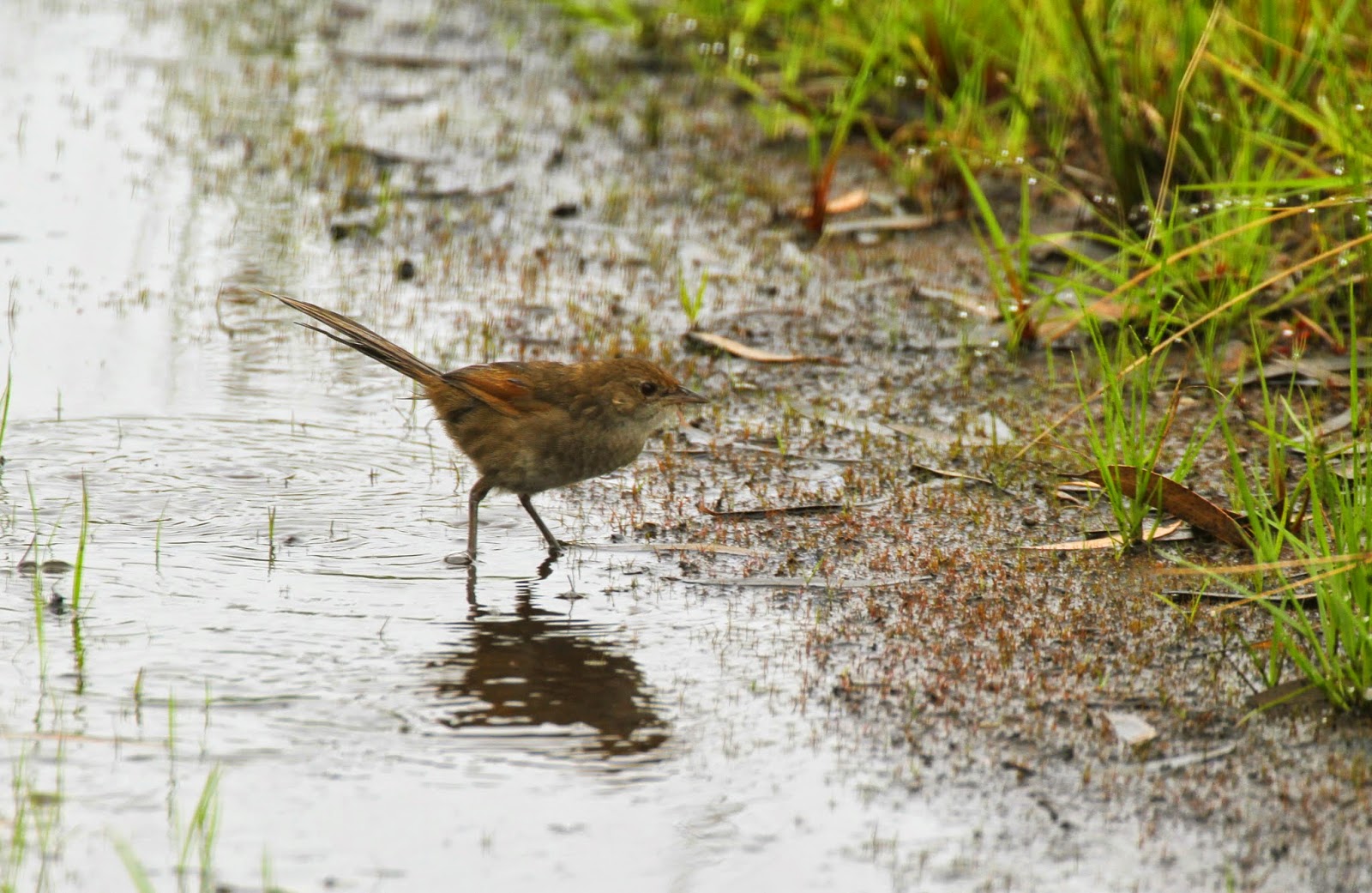 |
| Eastern Bristlebird searching for insects in a puddle. |
Birds such as Eastern Bristlebird, Eastern Ground Parrot, Southern Emu-wren, Beautiful Firetail, and Tawny and White-eared Honeyeater inhabit the heath along the western branch of the Griffith Trail, particularly the section between the car park and natural stone bridge.
 |
| The old bird observatory. |
A particularly good spot to look for Eastern Bristlebird is immediately after you pass the old bird observatory and the Service Track (mentioned below), particularly in the next 200 m or so. When I have visited, there are usually two pairs close to each other in the heath, one on the left or east side of the trail and the other on the west side of the trail. This section of trail (and this time of year) must surely be the best place in Australia to see this normally elusive species.
Eastern Bristlebird are predominantly ground-feeding insectivores. Like fantails and flycatchers, they use their bristles to assist them in catching insects, hence the name. They like to utilize the ecotone between the tall, dense heath that borders the Griffith Trail and the adjacent woodland. So look for them scurrying on the ground or just above it. To find them, listen for their high-pitched melodious call (onomatopoeically described Graham Pizzy as a silvery sweet bijou). Outside of breeding season, you are more likely to hear their sharp alarm zeet zeet call, which I reckon sounds somewhat similar to the alarm call given by the New Holland Honeyeater. It was mostly raining when I was there. However, this was fortunate, as the birds came out to drink and hunt for insects in the puddles along the Griffith Track.
For me, it seems so strange that at Howe Flat and Nadgee, Eastern Bristlebirds are so elusive and hard to see. However, at Barren Grounds, they run across tracks and drink from puddles out in the open. For instance, after several hours of birding along the Griffith Trail, I had seen at least eight different birds, all with some ease. In fact, at one spot, I asked a bird if he could please give me better views. To which he replied, ‘Yes.’. Or at least, that’s what I thought he said. He certainly jumped out into the open and said, ‘Hi,’ or perhaps he was actually telling me, ‘bugger off.’ Whatever the case, late February is clearly a good time to see them. It’s after the breeding season; they have lost their sense of territoriality, and there are a whole bunch of young birds running around wanting to impress.
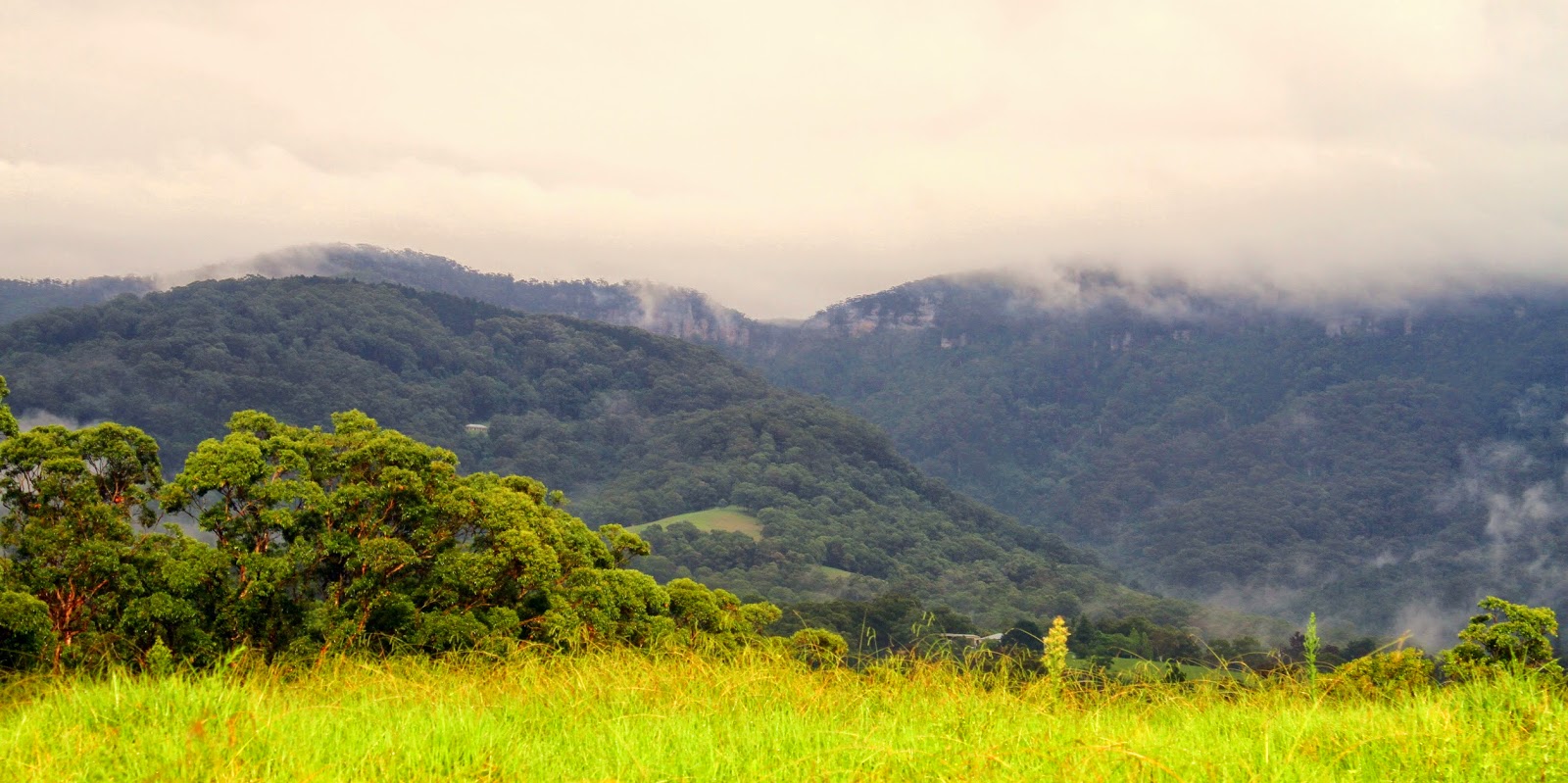 |
| Looking up the escarpment to Barren Grounds, a habitat known as a hanging swamp plateau. |
compared to those of other heathland birds. At Barren Grounds, there’s a maximum density of about 4 birds per 10 hectares. With a total world population of less than 2500 birds, it’s estimated that approximately 600 live at Barren Grounds and the adjacent Budderoo National Park (discussed below).
 |
| Beautiful Firetail, one of the heathland specialists. |
Eastern Bristlebird were once distributed in discrete pockets from the Conondale Ranges in south-east Queensland along the coast and adjacent ranges to Marlo in eastern Victoria. Only a few remaining populations are known. Two near Brisbane, several near Wollongong, and two adjacent to the NSW-Victoria border at Cape Howe (at Nadgee Nature Reserve and Howe Flat).
Around Wollongong, aside from Eastern Bristlebird being present at Barren Grounds and Budderoo, there have been records at Fitzroy Falls and the Upper Kangaroo Valley (15 km w of Barren Ground) and at Red Rocks and Cambewarra Range Nature Reserves (5 km s-e) (where there’s also a small population of Brush-tailed Rock-Wallaby). The good news about this is that it tells us that there is some dispersion of Eastern Bristlebird through suitable corridor habitat.
Continuing along the Griffith Trail, another good spot for Eastern Bristlebird is where the Cooks Nose Lookout Walk branches west from the Griffith Trail. It is approximately 1.5 km from the car park. This is also a good spot for Beautiful Firetail, which tends to feed on the grasses growing on the side of the track and will often allow you to approach within about 5 m. I also saw several Brown Quail here.
 |
| Stone Bridge half way along the Griffith Trail. |
Half way along the Griffith Trail loop, you come to a natural stone bridge that crosses Lamonds Creek. It is approximately 2 km from the car park. This is an interesting place, with the water flowing immediately under the rocks. Eastern Bristlebird inhabits the scrub around the bridge; for instance, I saw an Eastern Bristlebird in the shrubs immediately behind the Stone Bridge sign. The woodland section beyond the Stone Bridge is probably the most reliable place to see Chestnut-rumped Heathwren. With a similar habitat preference to Eastern Bristlebird, they like the ecotone edge of forest and woodland clearings.
Around the stone bridge, in the forested section along the walk, is probably the best place for forest birds such as Superb Lyrebird, Brush Bronzewing, Brown Cuckoo-Dove, Gang-Gang Cockatoo, Fan-tailed Cuckoo, Satin Bowerbird, Eastern Whipbird, Black-faced Monarch, and Leaden and Satin Flycatcher, although many use more than one habitat within the reserve. So, as usual, always keep your eyes and ears open. Nightbirds such as Southern Boobook and Powerful Owl use the forests to hunt, while Eastern Barn Owl tends to hawk over the heathland.
Towards the eastern end of the Griffith Trail, the Illawarra Lookout provides superb views of the Illawarra coast and hinterland (remembering you can always start the Griffith Trail from the eastern end). The forest around the lookout is a good spot for Pilotbird. While the heath and woodlands between the lookout and picnic ground are another reliable spot for Eastern Bristlebird.
 |
| A confiding Eastern Bristlebird, along the Griffith walk in Barren Grounds. |
The Service Track
Back at the beginning of the western section of the Griffith Trail, near the old bird observatory, there is a fire trail; it is sign-posted ‘Service Track only’. This trail leads west down to Redbank Gully Creek and is approximately 1 km return. The low-lying heath along this trail is good for Eastern Ground Parrots; listen at dawn and dusk for their distinctive resonating call.
Eastern Ground Parrot are present in reasonable numbers at Barren Ground, with recent surveys regularly recording between 20 and 40 parrots. Recent evidence indicates that fire management is particularly important when dealing with populations of Eastern Ground Parrot. They tend to occur in heath growth between 1 and 20 years post-fire, with their population stabilizing after ten years. After about 10 years, in an optimum habitat (like Barren Grounds) their approximate densities are about 3 birds per 10 hectares. Typically, for their survival, it’s important to have a mosaic of fire ages in a given region, spanning between 0 and 30 years.
Luck! Much of birding is just luck, and when looking for Eastern Ground Parrots, you need quite a bit of luck. Luckily for me, I flushed an Eastern Ground Parrot from the trail about a third of the way down. Again, luckily, it re-landed on the track about 100 feet further down.
The Eastern Ground Parrot is clearly a highly elusive bird, with a preference for knee-high heath and sedgelands. Getting a decent view is always hard, with most of my encounters simply a fleeting glimpse of the bird’s backside as it flies away. If flushed, Eastern Ground Parrots take off rapidly, fly some 2 m above ground level, and then glide down into cover at a shallow angle.
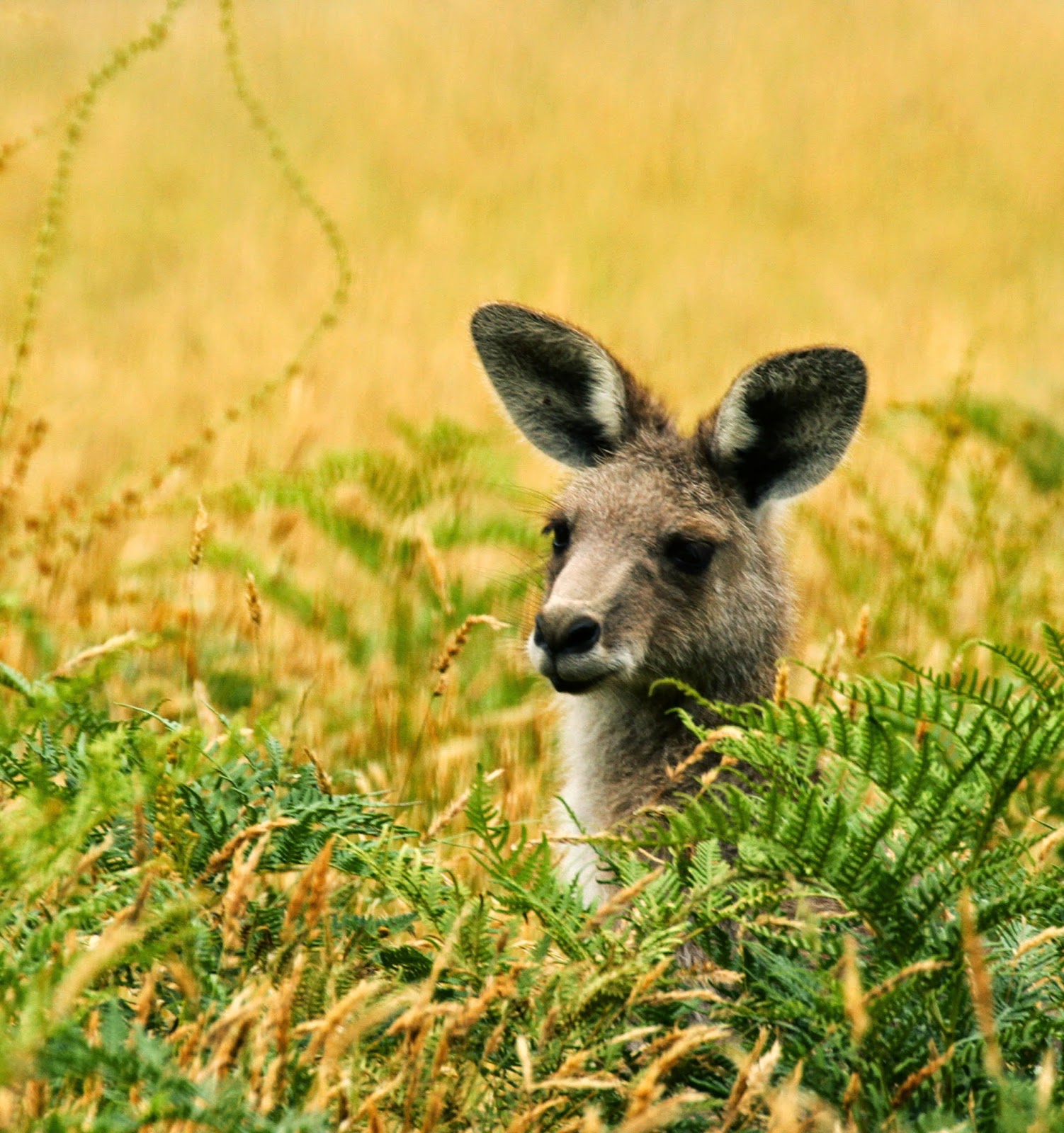 Eastern Grey Kangaroo are common at Barren Grounds.
So, luckily for me, the birds re-landed on the track, and I was able to get some excellent views and some nice images. After seeing the bird, I meet a group of birders who’d not seen Eastern Ground Parrot before, despite many attempts. I explained where I’d seen the bird, so they rushed down to see it. When I saw them again several hours later, they explained they had dipped. Despite standing in the rain for hours and in the exact spot where I saw the bird. So, I was just lucky!
Fortunately, I’ve seen Eastern Ground Parrot at quite a few places in Australia: in the heathland in Croajingolong in Victoria, at Jervis Bay in NSW, near Strahan in Tasmania, and in the Great Sandy National Park in Queensland. So that’s every state in which they occur in Australia, and now I can add Barren Grounds to the list of sites. From here, I reckon I need to head to Western Australia to look for Western Ground Parrots. Wish me luck.
Kangaroo Ridge Walk
If you have time or the will, walk the 20-kilometre Kangaroo Ridge Walk. It’s a long, grassy, open track that travels over undulating heath country. Keep a lookout for Eastern Ground Parrot and Brown Quail feeding on the track, and look for Beautiful Firetail and Southern Emu-wren in the adjacent heath. This walk is probably the best in the reserve for raptors, such as Grey Goshawk, Brown Goshawk, and Collared Sparrowhawk. Once at the edge of the Illawarra escarpment, the views of the Berry district are fantastic. Here, there is a chance of seeing the Peregrine Falcon, which nests on the cliffs near here. It’s worth noting that the Kangaroo Ridge Walk can be very wet and muddy after rain, which, unsurprisingly, happens quite a bit at Barren Grounds.
The Herbarium Walk
In spring, when the wildflowers are blooming, the Herbarium Walk—it’s about a 1.5-kilometre loop—is particularly good for honeyeaters such as Crescent, Lewin’s, New Holland, Yellow-faced, White-cheeked, and White-eared, and, occasionally, Fuscous and Scarlet.
Other wildlife at Barren Grounds
Thirty species of native mammals have been recorded in Barren Grounds. Most occur in the woodland area, with moist forest patches. The reserve lists include Common Wombat, Sugar Glider, Eastern Pygmy Possum, Common Ringtail Possum, Brown Antechinus, Long-nosed Bandicoot, Bush Rat, Grey-headed Flying Fox, and, in rainforest areas, Greater Glider. Rarer mammals include the Spotted-tailed (Tiger) Quoll, Long-nosed Potoroo and Common Bent-wing Bat.
If you get a chance to do some spotlighting, the best time to see a Long-nosed Potoroo is just after dusk. This is when they begin to feed. To find them, look for the broad, conical-shaped digging holes, where they dig for underground fungus, roots, and small insects. Also on the ground, look for Long-nosed Bandicoot. Superficially similar to the Long-nosed Potoroo, Long-nosed Bandicoot is paler in colour, has a shorter tail, and its muzzle is much longer.
Eastern Pygmy Possum prefers the heathland, being particularly fond of Banksia flowers. Sugar Glider prefer wooded areas, gliding between trees as much as 50 feet.
Information about reptiles and amphibians in Barren Grounds is limited when compared to birds and mammals. 12 lizards have been recorded, including the Lace Monitor and Eastern Water Dragon, while there are 11 species of snakes: Swamp Snake, Green Tree Snake, Red-bellied Black Snake, and Copperhead, while Broad-headed Snake may occur. Being very swampy, frogs are well represented, with 14 species, including three that are threatened: the Giant Burrowing Frog, Giant Barred Frog, and the spectacular-looking Red-crowned Toadlet. In terms of butterflies, when I was there, the beautiful Swordgrass Brown was a common sight in the heath.
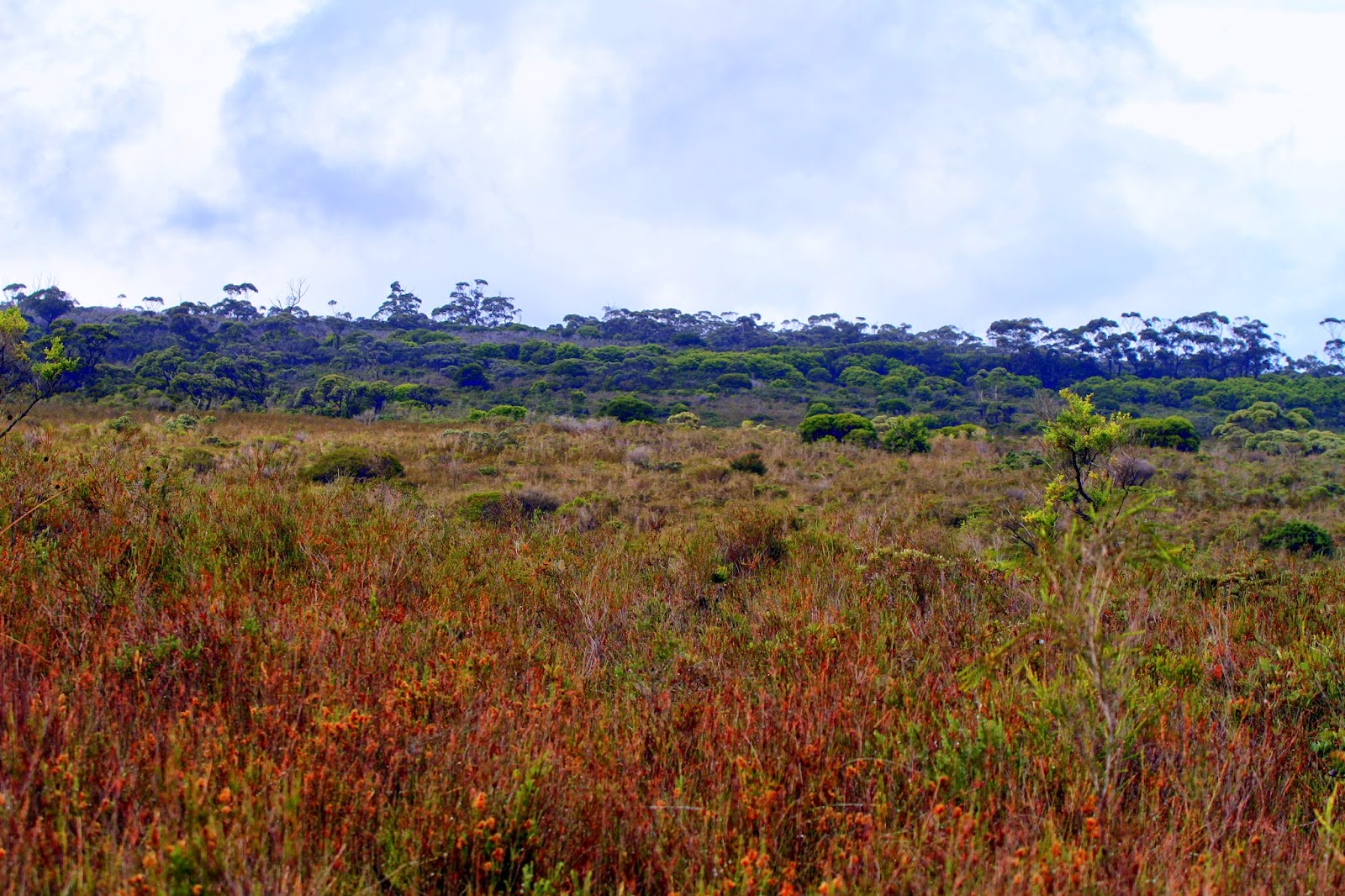 |
| Superb heath along the Budderoo Track – another good spot to look for Eastern Ground Parrot and Eastern Bristlebird |
Some birding sites nearby
Budderoo National Park
If you don’t see Eastern Bristlebird and Ground Parrot at Barren Grounds, continue 3 km west along the Jamberoo Mountain Rd to the Budderoo Track in Budderoo National Park. Little survey work has been carried out for Eastern Bristlebird, but they appear to me to be more numerous in Budderoo than Barren Grounds, possibly because of the greater amount of woodland.
The Budderoo Track traverses excellent areas of heath and mixed Eucalyptus and Banksia woodlands. A particularly good spot to look is 300 m from the road, where there is a fence line and gate. The heath here is a little lower than at Barren Grounds, and consequently, birds can be easier to see. Other birds to look for along the trail include Southern Emu-wren (a good spot is near the gate), Bassian Thrush, White-eared, Crescent and Tawny-crowned Honeyeater, Beautiful Firetail, and in woodland areas further along the track, Gang-gang Cockatoo and Red-browed Treecreeper.
In Budderoo National Park, at the base of the escarpment, it may be worth visiting the Minnamurra Falls. It’s a great place to see Superb Lyrebirds; when I was there, they were foraging around the car park. There are a couple of walks that pass through the rainforest, where birds such as the Satin Bowerbird, Yellow-throated and Large-billed Scrubwren, Rose Robin, Bassian Thrush, Brown Gerygone, and Lewin’s Honeyeater occur, while, in summer, you might see Brown Cuckoo-Dove and Topknot Pigeon. The bad news about Minnamurra Falls is that only opens between 9 am and 5 pm, not particularly good hours for a visiting birdwatcher. Pity.
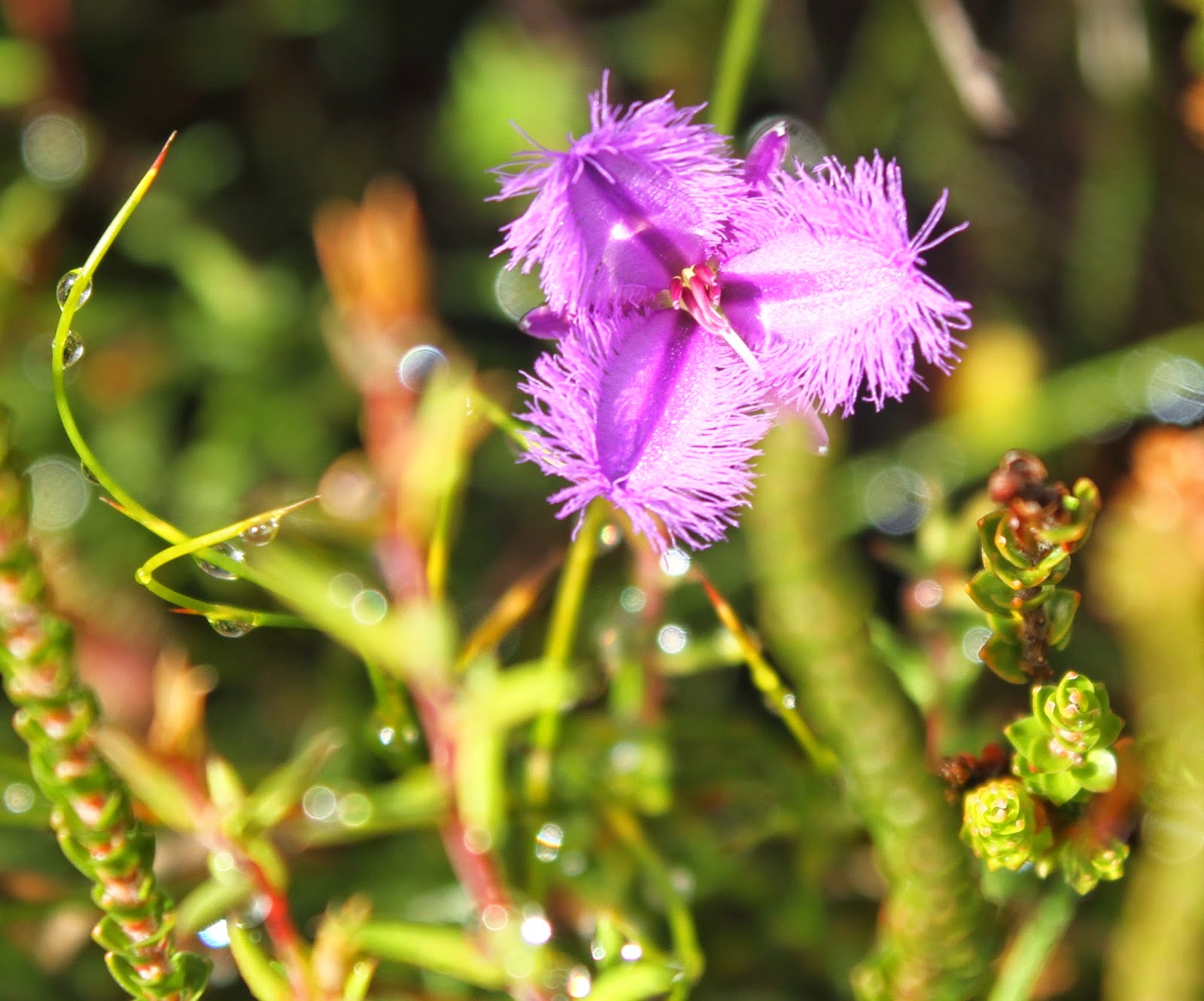 |
| Common Fringe-lily (Thysanotus tuberosus) |
Cascade Rainforest Walk
The Cascade Rainforest Walk is a remnant section of sub-tropical rainforest located in Macquarie Pass National Park. It starts at the picnic area at the foot of Macquarie Pass and follows a creek for 1 km to the Cascades, where there is a 20-metre waterfall. The trees along the walk are fabulous. These include rainforest species such as Lily Pilly (Syzygium smithii), Jackwood (Cryptocarya glaucescens), Illawarra Flame Tree (Brachychiton acerifolius), Turpentine (Syncarpia glomulifera), Cabbage-tree Palm (Livistona australis), Giant Stinging Tree (Dendrocnide excelsa), Beefwood (Grevillea striata), and Small-leaved Fig (Ficus obliqua).
The area of rainforests is one of the most southerly strongholds for a number of birds that depend upon the fruit of these rainforest trees for their diet. These include birds such as the Green Catbird, Emerald Dove, Brown Cuckoo-Dove, Topknot Pigeon, White-headed Pigeon, Logrunner, Channel-billed Cuckoo, Australasian Figbird, Yellow-throated Scrubwren, and Spectacled Monarch. Some of the other birds you might see along the walk include the Superb Lyrebird, Olive-backed Oriole, Crescent and Lewin’s Honeyeater, Black-faced Monarch, Leaden Flycatcher, Rose Robin, Large-billed Scrubwren, Bassian Thrush, Brown Gerygone, and the introduced Red-whiskered Bulbul. Threatened mammals in the park include Tiger Quoll and Long-nosed Potoroo, so it may be worth doing some nighttime mammal watching.
 |
| Another heathland specialist – Southern Emu-wren |
Robertson Nature Reserve
Located near the edge of the Illawarra Escarpment, the Robertson Nature Reserve is a small reserve, approximately 5 hectares in size. To get there, from the main street of Robertson, turn south at the intersection near the hotel, cross the railway line, then turn left at the T-intersection. The reserve is a little way along on the right. Robertson Nature Reserve protects a remnant area of Yarrawa Brush. Brush, in this sense, is the name given to a forest with a dense understory. Originally, Yarrawa Brush covered 2500-hectares of the eastern part of the Highlands. Apart from isolated pockets of scrub, only this 5-hectare portion remains of the original rainforest.
The high rainfall and heavy mists create a microclimate particularly suited to birds who like cool, temperate rainforests. Despite its size, it can be very birdy. After a short walk along the 600-metre track, I saw Brown Cuckoo Dove, Wonga Pigeon, Shining Bronze-Cuckoo, Satin Bowerbird, Lewin’s and Yellow-faced Honeyeater, Large-billed and Yellow-throated Scrubwren, Brown Gerygone, Rufous Fantail, Black-faced Monarch, and Bassian Thrush, to name a few. If visiting at night, keep an eye open for Tigor Quoll, which is said to inhabit the reserve.
Aside from the birds, the reserve is worth visiting just for the plants. For instance, you can see a lot of trees with the word ‘wood’ in their names: Featherwood (Polyosma cunninghamii), Possumwood (Quintinia sieberi), Coachwood (Ceratopetalum apetalum), Blackwood (Acacia melanoxylon), and Pinkwood (Eucryphia moorei). Other trees include Sassafras (Doryphora sassafras), Lillypilly (Acmena Smithii), Cabbage Tree Palm (Livistona australis), and Pencil Cedar (Polyscias murrayi). The ground cover is a mixture of shrubs such as Orange Thorn (Pittosporum multiflorum) and Soft Tree Fern (Dicksonia antartica).
As can be seen by the image below, vines are a prominent feature of the Yarrawa Brush, clearly responsible for how it got its name. You could visit the reserve just to ‘twitch’ vines. Do people do that? Here’s a list of some you may see: Wonga Vine (Pandorea pandorana), Anchor Vine (Palmeria scandens), Common Milk Vine (Marsdenia rostrata), Five-leaf Water Vine (Cissus hypoglauca), Gum Vine (Aphanopetalum resinosum), Staff Vine (Celastrus australis), and Pearl Vine (Sarcopetalum harveyanum).
 |
| Yarrawa Brush at Robertson Nature Reserve |
Fitzroy Falls
Finally, it’s worth dropping into Fitzroy Falls, located in the north-eastern section of Morton National Park. The falls are situated where Yarrunga Creek plunges from a sandstone escarpment into the valley below. There’s a good range of plant communities, such as rainforests, dry eucalypt forests, and plateaus of wet sedge and heathland. And, if you want to camp, there’s a campground at Gambells Rest. There are several good walks starting at Fitzroy Falls. Birds to look for along the East Rim Track (7 km return) include Pilotbird, Superb Lyrebird, Gang-gang Cockatoo, Topknot Pigeon, Green Catbird, Crescent Honeyeater, Yellow-throated Scrubwren, Varied Sittella, Crested Shrike-tit, Rose Robin, and Satin Bowerbird. Similar birds occur along the West Rim Track (4 km return). Along this walk, a steep staircase leads down to a cool, ferny gully known as the Grotto. Rockwarbler feed along the rocky stream just before the Grotto.
Southern Emu-wren and Beautiful Firetail occur in the heathland areas along the Redhill Fire Trail (7 km return). It starts near the Twin Falls Lookout, located on the West Rim Track. Back at the Fitzroy Falls Visitor Centre, Bassian Thrush occurs around the car park.
 |
| Pouched Coral Fern (Gleichenia dicarpa). scattered throughout Barren Grounds. |
 |
| An unlikely reason for one of my visits to Barren Grounds; a White-rumped Sandpiper was seen nearby. A rare vagrant to Australia, unfortunately you are not going to see them at Barren Grounds but, at Lake Wollumboola, there is always a chance! |
 Tim Dolby's Birding Tours