Due to some PhD research commitments at Charles Sturt University, over the years I’ve traveled through Chiltern quite a bit. As a result, I thought I’d update my trip report page for Chiltern-Mount Pilot National Park (the original report was fairly scratchy anyway). If you ask Australian birdwatchers what their favorite bird sites are, for many, Chiltern easily slips into the top ten. There’s a wide range of literature available on Chiltern-Mt Pilot National Park (see the end of this report), so this report is really just my personal take on this wonderful national park, with a few thoughts on some of the plants, animals, and the best birding sites in the park.
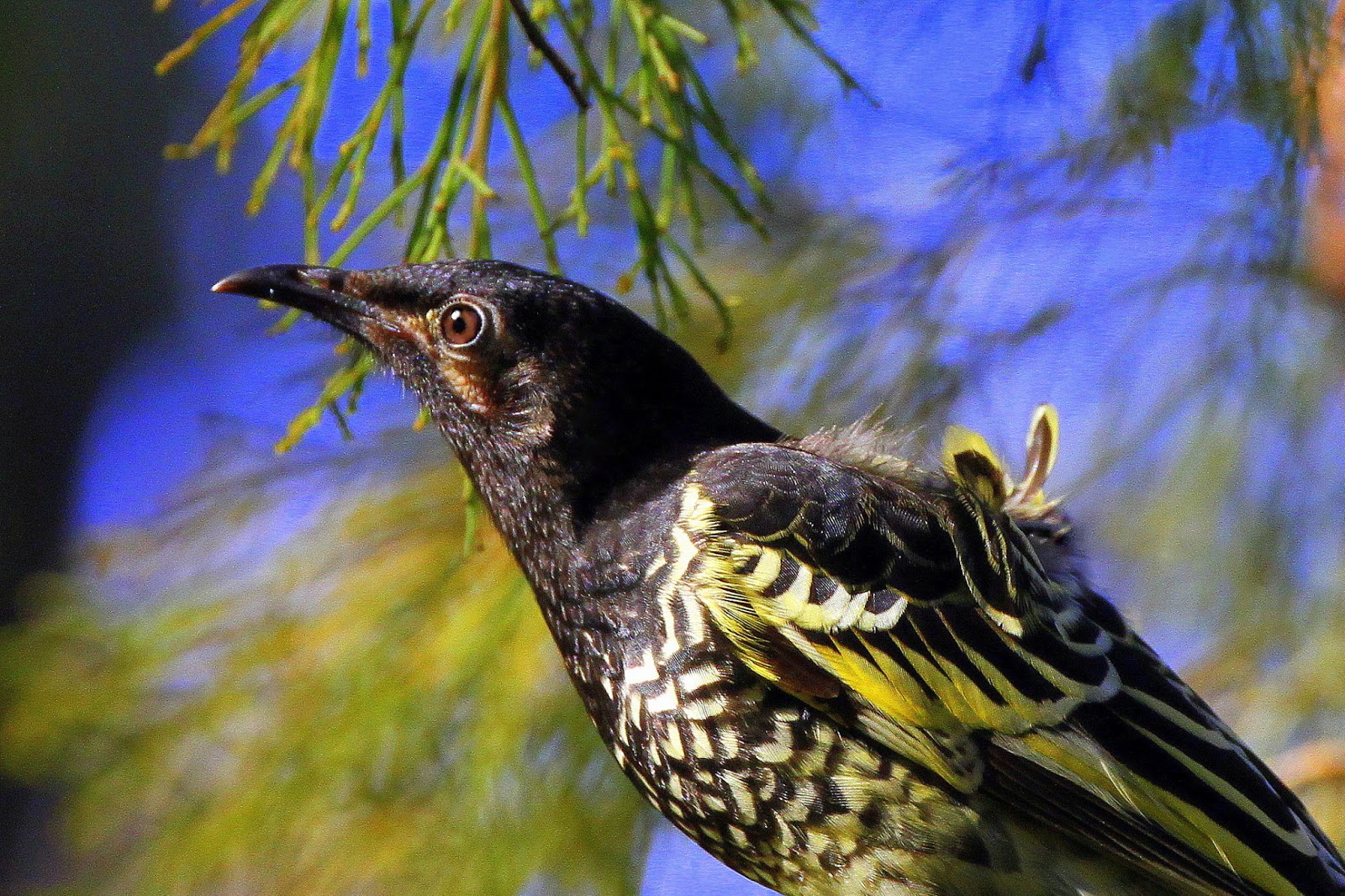 |
| Regent Honeyeater. With remaining numbers estimated at between 500 – 1500, are they looking into the darkness |
Background notes
Created in 2002, Chiltern-Mt Pilot National Park (21,560 ha) conserves Victoria’s Box‐Ironbark forests and woodlands, a unique habitat to Australia. This type of forest once covered around 15% of Victoria (~3 million ha). However, by 2013, ~85% of the Box-Ironbark forests had been cleared. So the park is an extremely important remnant of this once widespread forest type and provides a really important habitat link between the foothills of the Australian Alps and the Murray Riverine plains.
Chiltern-Mt Pilot National Park is probably the best flora and fauna assemblage of any Box-Ironbark forest in Australia. There are well-formed vehicle tracks throughout the park, providing access to most areas. I’ve found the best way to bird in the Chiltern is to follow these tracks, looking for flowering eucalypts. This process is relatively straight-forward: look for recently fallen blossoms and buds on the ground, and listen for the sounds of calling birds. When flowering, the eucalypts in Chiltern produce an abundance of nectar, which is food for hungry honeyeaters and parrots. So, using this technique is a pretty effective way to track down the park’s birds.
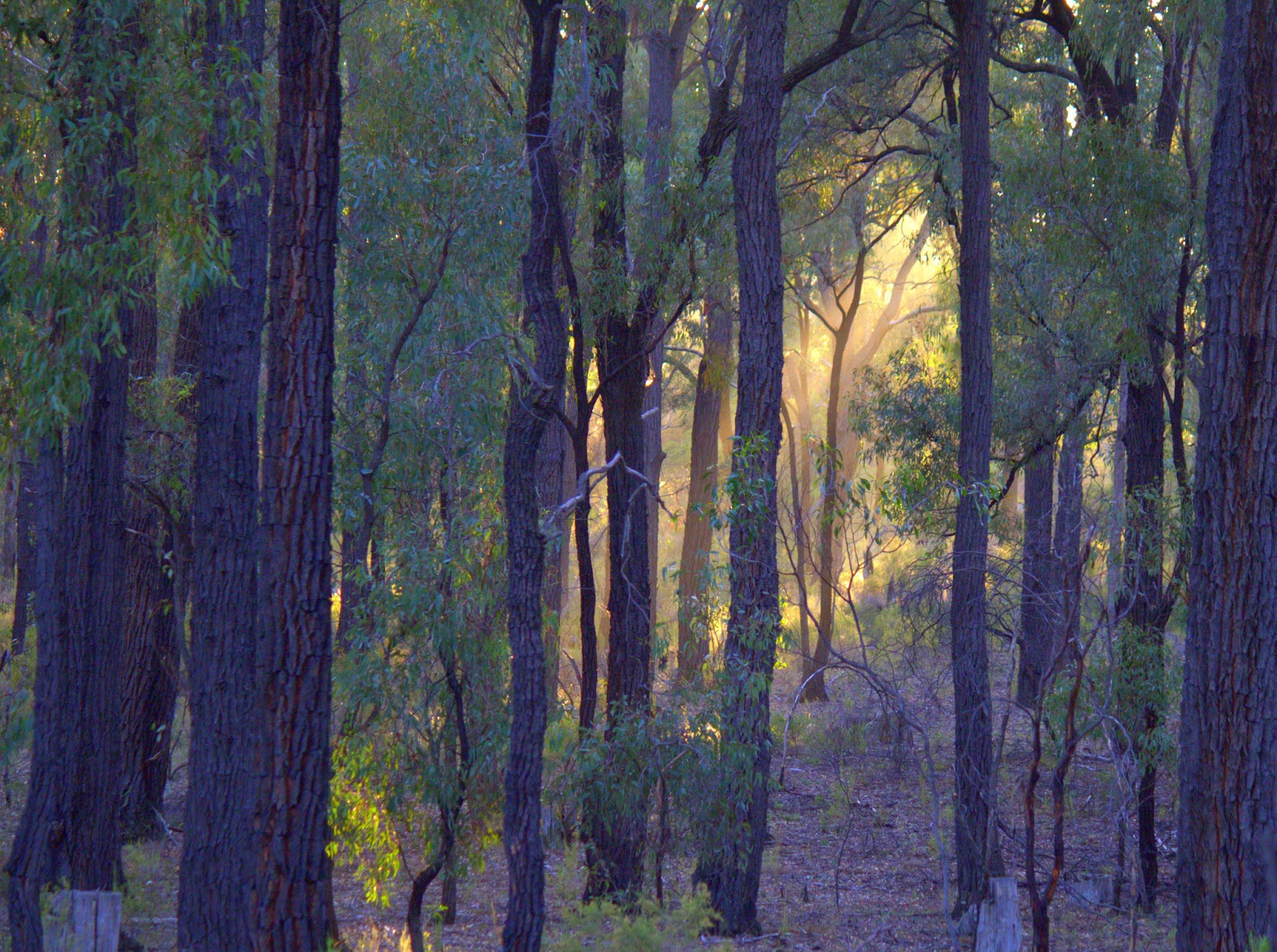 |
| Mugga Ironbark (Eucalyptus sideroxylon) – another spectacular winter’s morning in Chiltern |
In terms of ornithological conservation, the most significant species is the Regent Honeyeater, which relies on the Box-Ironbark species for survival. Historically seen in large flocks—in some cases, several hundred strong—regent Regent Honeyeaters were once found around Adelaide in South Australia, and Fred Smith once saw a Regent Honeyeater at Yarra Bend, a park near my home in central Melbourne. Current estimates suggest that there are now as few as 1,000 birds. In Victoria, the main breeding sites for Regent Honeyeaters are around Chiltern and Benalla. In winter, Regent Honeyeater disperse widely, i.e., recent records of birds in Gippsland, with seasonal movements dictated by flowering eucalypts. The loss of these eucalypts through habitat loss, especially in terms of corridors of habitat, and the lack of regeneration of these tree species seem to be the keys to their decline. r, which relies on the Box-Ironbark species for survival. Historically seen in large flocks—in some cases, several hundred strong—regent Regent Honeyeaters were once found around Adelaide in South Australia, and Fred Smith once saw a Regent Honeyeater at Yarra Bend, a park in central Melbourne. Current estimates suggest that there are now as few as 1,000 birds. In Victoria, the main breeding sites for Regent Honeyeaters are around Chiltern and Benalla. In winter, Regent Honeyeater disperse widely, i.e., recent records of birds in Gippsland, with seasonal movements dictated by flowering eucalypts. The loss of these eucalypts through habitat loss, especially in terms of corridors of habitat, and the lack of regeneration of these tree species seem to be the keys to their decline.
How to get there, where to stay
The park’s located between Beechworth and Chiltern. It’s 275 km north-east of Melbourne, 34 km north of Wangaratta, and about 40 km south of Albury and Wodonga. The best access is from the Hume Freeway at the Chiltern turn-off. Camping and accommodation are available in the nearby towns of Chiltern and Beechworth, and there’s camping along Reedy Creek (Mt. Pilot section of the park) and basic bush camping at the Tuan Campsite, located on Depot Rd. on the north side of the park. My personal preference is to stay in the Lake Anderson Caravan Park in Chiltern, and the Colonial Motel is also good value.
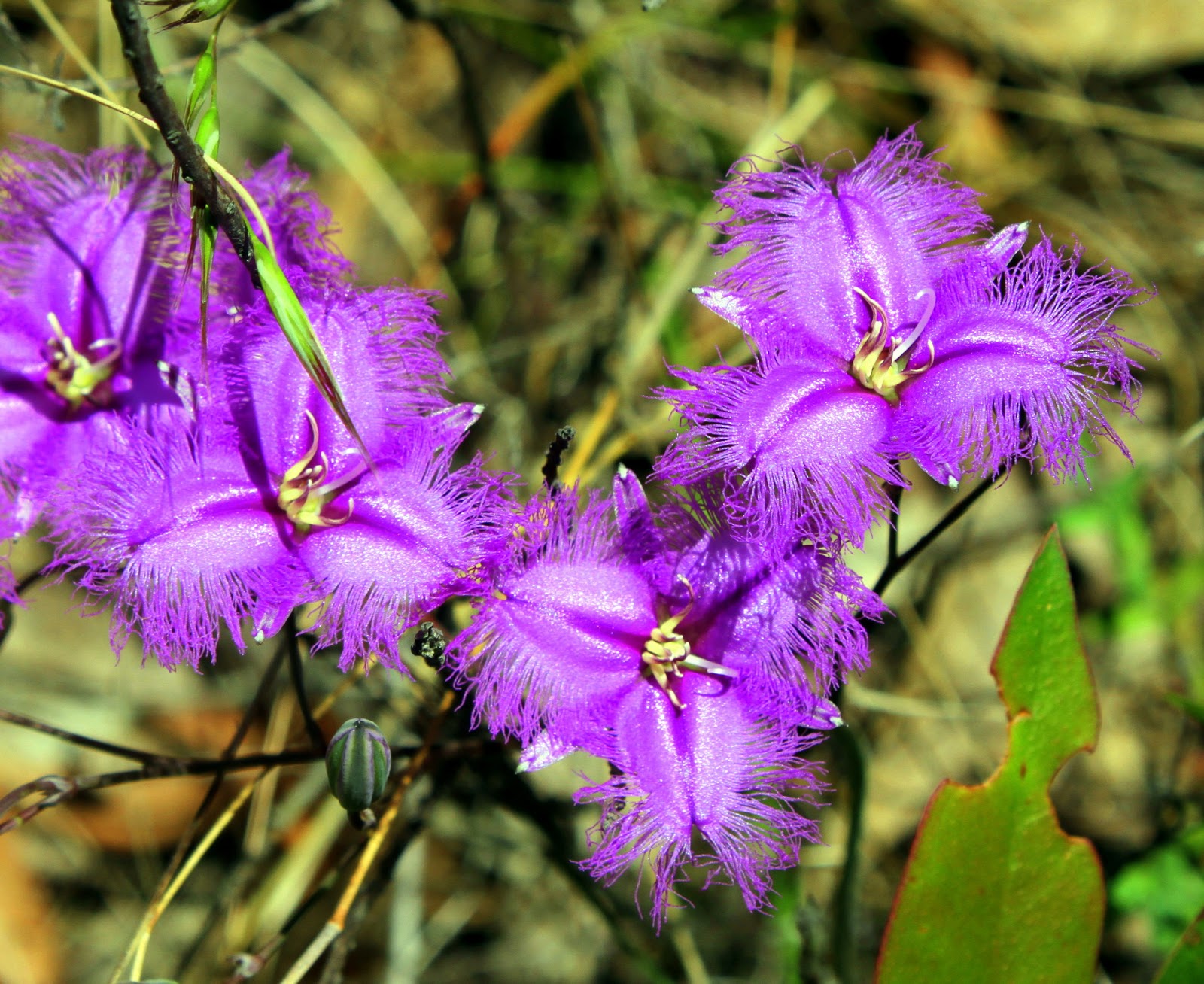 |
| Common Fringe-lily (Thysanotus tuberosus) – its frilly edges last just one day. |
The flora
The park’s dominant canopy trees are open eucalyptus, such as the rugged Mugga Ironbark (Eucalyptus sideroxylon), Grey (E. microcarpa) and White Box (E. albens), Red Stringybark (E. macrorhyncha), and Blakely’s Red Gum (E. blakelyi). Many of these trees flower in sequence, providing a consistent nectar source for the resident and visiting bird species. Occasionally, Mugga Ironbark and the box species produce hybrids. There are good examples of this at the eastern end of the White Box Walking Track, just east of the Honeyeater Picnic Area. The national park also preserves a range of endangered tree species, such as the Warby Range Swamp Gum (E. cadens) and the blue-leafed Beechworth Silver Stringybark (E. aff. cinerea); look for them at the Woolshed Falls. Much of the eucalyptus in the park is covered by Box Mistletoe (Amyema miquelli) and Fleshy Mistletoe (A. miraculosa ssp. boormanii), a favorite plant of many species of birds, notably the Painted Honeyeater. Other eucalpts include River Red Gum (E. camaldulensis) and Yellow Box (E. melliodora), mostly near the parks wetlands such as Chiltern Valley No. 1 and No. 2 Dams and Frogs Hollow. There are also significant roadsides habitats that run through farmland bordering the park, such as along Fishers Lane and Toveys Rd.
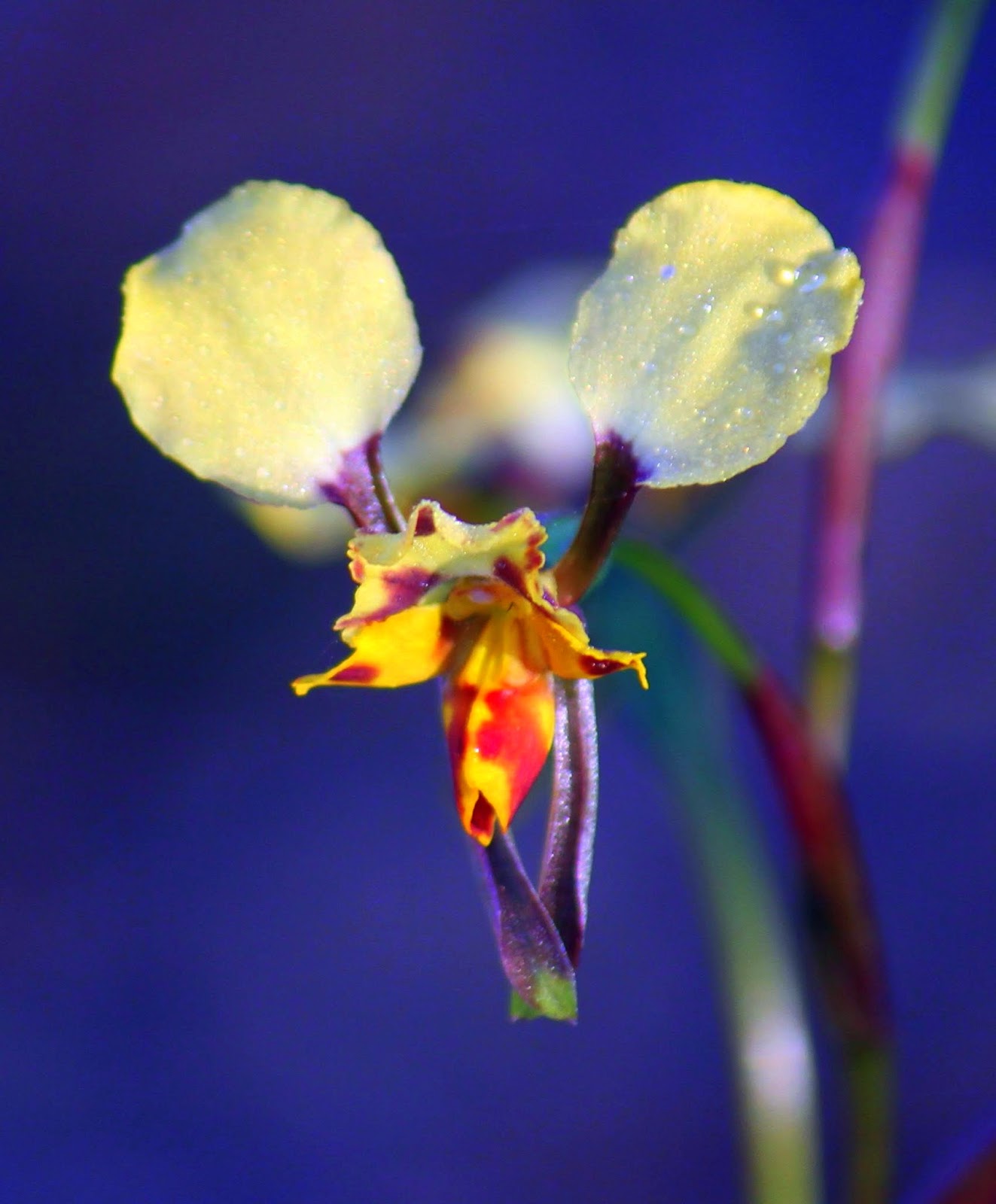 |
| A stunning Leopard Orchid (Diuris pardina) |
Chiltern has Australia’s largest reserved population of Black Cypress-pine (Callitris endlicherii), mainly on the dry granite ridges in the east of the park near Eldorado. Traveling through these Black Cypress-pine forests reminds me of Terrick Terrick National Park in central Victoria, a park dominated by White Cypress-pine (C. glaucophylla). Perhaps surprisingly, the cypress-pine forests near Chiltern are under-visited by birders, myself included. I might correct this oversight during the forthcoming spring.
The park has a prolific array of shrubs that includes many wattles and wildflowers. During winter and autumn, the shrub layer is relatively quiet when compared to spring; however, it still has a wonderful selection of flowering plants and contrasting colors. You might see Hoary Sunray (Leucochrysum albicans), Slender Rice-flower (Pimelia linifolia), and Urn Heath (Melichrus urceolatus), a plant somewhat similar to Heath Murtle. One autumn flowering flower is the Common Fringe-lily (Thysanotus tuberosus), surely one of Australia’s most strikingly beautiful wildflowers. The frilly edges of their three petaled flowers only last for one day.
Wattles include Golden Wattle (Acacia pycnantha), Varnish Wattle (A. verniciflua), and the winter flowering Spreading Wattle (A. genistifolia), with its delightful lemon color. The Deane’s Wattle (A. deanei) is a rare local endemic. The Spur-wing Wattle (A. triptera) was planted in the park during the 1960s. It was sourced from the only natural occurring Victorian population in the Warby Range State Park, in case of local extinction. Cherry Ballart (Exocarpos cupressiformis) features highly in the park and is a favorite tree for many species of birds, including honeyeaters such as Regent Honeyeaters, who use its dense foliage for roosting and to search for small insects. (Indeed, the relationship between Cherry Ballart and Regent Honeyeater is probably understated in the literature.) The wattles and the Cherry Ballart contrast beautifully with the hard black fissured trunks of the Mugga Ironbark and Grey Box.
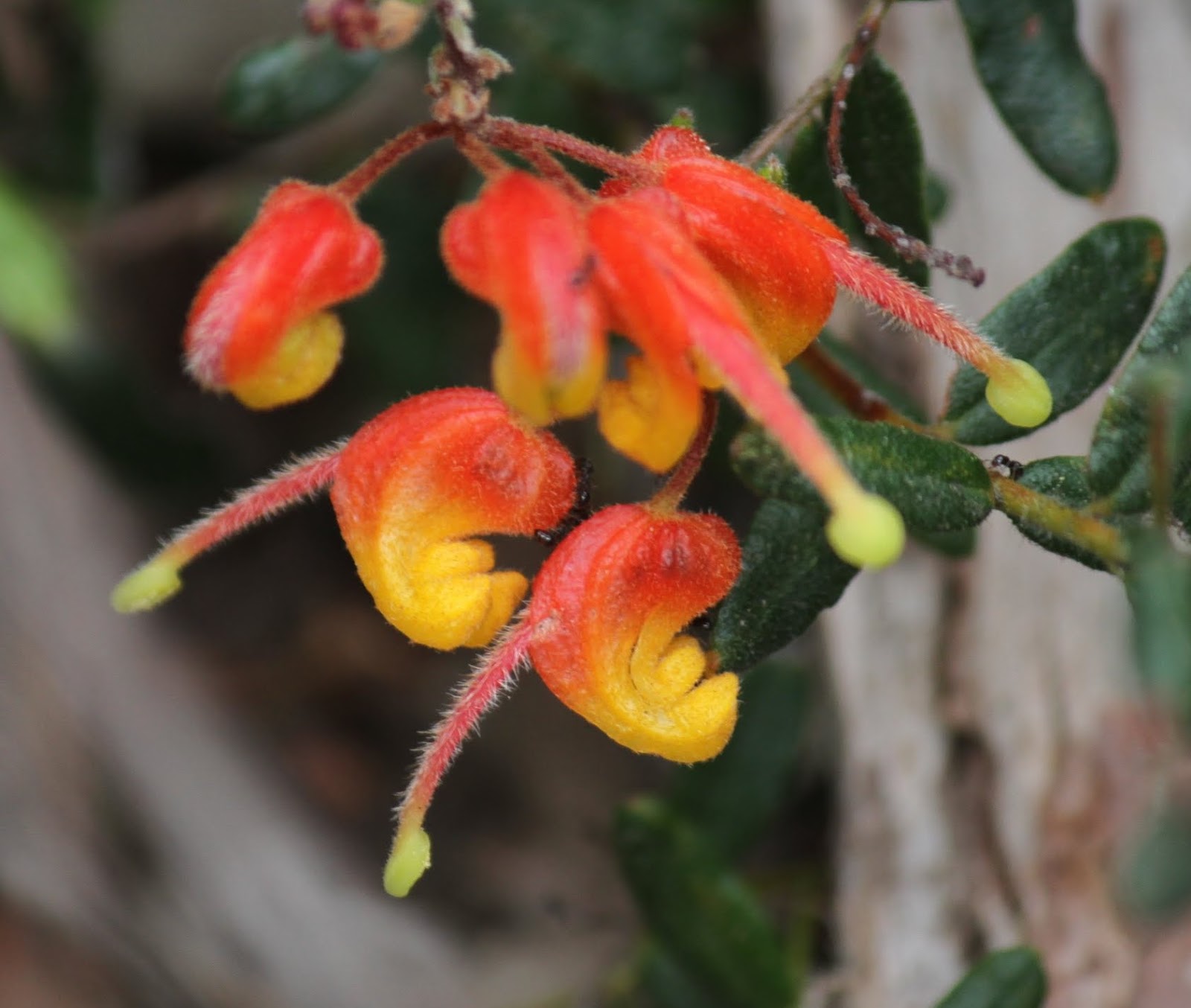 |
| Cat’s Claw (Grevillea alpina) |
Another winter flowering plant is the Broom Bitter-pea (Daviesia genistifolia). A low-growing egg and bacon-style plant, it has a delightful tinge of orange and mauve. Somewhat similar is the apply-named Handsome Flat-pea (Platylobium formosum). Then there is the blue Common Hovea (Hovea linearis).
It is worth searching for the extremely rare and critically endangered Mountain Swainson Pea (Swainsona recta). The total number of reported plants in Australia ranges from ~2,700 to ~4,000. It was presumed extinct in Victoria until a single population of four plants was found near Beechworth in 2001, discovered by none other than Eileen Collins.
Spring is the time for prolific wildflowers in Chiltern. For those fascinated by our native orchids—I included myself—with patience, late autumn or spring is the time to search for them. Look for the spectacular Crimson Spider Orchid (Caladenia concolor), Lepord Orchid (Diuris pardina), Mt Pilot Spider Orchid (C. pilotensis), an endemic to Victoria’s northern inland slopes, and the rare Yellow Hyacinth Orchid (Dipodium hamiltonianum), another with a leopard-like coloration that’s covered in purple spots.
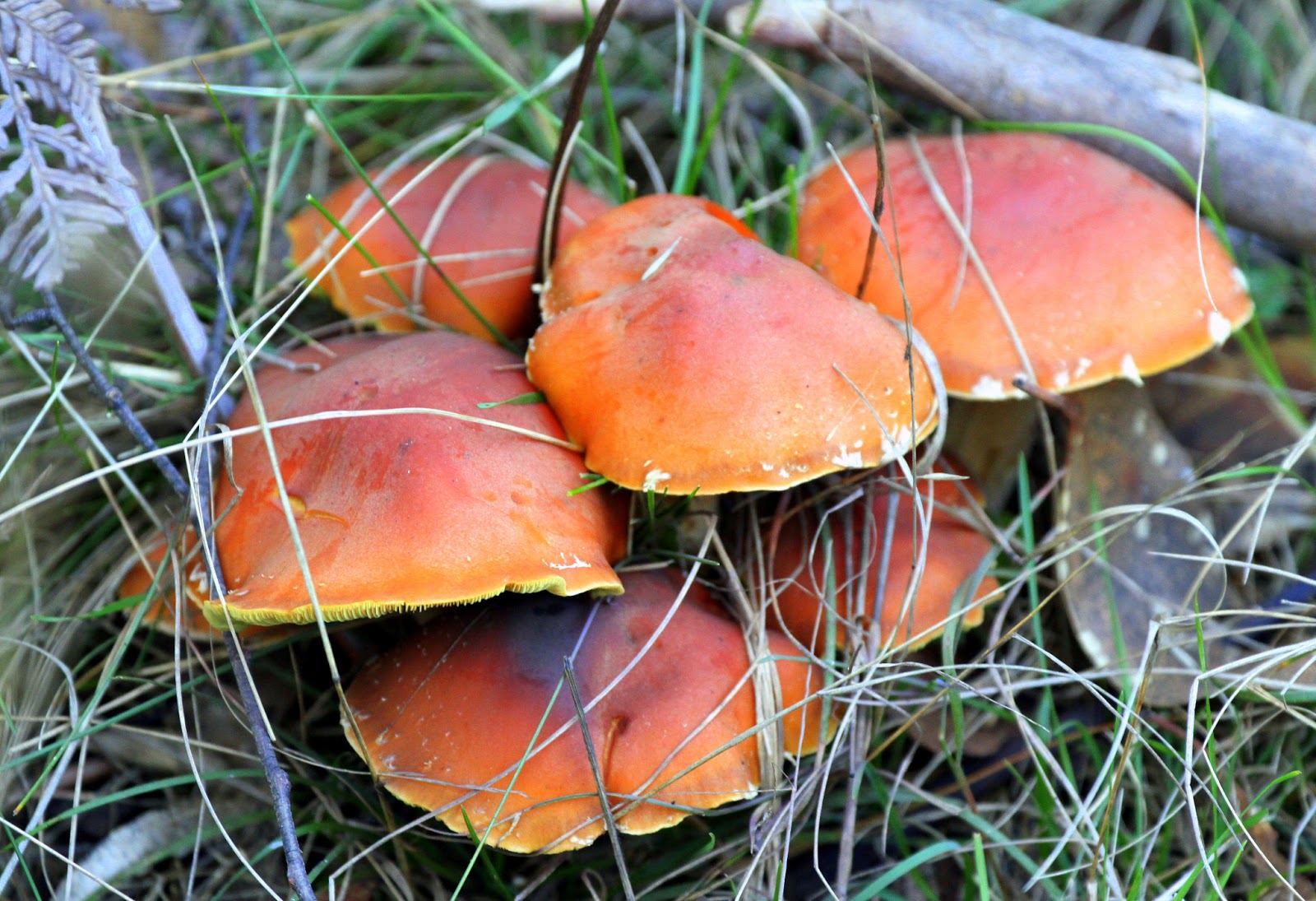 |
| Gymnopilus sp. |
In spring, Golden Everlasting (Brachyscome bracteata) covers the ground at Bartley’s Block. Along with Golden Wattle (Acacia pycnantha), the block turns into a yellow-wonderland. Another yellow-flowering plant is the Woolly Ragwort (Senecio garlandii). An erect perennial, daisy-like flower, growing to ~2 high, it was previously only known from one site in Victoria. Two new sites have been found, one of them in the Box-Ironbark forest in Chiltern. The total population consisted of a single individual! (The best spot to look for Woolly Ragwort is actually The Rock Nature Reserve, about 30 km south of Wagga Wagga.) At some sites, the Chocolate-lily (Arthropodium strictum) can completely blanket the ground, such as around the car park at Yeddonba. The flower is a delightful blue, while the use of chocolate in the names alludes to the scent of the flowers, which resembles chocolate. With their racemose inflorescence ~1 m high (a great term that means the flower stalk continues to produce new flower buds during growth), when the Chocolate-lilies flower, they flower in large clusters and look spectacular. Fringed Heath-myrtle (Micromyrtus ciliatus) is common in certain areas of the park, particularly around Mt. Pilot along the walk to the summit.
As far as I’m aware, the Xanthorrhoea at Chiltern is the Grey Grass-tree (Xanthorrhoea glauca subsp. angustifolia), which has recently been nominated for listing as a threatened species in Victoria. Perhaps surprisingly, they’re uncommon; for example, grass trees are common in the Warby Ranges, a park with a very similar environment. The flowering stems attract large numbers of butterflies, hoverflies, and other insects, which in turn attract birds. I’ve found that the Xanthorrhoea is an excellent nesting plant for various woodland birds, such as the Golden Whistler, so it’s always worth having a look at their dense grassy foliage for nesting activity.
I should point out that the Chiltern is a great place to see fungi. The most dramatic are the Smooth Cage (Ileodictyon gracile), an intriguing basket fungus, the wonderful Earthstar (Triplex Geastrum), and the stunning Blue Stain (Chlorociboria sp.). These are all spectacular to see. On several occasions in Chiltern, I’ve met groups of mycologists (fungi people) scouring the ground for fungal fruit.
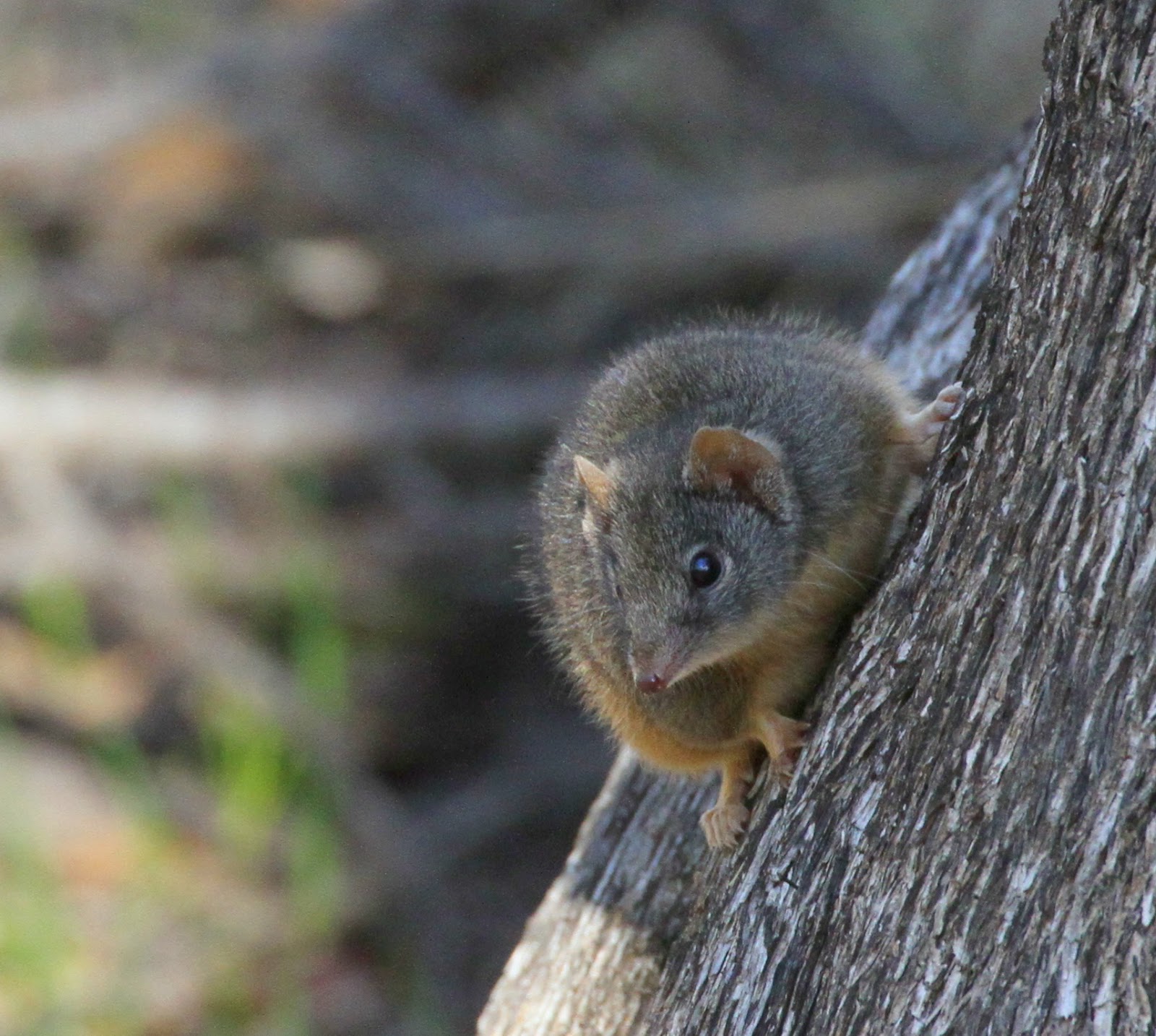 |
| The diurnal and infamous Yellow-footed Antechinus: this one popped in and out of a small tree hollow ~60 feet up a Grey Box, before coming down to feed on the ground. |
Chiltern’s animals
The Box-Ironbark forests around Chiltern are a fantastic place to see a selection of native Australian mammals. Effectively, the mammalian fauna consists of large grazers, medium-sized browsers, small ground insectivores, arboreal species, and bats.
In terms of large grazers, there are two: the Eastern Grey Kangaroo (Macropus giganteus), common, while the Black (Swamp) Wallaby (Wallabia bicolor) is often seen darting off the dirt tracks. There’s usually an animal or two resident along most watercourses and creek lines. The Echidna (Tachyglossus aculeatus) is relatively common, while the Common Wombat (Vombatus ursinus) is surprisingly rare. I’ve not seen them in Chiltern, but I’ve heard that recently a burrow was found, with associated diggings and droppings. I’m not sure what their status is in the Mt. Pilot section, particularly in the far east near Beechworth. They are certainly quite common in Beechworth Historic Park.
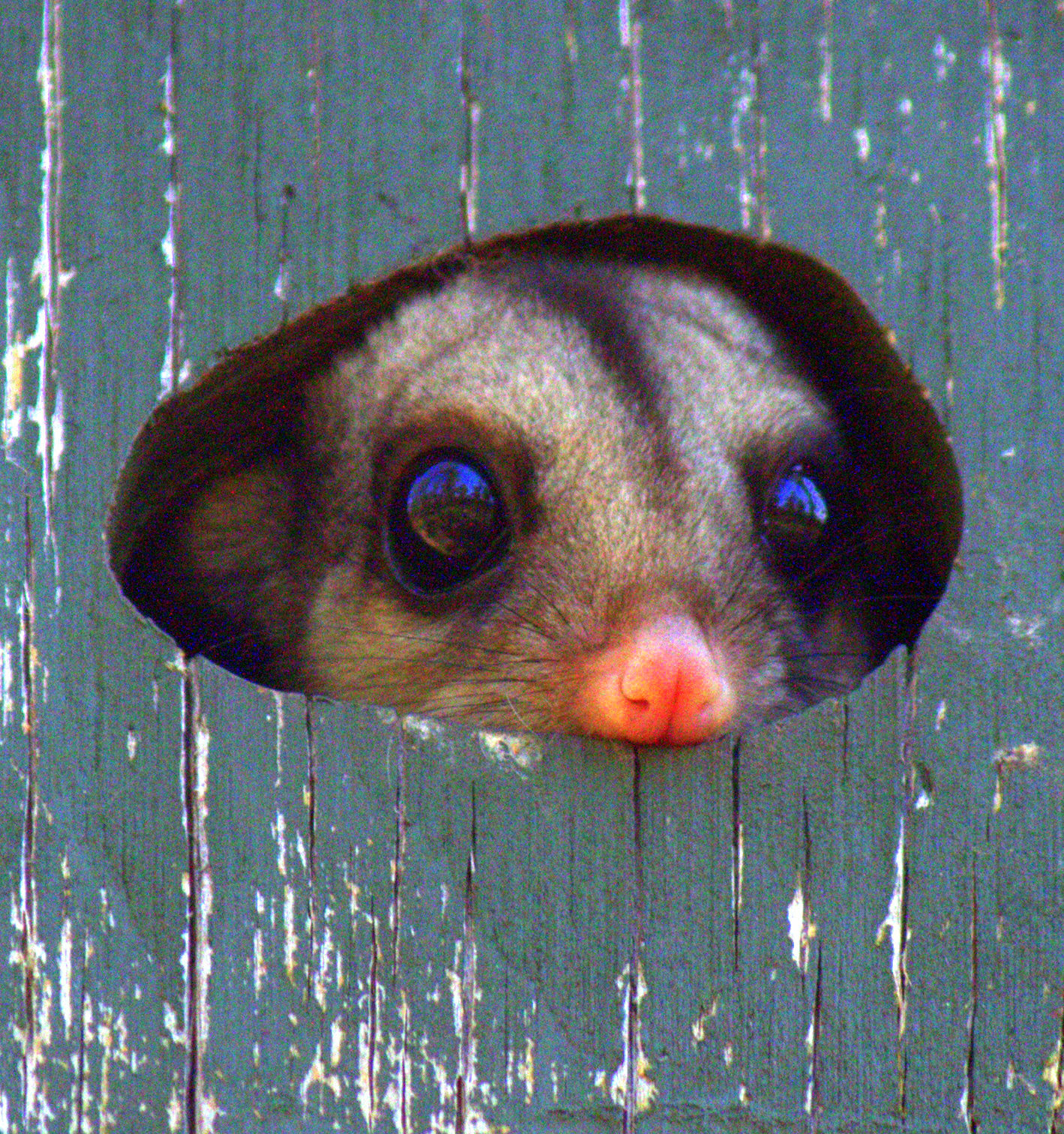 |
| A curious Sugar Glider – known by some as the Short-headed Flying Phalanger. I think I’ll stick with Sugar Glider. |
The main small ground insectivores in the park are the wonderful Yellow-footed Antechinus (Antechinus flavipes). Also known as the Mardo, a local shopkeeper refers to them as the Chiltern Golden Mouse. At times, it can be quite common; recently, I seem to be seeing them at every stop I make. An intriguing animal, it’s comparatively diurnal when compared to other similar species. It’s infamous—for want of a better word—for its sexual behavior, engaging in a mating frenzy that results in the stress-related death of all adult males before they reach one year old! I’ve seen them at a number of locations in Chiltern. Recently, I’ve seen them at Chiltern Valley No. 2 Dam; they made the small diggings just before the bird hide. I’ve also seen them along Ryans Rd., most often on the ground but also feeding high up in the canopy, with an animal darting in and out of a small tree hollow ~30 feet up a Grey Box.
The arboreal, tree-dwelling species are particularly well-represented in Chiltern-Mt Pilot-National Park. Late one night, while spotlighting for owls, in the beam of my cars headlights, a Brush-tailed Phascogale (Phascogale tapoatafa) run, or rather bounced, across the Chiltern-Beechworth Rd. It then leaped into a roadside tree. This Brush-tailed Phascogale is heavily dependent upon the Box-Ironbark ecosystem; aside from Chiltern, I’ve seen them several times at Heathcote-Graytown National Park.
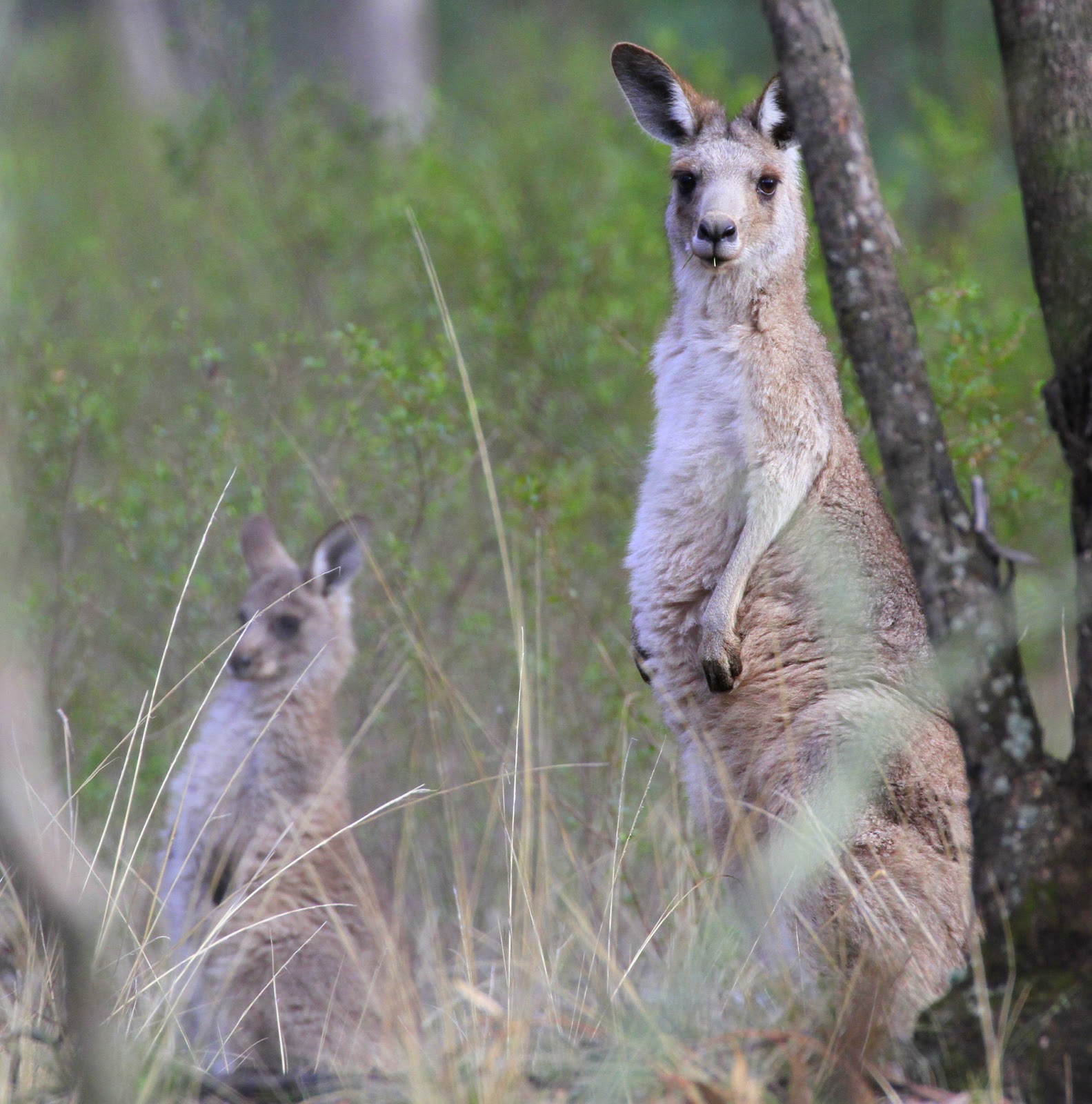 |
| Female Eastern Grey Kangaroo with joey |
Three gliders (Petaurus sp.) are present in the park. The Sugar Glider (Petaurus breviceps) has an alternative name: the Short-headed Flying Phalanger! Not bad. That’s what I will call them from now on. A good spot to look for them is Frog Hollow, leaping between trees. Listen for their barking call just after dusk—a yip, yip, or yap, yap—a bit like the bark of a small dog. Another glider, the Squirrel Glider (Petaurus norfolcensis), is almost twice the size of a Sugar Glider. It’s uncommon and has a preference for roadside trees and watercourses in the southern area of the park. I’m yet to see the Feathertail Glider at Chiltern; it’s the smallest of the local gliders, occasionally observed along the river line and Box-Ironbark forests feeding amongst the heavily blossoming eucalypts. All the gliders are highly social and very territorial, so where there’s one, there’s sure to be others. The gliders, along with the Brush-tailed Phascogale and the bats, seem to be benefiting from the erection of mammal boxes. Common Brushtail Possum (Trichosurus vulpecula) and Common Ringtail Possum (Pseudocheirus peregrinus) are both reasonably common, preferring areas with large hollow-bearing trees, and can be seen around Chiltern’s town parks. A good spot to look for Koala (Phascolarctos cinereus) is around the Honeyeater Picnic Area.
Bat species feature predominantly in Chiltern. The extensive list includes Southern Freetail Bat (Mormopterus planiceps); there used to be a large colony inside the historical Chiltern Jail; White-striped Freetail Bat (Tadarida australis); Gould’s (Chalinolobus gouldii); Chocolate Wattle Bat (C. morio); Gould’s (Nyctophilus gouldi); Lesser Long-eared Bat (N. geoffroyi); Inland Broad-nosed Bat (Scotorepens balstoni); Large (Vespadelus darlingtoni); Southern (V. regulus); and Little Forest (V. vulturnus) Bat. All are vulnerable to the loss of roost sites in tree hollows and, of course, the loss of habitat.
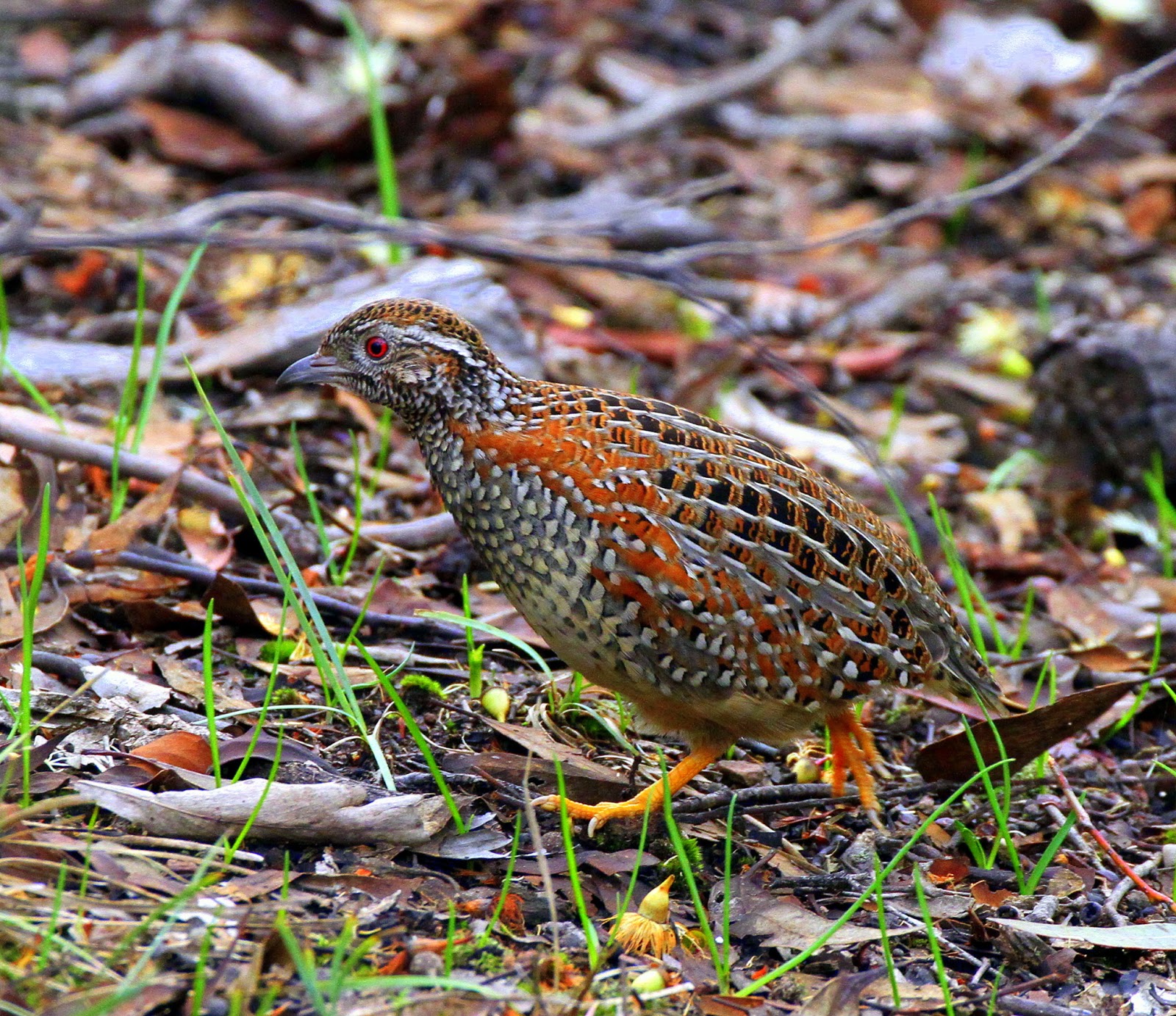 |
| The perfectly named Painted Button-quail – blending into its environment. |
Other native mammals recorded in the national park include the Water Rat (Hydromys chrysogaster) and Platypus (Ornithorhynchus anatinus), both predominately from the Mt. Pilot section. Every now and again, there’s an unconfirmed report of the Spot-tailed (Tiger) Quoll (Dasyurus maculatus). It’s mainland Australia’s largest marsupial carnivore, with the last confirmed sighting in the mid-1970s. Unfortunately, a couple of introduced animals seem to be increasing: Sambar Deer (Cervus unicolor) and Hare (Lepus europaeus). A couple of weeks ago, I flushed a Hare from its hide in the very center of the national park.
The birds in the park
Over 220 bird species have been recorded, with a full list available on the Friends of Chiltern-Mt. Pilot National Park website. That makes Chiltern the second-best birding site in Victoria, about 40 behind the Western Treatment Plant and a few ahead of Hattah-Kulkyne, Croajingolong, Greater Bendigo, Warby-Ovens, Terrick Terrick and the Little Desert. In effect, aside from some silly treatment plant, it is the best birding site in the state! By way of comparison to other birding sites in Australia, Chiltern-Mt Pilot NP reminds me of the Capertee Valley and Munghorn Gap Nature Reserve in NSW, Sundown and Girraween NPs in Queensland, and, perhaps, Dryandra Reserve (for various reasons) in Western Australia.
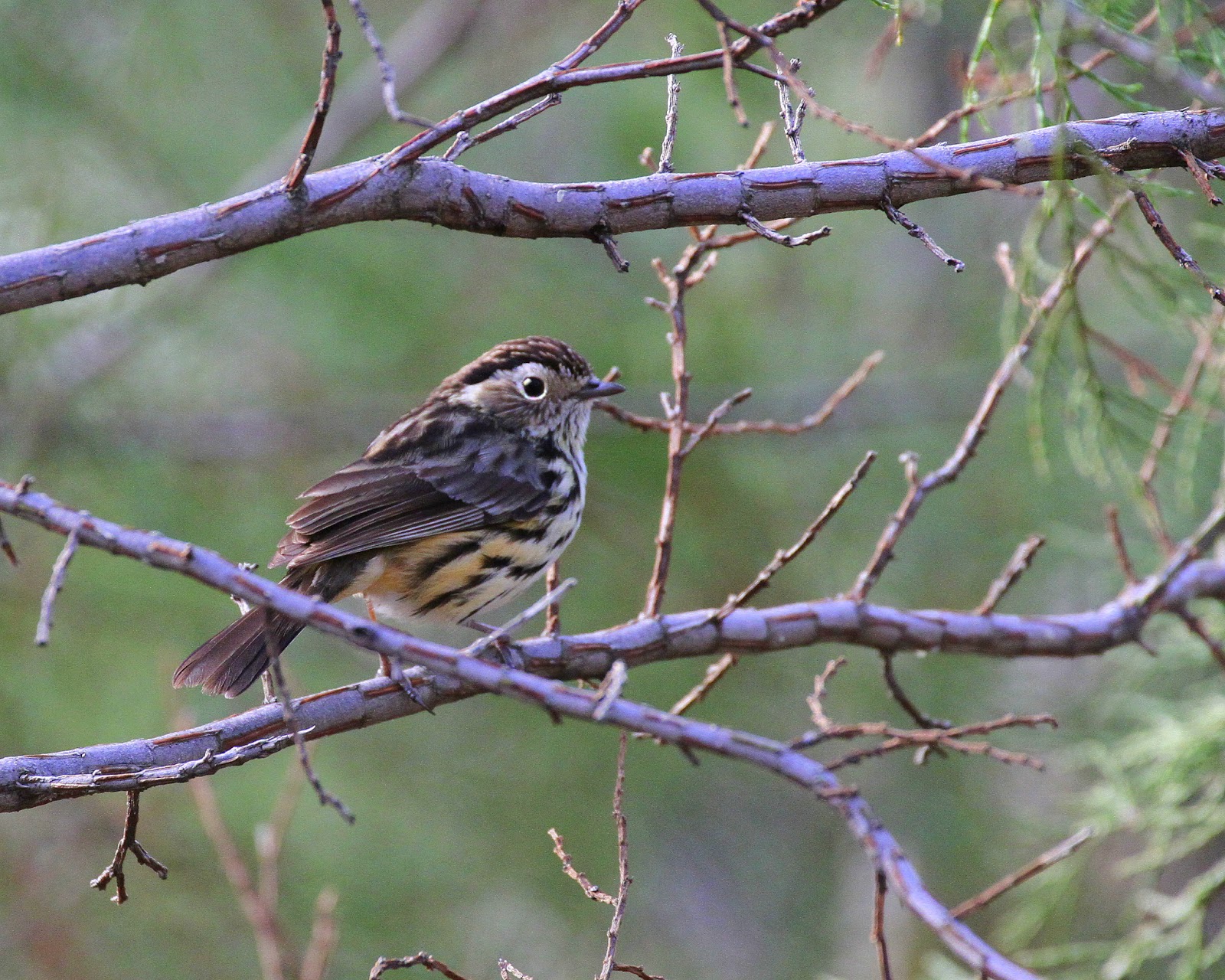 |
| Speckled Warbler looking very muck like a warbler in an English woodland. |
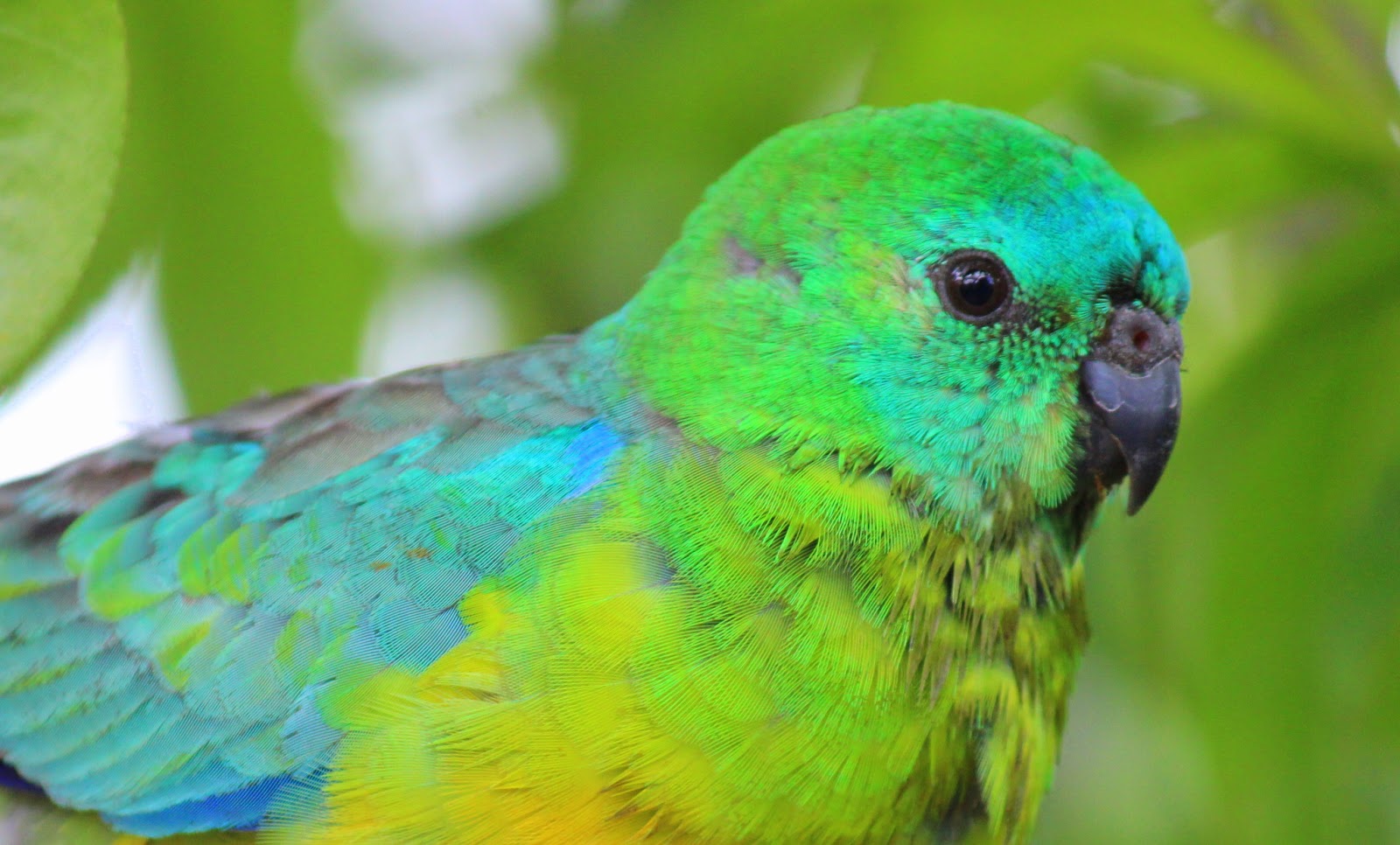
Visiting birders target species such as Regent, Painted and Black-chinned Honeyeater, Swift and Turquoise Parrot, Square-tailed Kite, Painted Button-quail, White-bellied Cuckoo-shrike, Grey-crowned Babbler, Speckled Warbler, White-browed and White-breasted Woodswallow, Chestnut-rumped Heathwren, Western and White-throated Gerygone, White-bellied Cuckoo-shrike, Diamond Firetail, and night birds such as Barking Owl and White-throated Nightjar. In the Mt. Pilot section, highlights include the Australian King-parrot, Satin Bowerbird (winter), Spotted Quail-thrush, and Leaden Flycatcher.
The more common species in Chiltern include Yellow-tufted, Fuscous, White-naped, White-plumed and Brown-headed Honeyeaters as well as Eastern Spinebill, Red Wattlebird, Noisy, and Little Friarbird. Other common birds include Eastern Rosella, Little Lorikeet, Red-rumped Parrot, Common Bronzewing, Laughing Kookaburra, Brown Tree-creeper, Jacky Winter, Scarlet, Eastern Yellow and Red-capped Robin, Golden and Rufous Whistler, Grey Shrike-thrush, Black-faced Cuckoo-shrike, Restless Flycatcher, Dusky Woodswallow, White-browed Babbler, Grey Fantail, Willie Wagtail, Silvereye, Mistletoebird, plus a few others.
Some of the uncommon, rare, and vagrant species recorded include Freckled Duck, Brolga, Black-tailed Native-hen, Bush Stone-curlew, Latham’s Snipe, Australian Painted-Snipe, Black-eared Cuckoo, Red-backed Kingfisher, Black Falcon, Cockatiel, Southern Whiteface, Masked Woodswallow, Rose Robin, White-backed Swallow, Crescent Honeyeater, Cicadabird, Double-barred Finch, and, more recently, honeyeaters such as Black, Scarlet, and White-fronted Honeyeater. Hooded Robin is becoming increasingly rare in the forest, and Crested Bellbird, last recorded in 1991, is considered locally extinct.
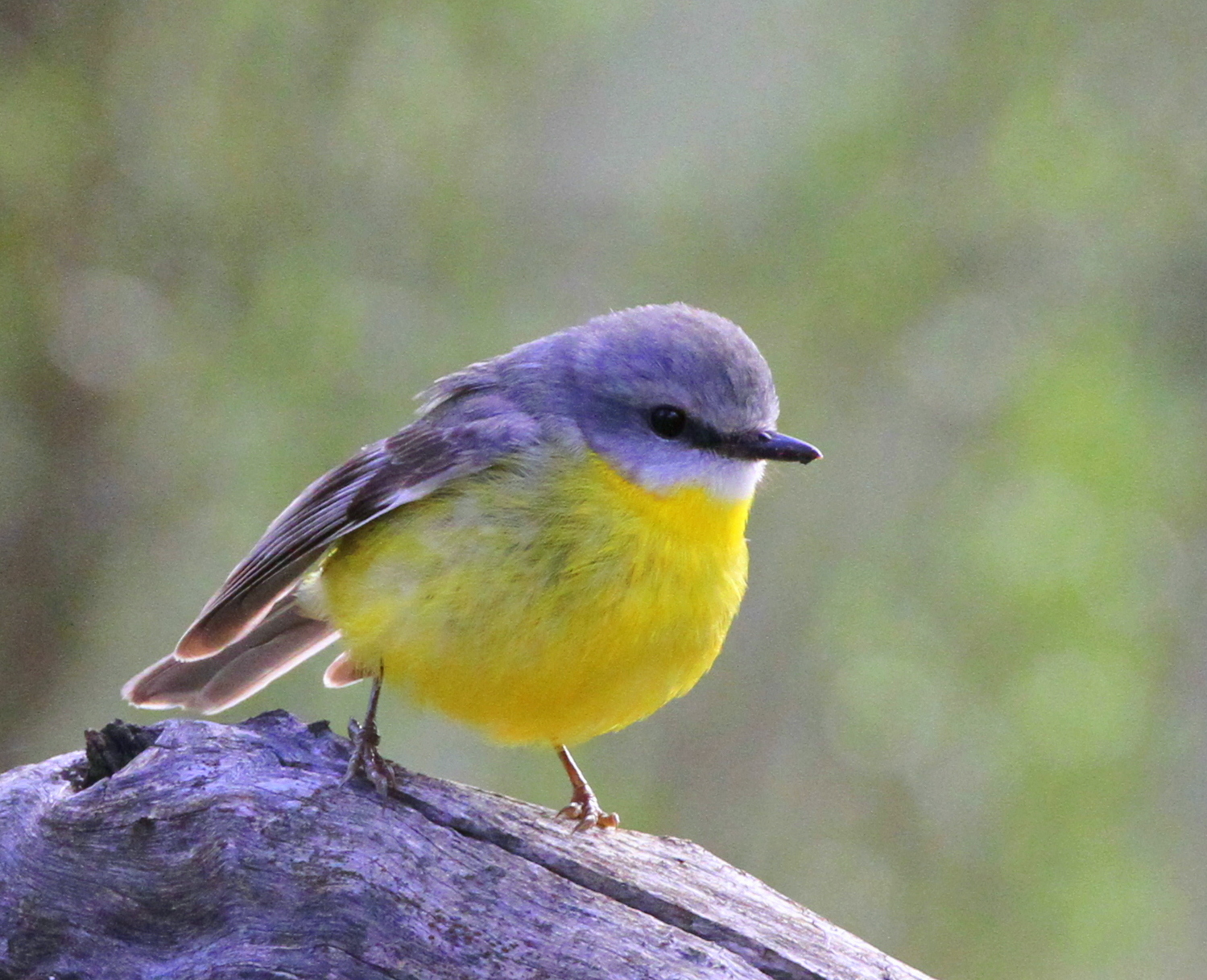 |
| Eastern Yellow Robin, wearing its fashionable winter coat |
Bartley’s Block
Bartley’s Block is an old bush paddock bordered by Box-Ironbark, and is probably the most visited birdwatching spot in the park. As with most birding habitats, fringe habitats provide some of the best birding, and this is certainly the case with Bartley’s Block. It’s located ~3 km from Chiltern, on the left/west side of Howlong-Chiltern Rd. The best access is via a small pull-in car park on the north side of the block; blink and you’ll miss it.
I’ve found the best technique for birding Bartley’s is to simply walk around the block’s boundary, a total distance of about a kilometer. This will usually produce a wide diversity of woodland, such as Little Lorikeet, Jacky Winter, Mistletoebird, Red-browed Finch, Rufous and Golden Whistler, Restless Flycatcher, robin’s such as Scarlet, Red-capped, Flame (winter), and occasionally Rose Robin. In spring and summer, you can add the following to the list: Sacred Kingfisher, Peaceful Dove,Western Gerygone, White-winged Triller, Rufous Songlark, Fan-tailed Cuckoo, Horsfield’s Bronze-Cuckoo, and Olive-backed Oriole. It’s worth keeping an eye open for raptors to look for Brown Goshawk and Collared Sparrowhawk.
Bartley’s Block (and Chiltern) must be one of the best places in Australia to see honeyeaters, rivaling most sites in Australia. An amazing 18 species have been recorded here, including Eastern Spinebill, Red and Little Wattlebird, Little and Noisy Friarbird, Noisy Miner, and Black-chinned, Yellow-faced Honeyeater, Brown-headed, White-naped, White-eared Honeyeater, Regent, Yellow-tufted, Fuscous, White-plumed, Black, Scarlet, and Painted Honeyeater. Not a bad list! Painted Honeyeater is one of the most sought-after, usually found from spring to autumn. They particularly like the flowering Box Mistletoe in the larger Mugga Ironbark on the north-west side of the block. In April of this year, there were five birds feeding on the same tree!
Speckled Warbler occur along the south-east side of the block, near the two small dams, and in the area of scattered Golden Wattle at the top of the block. The area around the wattle is also excellent for smaller passerines such as Yellow, Yellow-rumped, Red-browed Finch, Western Gerygone and robin’s such as Scarlet, Red-capped, and occasionally Rose.
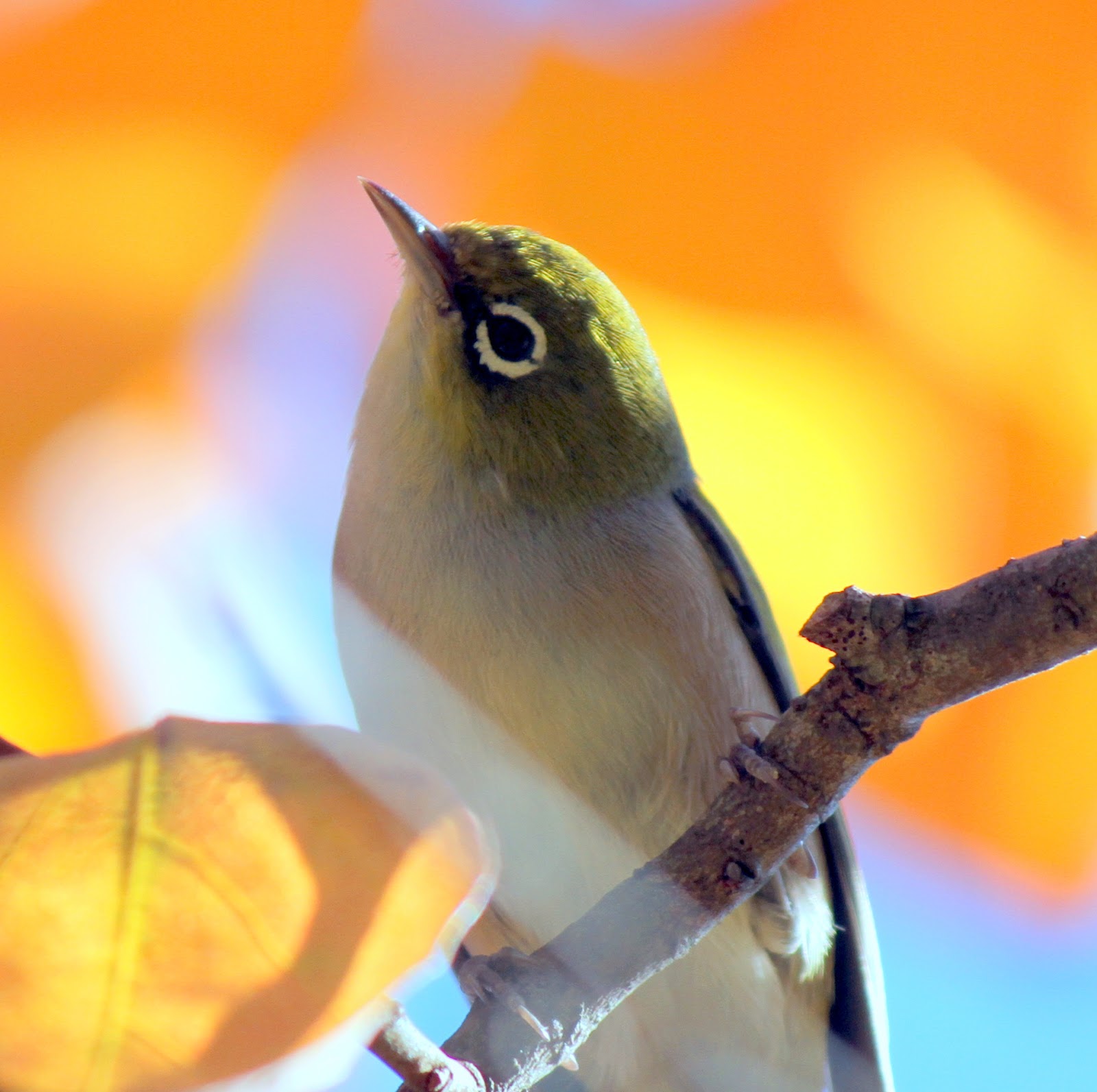 |
| Silvereye feeding in the old Persimmon Tree at Bartley’s Block |
On the north-east side of the paddock, you’ll find the old Bartley Brewery. Operational from 1861–1913, it’s important to the history of Chiltern. It’s also a good area to look for Turquoise Parrot and Western Gerygone (in summer, listen for them calling the larger gums near the car park). Remnant exotic trees around the old brewery site include a couple of very old Japanese Persimmon (Diospyros kaki). In autumn, their leaves turn a spectacular orange color, and in late April, the trees fruit ripen, attracting a dozen birds, such as the Golden Whistler, Mistletoebird, Eastern Spinebill, Brown-headed and White-naped Honeyeater, and Pied Currawong, to name a few, all gorging themselves. There is nothing better than just sitting under these trees and watching the continual procession of feeding birds.
Honeyeater Picnic Area and Cyanide Dam
Along with Bartley’s Block, the Honeyeater Picnic Area at Cyanide Dam is probably Chiltern’s best-known birding site. Until recently, it was the best place to see Regent Honeyeater, and it still has potential; for example, in spring 2012, a pair of Regent Honeyeater bred near the junction of All Nations Road and Cyanide Road. I’ve found the best birding area is on the south-east side of the dam, which is particularly good an hour or so after dawn. Birds seen here and around the dam generally include Turquoise Parrot, Painted Button-quail, Black-chinned, Yellow-tufted, and Fuscous Honeyeater, Little Lorikeet, Scarlet Robin, Restless Flycatcher, Mistletoebird, and, in summer, Sacred Kingfisher, Peaceful Dove, Olive-backed Oriole, and White-bellied Cuckoo-shrike (most often seen walking north along Cyanide Rd). The dam is particularly good for Brown Treecreeper and Eastern Yellow Robin, both species surprisingly tame, while on the dam itself is usually a pair of Australasian Grebe. The dam is also a summer hawking site for White-throated Nightjars.
White Box Walking Track
The White Box Walking Track starts just north of the Honeyeater Picnic Area. It’s total length is just over 8 km, so it takes a good couple of hours to complete. I usually just do a small loop at the start of the walk: walk up the hill to the top of the first major ridge, then turn east and walk down the forest slopes back to Cyanide Rd. When the White Box is flowering, the east-facing downward slope can be excellent for both Swift and Turquoise Parrots, and several pairs of Painted Button-quail are are usually in this area, particularly in the small valleys at the bottom of the ridge. It’s also a good spot to see Yellow-footed Antechinus and Lace Monitor (particularly in the in the summer, when they’re more active). Other birds to look for include the Scarlet and Red-capped Robin, Western and White-throated Gerygone (summer), Crested Shrike-tit, Varied Sittella, and White-throated Treecreeper.
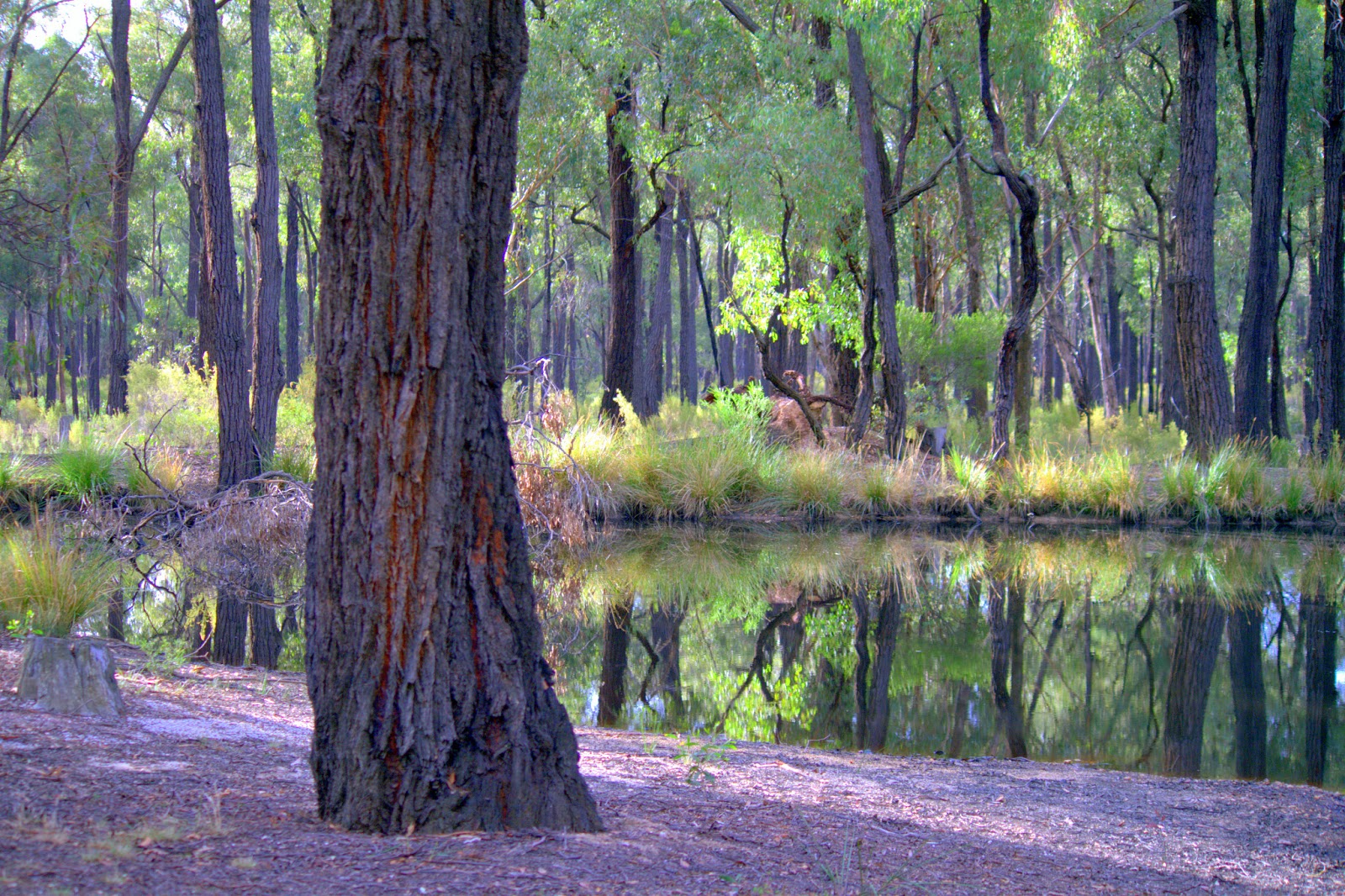 |
| Green Hill Dam. When the Box-Ironbark is flowering, the dawn chorus can be almost deafening |
Green Hill Dam
A small wildlife dam n Green Hill Rd, between Magenta Rd and the Pipeline Track, it’s located on the northern edge of the forest. Over the last couple of years Green Hill Dam has become perhaps the most reliable place to see Regent Honeyeater. It’s a classic Box-Ironbark dam, surrounded by bush. Sometimes the sounds of birds can be almost deafening – especially mornings and and evenings – with some of Australia’s most vocal honeyeaters such as Noisy Friarbird, Red Wattlebird, Yellow-tufted and Fuscous Honeyeater all calling continually. In terms of birding, it’s a good spot just to sit down to have lunch or a cup of tea. Be patient, sit, wait and listen for the birds to come to you.
Somewhat similar to Green Hill Dam, the Lappins Dam (-36.131064,146.567389) another good wildlife dam, where Regent Honeyeater have been seen.
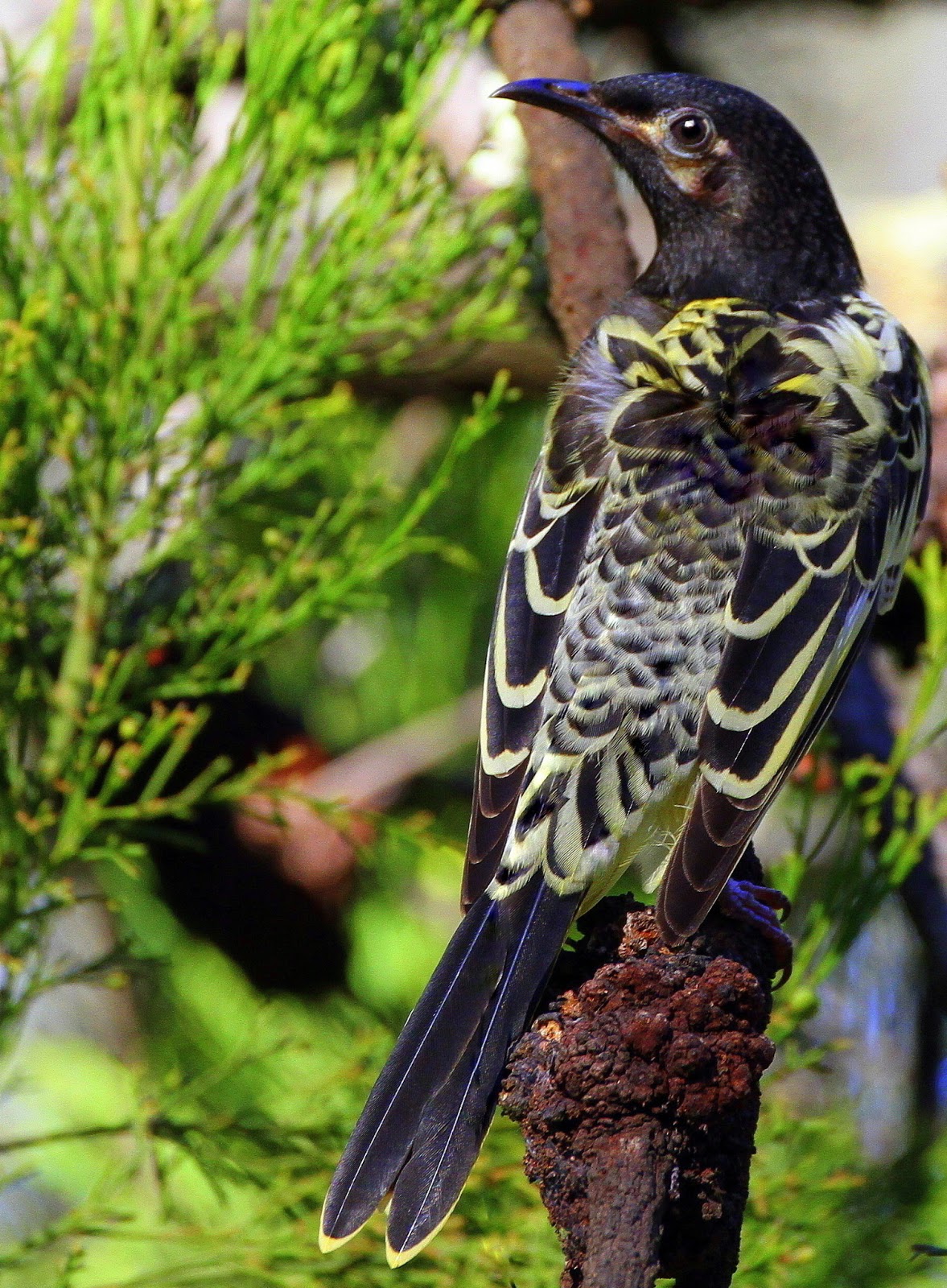 |
| The colours of the royal regent, the Regent Honeyeater. |
Magenta Mine
A historical mine and an adjacent dam, the Mugga Ironbark around the car park is excellent for honeyeaters such as Black-chinned, Fuscous, Yellow-tufted and Noisy Friarbird. I’ve also seen Swift Parrot here. For this reason, it was chosen as the release site by the Regent Honeyeater recovery team. The birds were reared at Taronga Zoo with the hope that they’d provide a boost to the wild Regent Honeyeater population. Of the forty or so released birds, about half were fitted with radio transmitters. The monitoring program seems to have been a great success, with most birds getting through the cold nights and some having put on weight since being released.
Recently, I was surprised to hear a Scarlet Honeyeater calling near the mine. Tracking it down, it was a stunning scarlet-colored male. Apparently, in the last couple of years, a couple of birds have been resident at Chiltern. Seeing it intrigued me, raising a number of questions. What was it doing here? In winter! Calling in winter! They’re normally a summer migrant to Victoria’s east coast, inhabiting coastal temperate forests. Have these birds accidentally headed up the west side of the Great Dividing Range rather than the east (their normal migratory pathway)? Perhaps these are the birds seen in Melbourne in the summer of 2009/10. Upon reaching Chiltern, they reached a habitat dead end, unable to move north. Conversely, they stuck around because the eucalypts around Chiltern flower with regularity, enabling them to hang on, albeit in very small numbers.
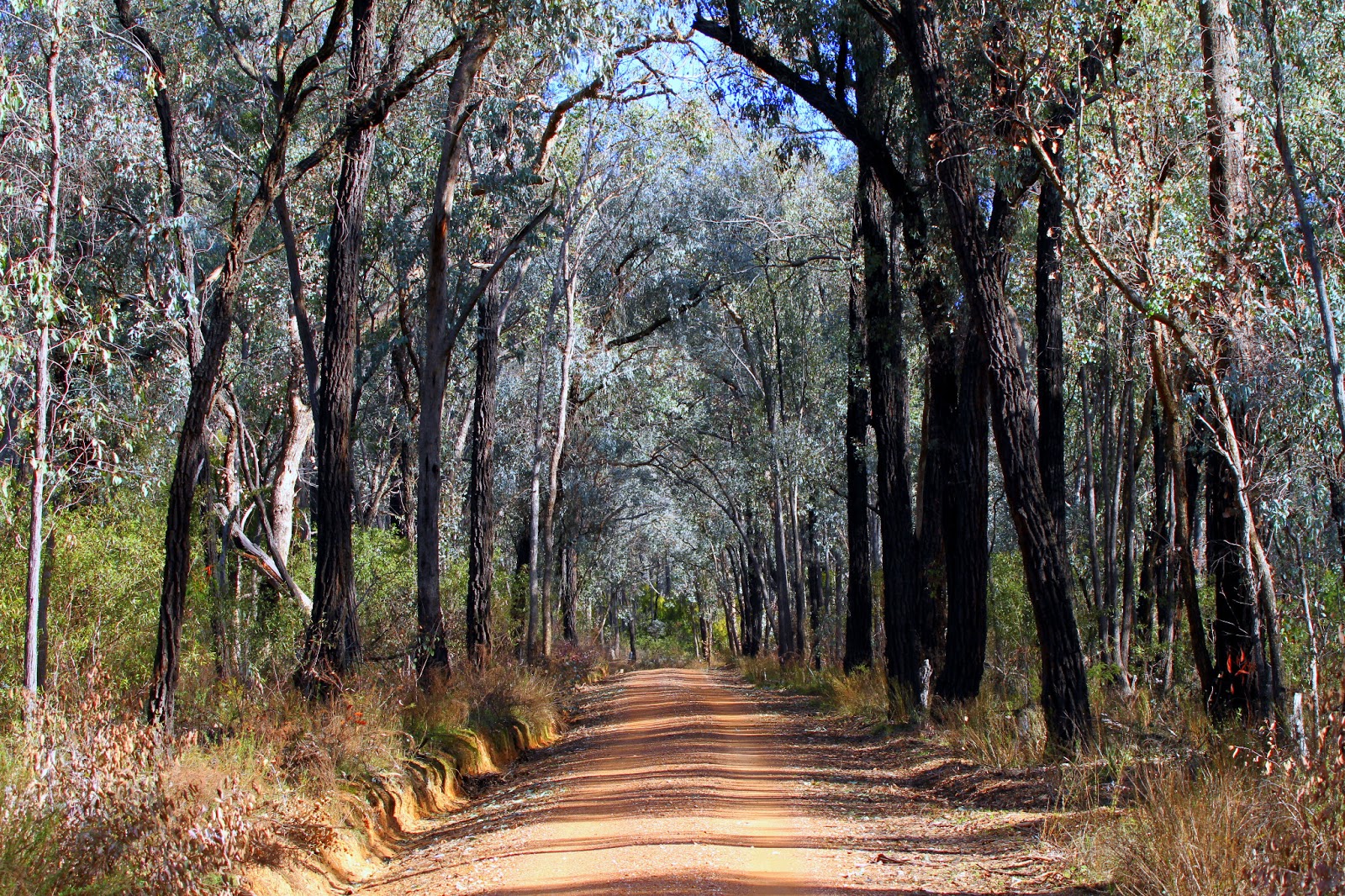 |
| Typical roadside. A track bordered by Box-Ironbark |
Frog’s Hollow
Frog’s Hollow (or Frog Hollow) is a pleasant small wetland and old dam that used to be the site of an early gold crusher. Located on the Barnawartha Road, ~3 km from Chiltern, it’s surrounded by River Red Gum. Like some of the other dam sites in Chiltern, the bird life here can be prolific and, at times, almost deafening. It’s a good site to add Australian Reed-Warbler and Little Grassbird to your Chiltern list, and one of the best sites for White-bellied Cuckoo-shrike, occasionally seen in the trees above the picnic ground.
Klotz Track
This is a classic Box-Ironbark forest track that’s located on the north-east side of the park, accessed via Green Hill Rd., just past the Green Hill Dam. When the trees are flowering, it can be a great place for forest specialists. I usually stop here to look for Regent Honeyeater, looking anywhere flowers appear on the ground. Once I walked along Klotz Track for several hours looking for Regents, seeing Painted Button-quail and Swift and Turquoise Parrot, but no Regents. Upon returning, a Regent Honeyeater was feeding in the tree directly above the car!
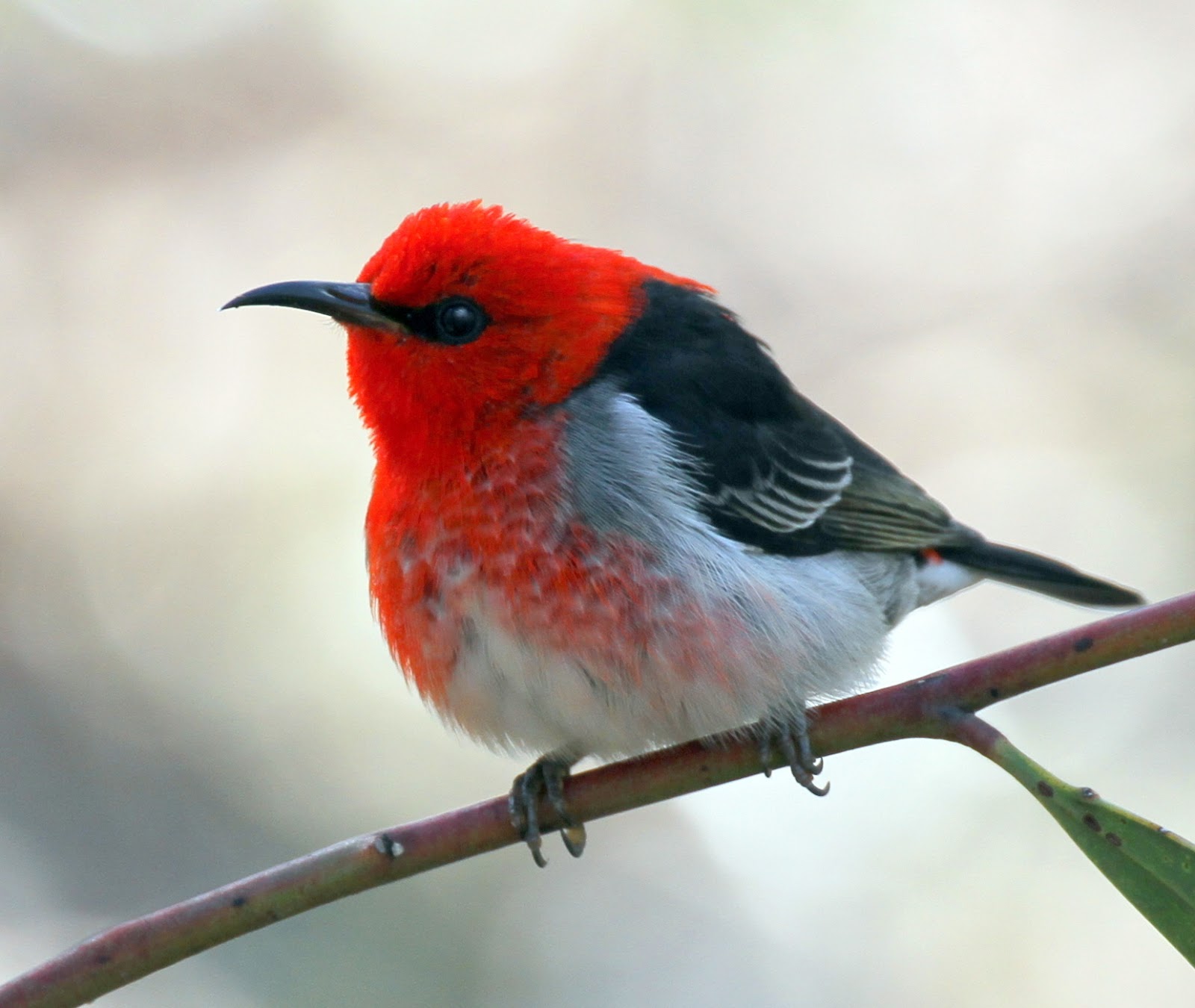 |
| An odd bird to see in Chiltern. A Scarlet Honeyeater at the Magenta Dam |
Ryans Road and the Barnawatha Treatment Plant
Ryans Rd. has proved to be a real gem in the park. It runs along the northern edge through excellent Box-ironbark forest. Some of the honeyeaters recently recorded along Ryans Rd. include Fuscous, Yellow-tufted, Black-chinned, White-naped, White-plumed, Brown-headed, Scarlet, Black, Regent and White-fronted (2nd record for Chiltern). Of course, White-fronted and Black Honeyeaters are normally semi-arid woodland birds, so, again, like the Scarlet, what are they doing here? It was only recently that birders were speculating where in Australia you might see both Black and Scarlet Honeyeaters together. Well, that place is now Chiltern!
Recently, I’ve spent quite a bit of time walking the hillsides adjacent to Ryans Rd. Almost without exception, each time I have, I’ve seen Painted Button-quail and Yellow-footed Antechinus (two highlights for the park), as well as Little Lorikeet, Common Bronzewing, Brown Goshawk, Restless Flycatcher, Scarlet and Eastern Yellow Robin, Jacky Winter, Golden Whistler, Spotted Pardalote, Dusky, and, occasionally, White-browed Woodswallow, Varied Sittella, and Crested Shrike-tit. It’s worth scanning the treatment plant at Ryans Rd. for waterfowl, such as Grey and Chestnut Teal, Pacific Black Duck, Hardhead, and at the moment Flame Robin (a winter visitor) are feeding on the grounds of the plant.
Pipeline Track
Requiring high clearance in places, the Pipeline Track is a 4×4 track (X-Trail and Forester would be OK). The track crosses a number of steep ridge lines, with the highest immediately north of the Magenta Mine. The top of the ridge is a roosting area for Dusky, White-browed and, less commonly, Masked Woodswallow, particularly in the summer and autumn.
Fishers Road
The roadside trees along Fishers Rd. are a local site for Grey-crowned Babbler. Located on the north side of the park, the road is a significant roadside area, providing high-value vegetation remnants important for habitat linkages and connectivity. The Babbler’s are most often seen about halfway between Chiltern-Howlong Rd. and the old Howlong Rd., with the best way to find them being to look for the distinctive collection of large domes and stick nests; most are alternative nests/roosting platforms. The birds are usually nearby. Other birds I’ve seen along Fishers Rd. include the Dollarbird, many Eastern Rosella, some Crimson Rosella, including the occasional yellow ssp flaveolus, and several Yellow-footed Antechinus.
Chiltern Valley No 1, No 2 Dams, and Wenkes Rd wetland
The Chiltern Valley No 1 Dam, a large old mining dam, is an excellent bird watching area. It’s accessed just before the corner of Wenkes Rd and Chiltern Valley Rd, ~3 km from Chiltern. Some of the waterfowl and waterbirds recorded here include Australian Shoveler and Musk, Pink-eared and, occasionally, Freckled Duck, Australasian, Hoary-headed and Great Crested (rare) Grebe, Latham’s Snipe (uncommon summer), Australasian Darter, White-necked Heron, Great Egret, Nankeen Night Heron, Great and Little Black Cormorant, Yellow-billed Spoonbill, Red-kneed and Black-fronted Dotterel and Black-winged Stilt. Whistling Kite hunt over the dam, and look for other raptors such as Peregrine and Brown Falcon, Australian Hobby, Little, Wedge-tailed and, occasionally, White-bellied Sea-Eagle. It’s a particularly good spot to see White-breasted Woodswallow. In the River Red Gum bordering the dam, more common birds such Little Friarbird, Restless Flycatcher, and Crested Shrike-tit, foraging for insect on the loose bark. Pied Butcherbird, uncommon here, lives along the roadside in this area. Some of the other birds recorded here include Latham’s Snipe, Black-tailed Native-hen, Intermediate Egret, Budgerigar, Tree and Fairy Martin, Dollarbird, Rainbow Bee-eater and Masked Woodswallow.
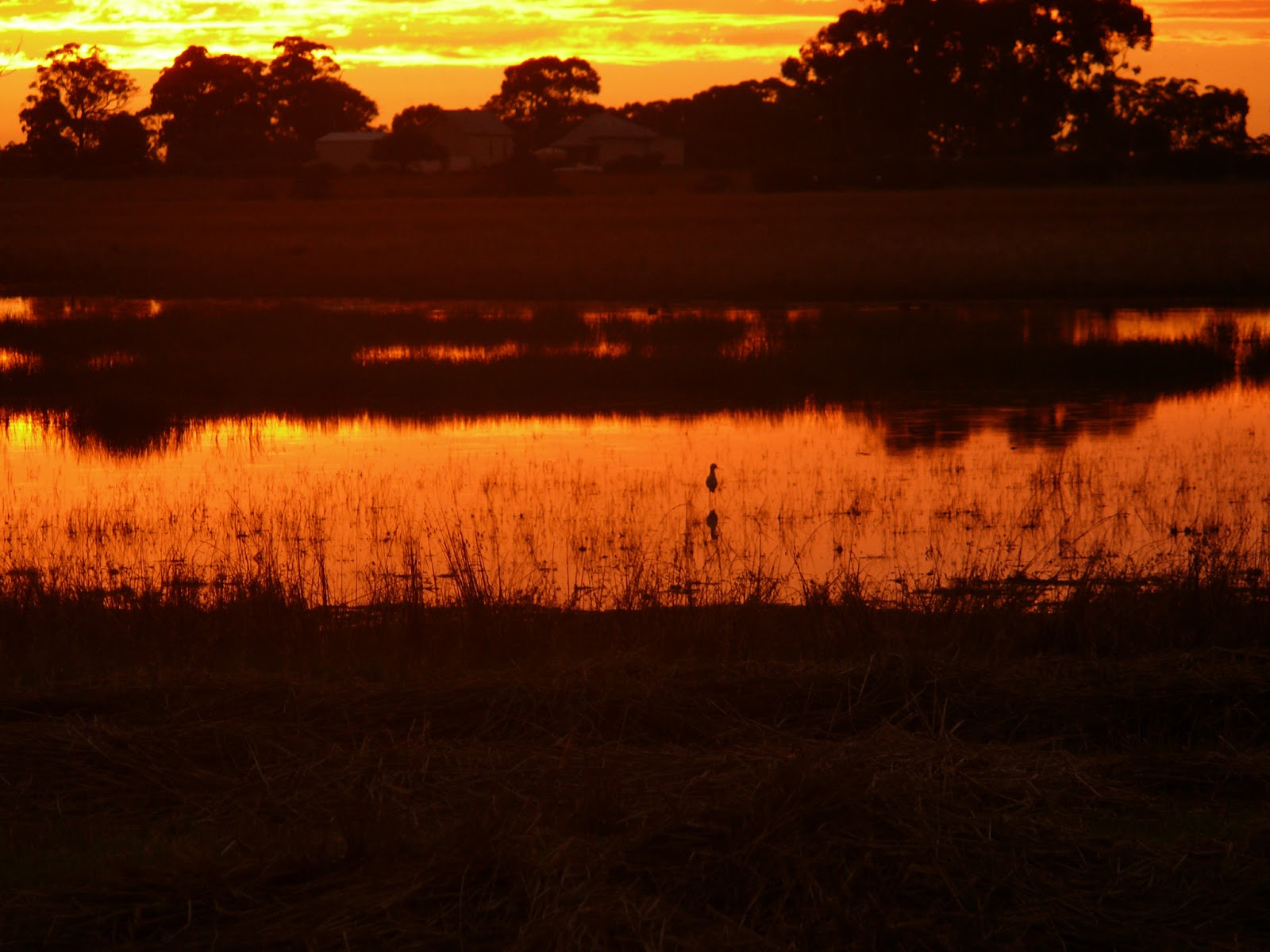 |
| Black-winged Stilt in Chiltern’s evening light. |
I should have mentioned that just before you get to the turn-off to the No. 1 Dam, it’s worth scanning the small wetland along Wenkes Rd. These are well-known for attracting skulking crakes and rails; Buff-banded Rail, Baillon’s, Australian Spotted and Spotless Crake, Black-tailed Native-hen, and, more commonly, Purple Swamphen, Dusky Moorhen, and Eurasian Coot have all been recorded. The best time to see them is during the warmer months, when their food source, the invertebrates, are more active.
Chiltern Valley No. 2 Dam is the largest wetland in the area. Another old mine dam; it’s an excellent birding wetland, and there’s a nice bird hide to boot. Many of the species recorded at Dam 1 have also been recorded here. The list includes Brolga, Latham’s Snipe, Intermediate Egret, Australasian Darter, Royal Spoonbill, Black-tailed Native-hen, Red-kneed Dotterel,White-breasted Woodswallow, Dollarbird, White-backed Swallow, Little Friarbird, Blue-faced Honeyeayer, Rainbow Bee-eater, Diamond Firetail, and Double-barred Finch, the last seen recently by Michael Ramsey along Chiltern Valley Rd near the gate. Red-bellied Black Snake can be quite common, particularly in the Tall Sedge (Carex appressa) around the lake, so tread carefully in the grassy stuff. One thing this snake is hunting for is Yellow-footed Antechinus. Quite common in the surrounding woodland, the diggings on the path just before the bird hide are theirs. It was nice to see that there’s a new metal bird hide at Dam 2. Be careful, though, when closing the hide door; it makes a lot of noise.
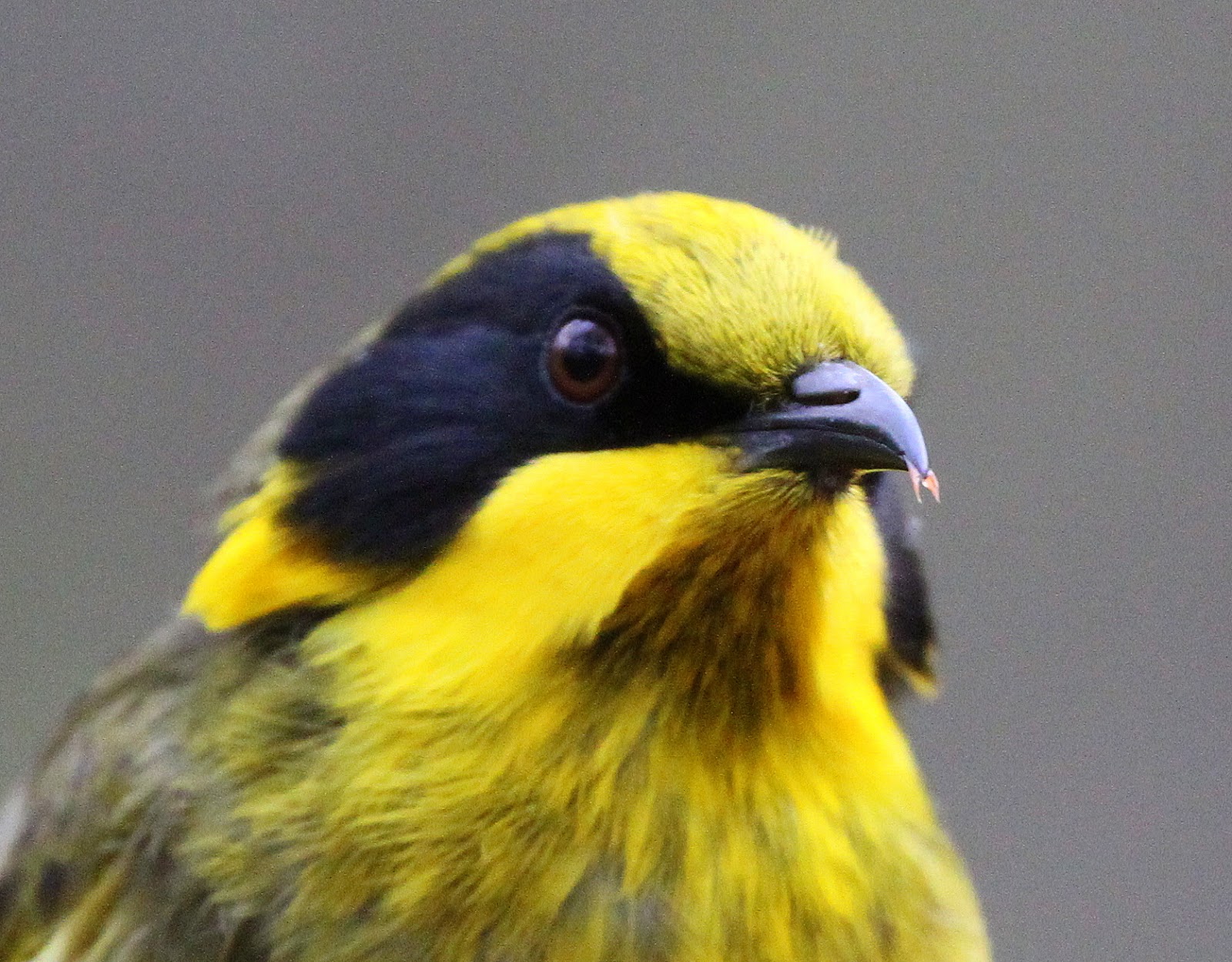 |
| The ever-present Yellow-tufted Honeyeater |
L
Lake Anderson and Lake Anderson Caravan Park
In terms of ‘birding’ accommodation, the cabins at Lake Anderson Caravan Park are excellent. Lake Anderson is also the best place in the area to see Blue-faced Honeyeater and Little Friarbird. Other birds around the lake include Straw-necked and Sacred Ibis, Eastern and Crimson Rosella (occasionally yellow ssp. flaveolus), Rufous Whistler, Yellow-rumped and Yellow Thornbill, and look for Eurasian Tree Sparrow. Around the lake, you can usually see Hardhead, Australian Wood Duck, Pacific Black Duck, Grey Teal, Mallard, Black-fronted Dotterel, White-necked and White-faced Heron, and in summer, Australian Reed-Warbler and Little Grassbird. The island is also a roost site for Great, Little Pied, and Little Black Cormorant, and sometimes Nankeen Night Heron.
Chiltern Golf Course
In the summer, it’s worth walking along Howlong Rd. on the edge of the golf course. In the summer, I’ve found it to be a particularly good spot for seeing White-throated Gerygone. I reckon the golf course is under-birdwatched. For instance, I can find no bird lists for the golf course, probably because birders just don’t play golf (fair enough), which is a shame. Golf courses are generally excellent bird habitats. I wonder how often Regent Honeyeater and Swift Parrot have used the trees along the fairways and beside the greens to feed. In Melbourne, for instance, the Royal Park Golf Course is one of southern Victoria’s most reliable sites for seeing Swift Parrots.
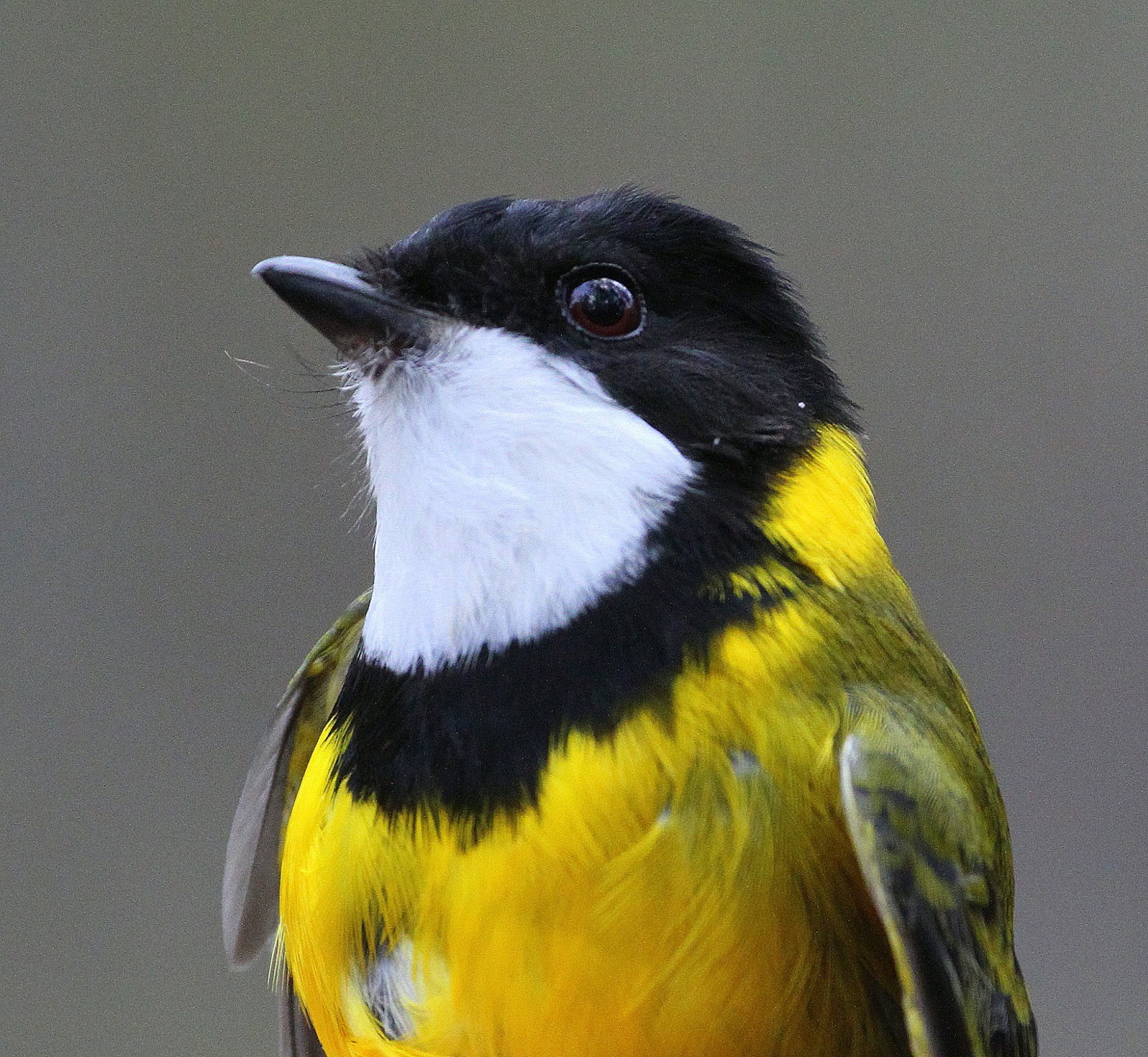 |
| Golden Whistler. Yellow and black are a common colour theme for the birds at Chiltern. |
Mt. Pilot section and the summit
Mt. Pilot is in the south-east section of the park. Part of the Barambogie-Mt. Pilot Ranges (or the Barambogies), it differs from the northern section because it’s largely granite country. The difference in geology produces different habitat types than those in the Chiltern section, and therefore some different species of birds. The Mugga Ironbark is absent, and the granite hills have extensive areas of native Black Cypress-pine.
If you are spending several days in Chiltern or Beechworth, the 300-meter walk up to the open, rocky granite summit of Mt. Pilot is a must. It provides spectacular 360-degree views and gives you a real feel for the area. Scan updrafts above the forests and countryside for raptors such as Wedge-tailed and Little Eagle, and Peregrine Falcon and there is a chance of Square-tailed Kite cruising about the canopy between spring and autumn. In spring, the walk up to the summit is covered in wildflowers. Your best chance of seeing a Spotted Quail-thrush is in the woodlands around Mt. Pilot; look for them feeding on the ground, particularly along ridge lines. The wetter forests of the Mt. Pilot section favor birds such as Gang Gang Cockatoo, Leaden Flycatcher, Rufous Fantail, Rose Robin, Spotted Pardalote, Buff-rumped Thornbill, Chestnut-rumped Heathwren, and White-browed Treecreeper, as well as night birds such as Owlet Nightjar, White-throated Nightjar, Southern Boobook, and a possibility of Barking Owl.
Yeddonba
Yeddonba (an aboriginal name for the Black Cypress-pine) is located at the western base of Mt. Pilot. It is a good site for smaller passerines such as Yellow (feeding in Silver Wattle around the car park), Buff-rumped, Striated and Brown Thornbill, Weebill, and, in summer, Western and White-throated Gerygone. At night, it is also worth listening out for Barking Owl. I’ve heard and seen them here and along Tovey’s Road. A few weeks ago, a large group of Satin Bowerbird, surprisingly uncommon to the park, moved along Tovey’s Road into a farm orchard. They are mainly winter visitors. Yeddonba is also a great spot to see Chocolate Fringe- Lily flowering in profusion around the car park in spring. It is really worth having a look at the Aboriginal red-ochre painting, which is believed to be of a Tasmanian Tiger (Thylacine), a species that became extinct on mainland Australia ~2000 years ago.
While in the Mt. Pilot section, it’s worth visiting Woodshed Falls. Five minutes from Beechworth, the falls are spectacular after heavy rain. Mt. Barambogie is also interesting. The forests are dominated by stingybark, Red Box, and Blakely’s Red Gum. The summit, like Mt. Pilot, is covered by large granite boulders. It’s accessible via a rough 4×4 track, unfortunately not well signposted.
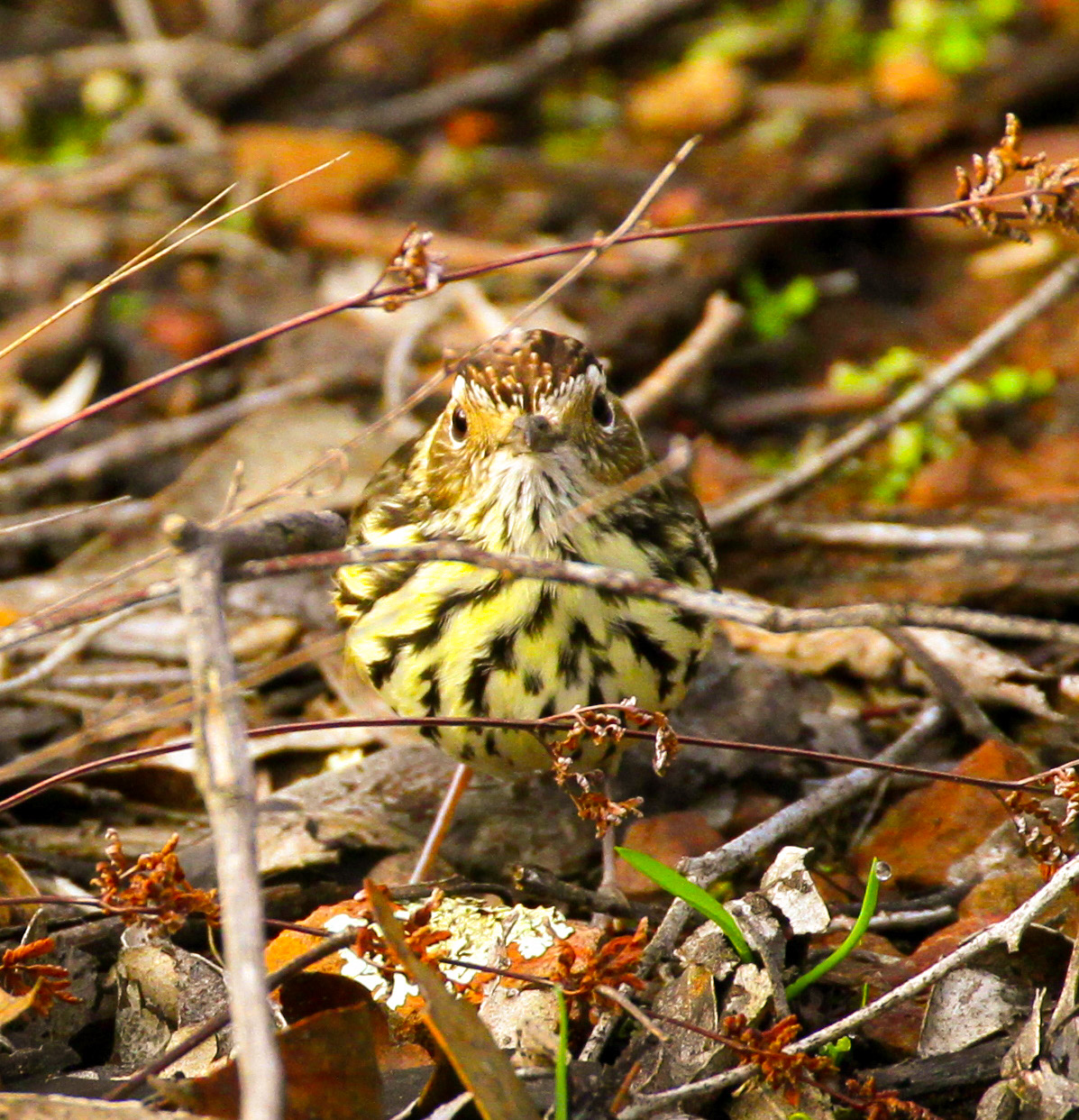 |
| Speckled Warbler. Like the Painted Button-quail, it colours are the perfect camouflage on the forest floor |
Summing up and more info
If you plan to visit Chiltern, aside from this report, it’s really worth tracking down some of the other literature available, in particular Chris Tzaros’s fantastic book entitled Wildlife of the Box-Ironbark Country. Sean Dooley wrote an excellent chapter on Chiltern in Where to See Birds in Victoria; Barry Trail produced a booklet entitled Bird Trails of Chiltern (13 pages), available free from the Chiltern Visitor Information Centre; and lookout for an article written in 1999 in the Australian Bird Watcher entitled ‘Current and past status of the birds of Chiltern—a Box-Ironbark forest in north-eastern Victoria.’ (1996, 16:309–326, Traill, B.J., E. Collins, P. Peake, S. Jessup). Although I haven’t looked at this article recently, for many years it was my essential resource when visiting Chiltern. Further, individual sites in Chiltern are well documented on eBird. There is also a range of excellent information on the Friend of Chiltern-Mt Pilot National Park website; read through the archive of their newsletter. So (as mentioned at the beginning of this report), this is my personal, and slightly self-indulgent, take on this wonderful Box-Ironbark national park.
Dean Ingwersen, who, like me, has spent quite a bit of time in Chiltern recently (as part of the Regent Honeyeater release program), described the park to me beautifully: “Chiltern’s a bit like a plum pudding. Incredibly rich, jam-packed full of wildlife, and, in terms of the birds, you just don’t know what will turn up next!” Just after Dean said this, we both heard a White-fronted Honeyeater calling, a species normally associated with the semi-arid woodlands; the closest populations are easily 200 km away. A few minutes later, I flushed a small covey of Painted Button-quail and then, another 15 minutes later, I was looking at a spectacular Scarlet Honeyeater. What a lovely place!
Tim Dolby
 Tim Dolby's Birding Tours
Thank you for this excellent and very readable update on Chiltern. I hope to be there next month and the information will be enormously helpful.
LikeLike
A wonderful, informative article Tim. Planning on visiting for the first time next week and I’ll try to squeeze in most of the spots you mention 🙂 Many thanks
LikeLike
Call in to our store in when in Chiltern and take a look at our collection of binoculars, photographs and local flora and fauna books including Chris Tzaros’s Wildlife of the Box-Ironbark Country!
Nat Ord Artist
53 Connes Street (the old Grapevine Hotel)
CHILTERN
natord.com.au
LikeLike