Tim Dolby
Central Cape York is the largest wilderness area in northern Australia, with an amazing 99% of the vegetation native! The main habitat type is tropical savannah woodlands, which stretch right across Cape York. The dominant trees of these woodlands are eucalypts such as the Darwin Stringybark (Messmate) (Eucalyptus tetrodonta) and Woolybutt (E. Miniata). The savannah woodlands are interspersed with wetlands, rivers, and coastal mangroves.
A few bird species, such as the Golden-shouldered Parrot (endangered), Red Goshawk (endangered), and Buff-breasted Button-quail (critically endangered and possibly extinct) (all discussed below), are threatened by inappropriate fire regimes, habitat change, and cattle grazing.
Cape York is mostly flat, although the Peninsula Ridge runs up its backbone. This ridge is the northern extension of the Great Dividing Range, the fifth longest mountain range in the world, stretching over 3,500 kilometres.

For me, the best time to visit central Cape York is the dry season, between May and October. You can easily visit central the area as for a long weekend from Cairns. Or, as is sometimes done by birdwatchers, incorporate a visit with a trip to the Katini-Payamu (Iron Range) National Park. (This is generally what I do on my bird-guiding tours.)
To get to central Cape York, you drive up the Peninsula Development Road. These days, it is bitumen up to Laura. After Laura, it’s mainly dirt and can be dusty. The Peninsula Development Road is considered one of Australia’s great 4WD drives. Some of the roads can be challenging, so take care when driving.
Some background on the birds of central Cape York
Only found in a small area of Cape York, the main target species is the spectacular Golden-shouldered Parrot. It must be one of the world’s most beautiful parrots, with the males plumage a wonderful turquoise and reddish-orange, with a black crown and bright yellow shoulders.
The local Olkola people’s name for the Golden-shouldered Parrot is ‘Alwal’. The Alwal are a totem species for Olkola people, seeing it as an indicator that Country is being kept healthy through customary rights. They know that if Alwal is thriving, then Country is healthy. Alwal were once seen in large flocks right across Cape York; however, estimates now suggest there are only between 780 and 1,100 individuals left in the wild. In the IUCN Red List of Threatened Species (2023), it is listed as Endangered.
One of the main issues affecting their numbers is changes to the parrots habitat. Golden-shouldered Parrot are seed-eating specialists, granivores, with their staple food being the grass seeds of Cockatoo Grass (Alloteropsis semialata), Fire Grass (Schizachyrium spp.), and Glimmer Grass (Planichloa nervilemma). However, it’s been noticed that the nesting habitat was getting thicker because the country wasn’t being burned the right way. In particular, small trees and shrubs, such as the Broad-leaved Paperback (Melaleuca viridiflora), have invaded grasslands and open woodlands, thickening the vegetation and making it difficult for the parrots to feed.
The Olkola people used to storm-burn the country to keep it open, which suited the parrots lifestyle. Consequently, the Golden-shouldered Parrot is considered a fire-dependent species. As a result, measures are now being made to restore its habitat. Fire management strategies are being modified across much of the parrot’s habitat to adopt a burning methodology that helps the Golden-shouldered Parrot. Another bonus of opening up the country through burning is that it makes it safer for the parrots because predators, such as Feral Cats and Pied and Black-backed Butcherbirds, are easier to see.
Aside from Alwal, another local name for the Golden-shouldered Parrot was the ‘Antbed Parrot’ or ‘Anthill Parrot’. This is because they nest in conical termite mounds. Along with the burning programs, researchers are now installing electric barrier fencing around termite mounds, protecting the nests from predators. The aim is to increase the number of baby parrots that are being fledged. Early signs of this measure are proving to be very positive.
Researchers are also providing supplementary food in predator-safe structures to help parrots through periods of food shortage. For example, there are a couple of food stations at the entrance of Artemis Station. So, let’s keep our fingers crossed for a positive future for the Golden-shouldered Parrot!

Another special bird to look for in central Cape York is the Black-backed Butcherbird. Like Golden-shouldered Parrot, they are only found in this area. It was once thought to be closely related to the Pied Butcherbird but has since been shown to be more closely related to the Silver-backed Butcherbird and Grey Butcherbird. Its specific scientific name is Cracticus mentalis. The word mentalis loosely translates to ‘mental noisy bird’, which probably doesn’t do the bird justice. They have lovely complex songs used to defend their territories, with both sexes singing prolifically. When you see them, a key feature that distinguishes them from the Pied Butcherbird is its white chin, the reason for its alternative name the ‘White-chinned Butcherbird’.
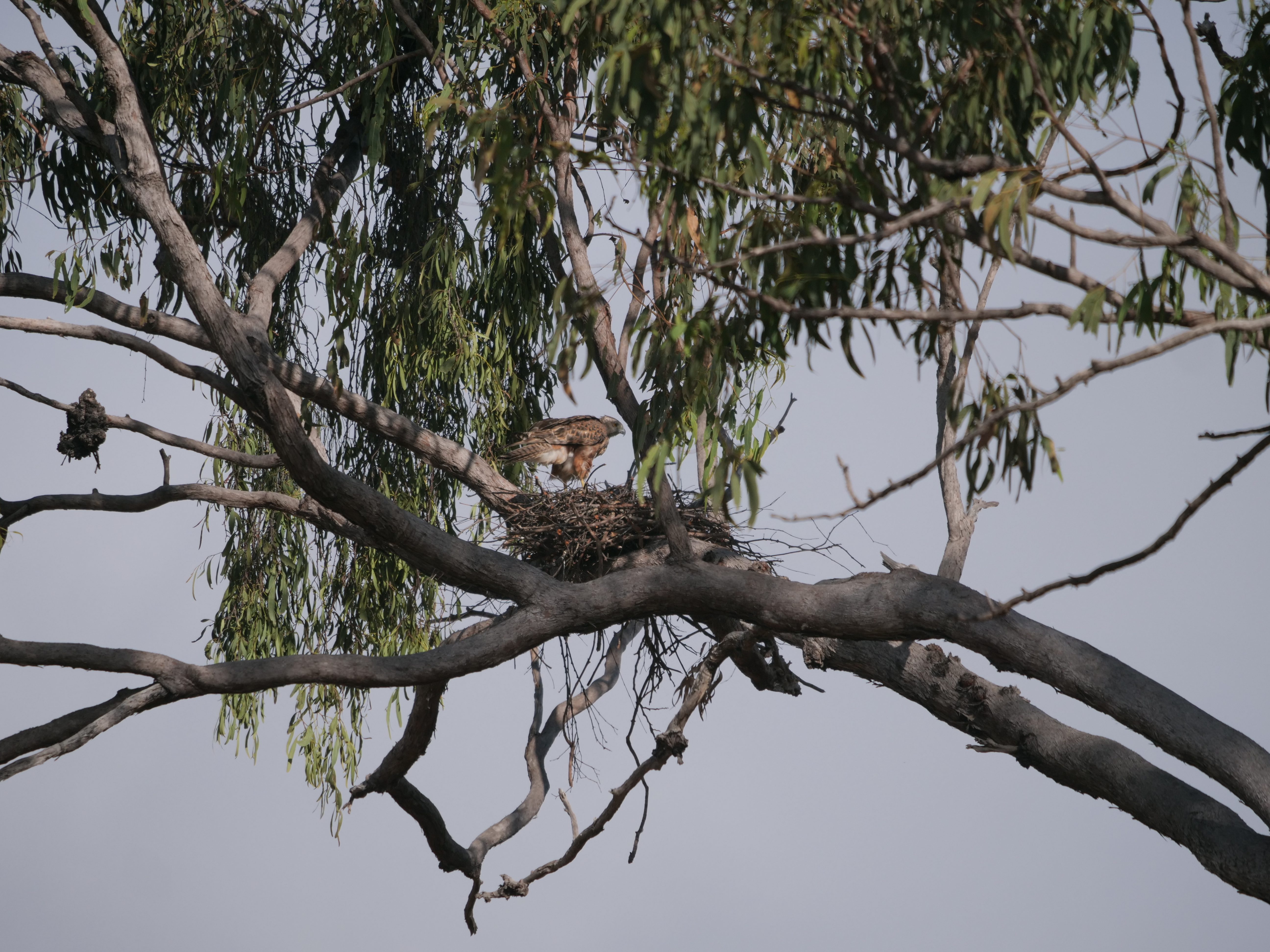
Aside from the Golden-shouldered Parrot and Black-backed Butcherbird, Central Cape York is a stronghold for the endangered Red Goshawk, the rare Eastern Grass Owl, and the critically endangered Buff-breasted Button-quail (discussed in more detail below). Red Goshawk like to hunt in the tropical savannah forest, while Eastern Grass Owls hunt over grasslands and the grassy fringes of wetlands.

There is an interesting selection of finches in central Cape York. Firstly, Star Finch, with the birds on Cape York being race clarescens, the ‘Cape York Star Finch’. It is such a gorgeous bird, and something you want to try and see. Cape York Star Finch on the eastern coast occur at Princess Charlotte Bay. There is also a small population on the west coast of the peninsula near Karumba, with a large gap in the distribution of the east and west coast populations. Cape York Star Finch are distinguished from other subspecies by its dark creamy-lemon coloured belly in males and yellowish cream belly in females. I’ve found them to be reasonably common and, in the late dry, I’ve seen several flocks containing around 150 birds.
There is also the Cape York race of the Black-throated Finch, atropygialis; it has a black rump. Then there is the Cape York race of the Masked Finch, leucolis, which has white-ear patches and was once known as the ‘White-eared Finch’. The Cape York race of the Crimson Finch, evangelinae, is really interesting. It has a white-belly rather than a black-belly and consequently known as the ‘White-bellied Crimson Finch’.
Then there is the Cape York race of the Pied Currawong, magnirostris, with a distinctive large and long bill and short tail, as well as the small Cape York race of Blue-faced Honeyeater, griseigularis. I found them both to be particularly common in the streets of downtown Coen.
Finally, this part of Cape York is where the critically endangered Buff-breasted Button-quail was last officially recorded. Buff-breasted Button-quail remains the only Australian bird yet to be photographed. For some time (since 1985 to be exact) they were thought to occur in the Atherton Tableland near Mount Molloy. However, some amazing research by Patrick Webster of the University of Queensland suggests that the birds seen in the Atherton Tableland were an undocumented colour variation of female Painted Button-quail; when breeding, the females develop a brighter, more rufous plumage. If this is true, this means that the last official sightings of the Buff-breasted Button-quail were, in fact, in central Cape York in February 1922. These were specimens collected by naturalist William Rae McLennan. So, (and that’s a big so), no Buff-breasted Button-quail sightings have been a confirmed for over 100 years! As Patrick Webster writes, this was when:
Tasmania Tiger roamed Tasmania’s forests, and the Paradise Parrot was still nesting in termite mounds of southeast Queensland. (1).
That being said, we can always hope. Cape York is such a vast area of wilderness that there remains a chance that a population of Buff-breasted Button-quail might still exist somewhere. Button-quail, generally, are a cryptic family of birds, and often hard to find. This is its great hope! Think of the field work of naturalist John Young and his remarkable rediscovery of the Night Parrot in 2013. This was certainly one of the most memorable moments in birding history, certainly in my mind. (When I was a kid, and a young keen, and a somewhat naive birdwatcher, I used to dream about finding Night Parrot. It used to be an enthusiastic topic of discussion between me and my father, who was also an avid birdwatcher. Birderwatchers are strange that way, as you know.) By the way, the McLennan’s specimens were collected in Messmate Savannah woodlands just north of Coen, so get out there and have a look! Don’t forget to take your camera. Good luck.
Some of the other animals to look for central Cape York
Just quickly, not forgetting mammals and reptiles. Central Cape York has a very nice selection. Macropods include Agile Wallaby, Northern Nail-tail Wallaby, Antilopine Wallaroo, Common Wallaroo, Eastern Grey Kangaroo, Godman’s Rock Wallaby (found in the northern section of the Rinyirru (Lakefield) National Park in the Bathhurst Ranges), Cape York Rock Wallaby, Black Wallaby, and the impressive Spectacled hare-wallaby (this is species I’ve always wanted to see. One day.). While some other mammals of note include the Lakeland Down’s or Northern Short-tailed Mouse, Krefft’s Glider, Northern Brown Bandicoot, Common Planigale, as well as Little Red and Black Flying Fox.

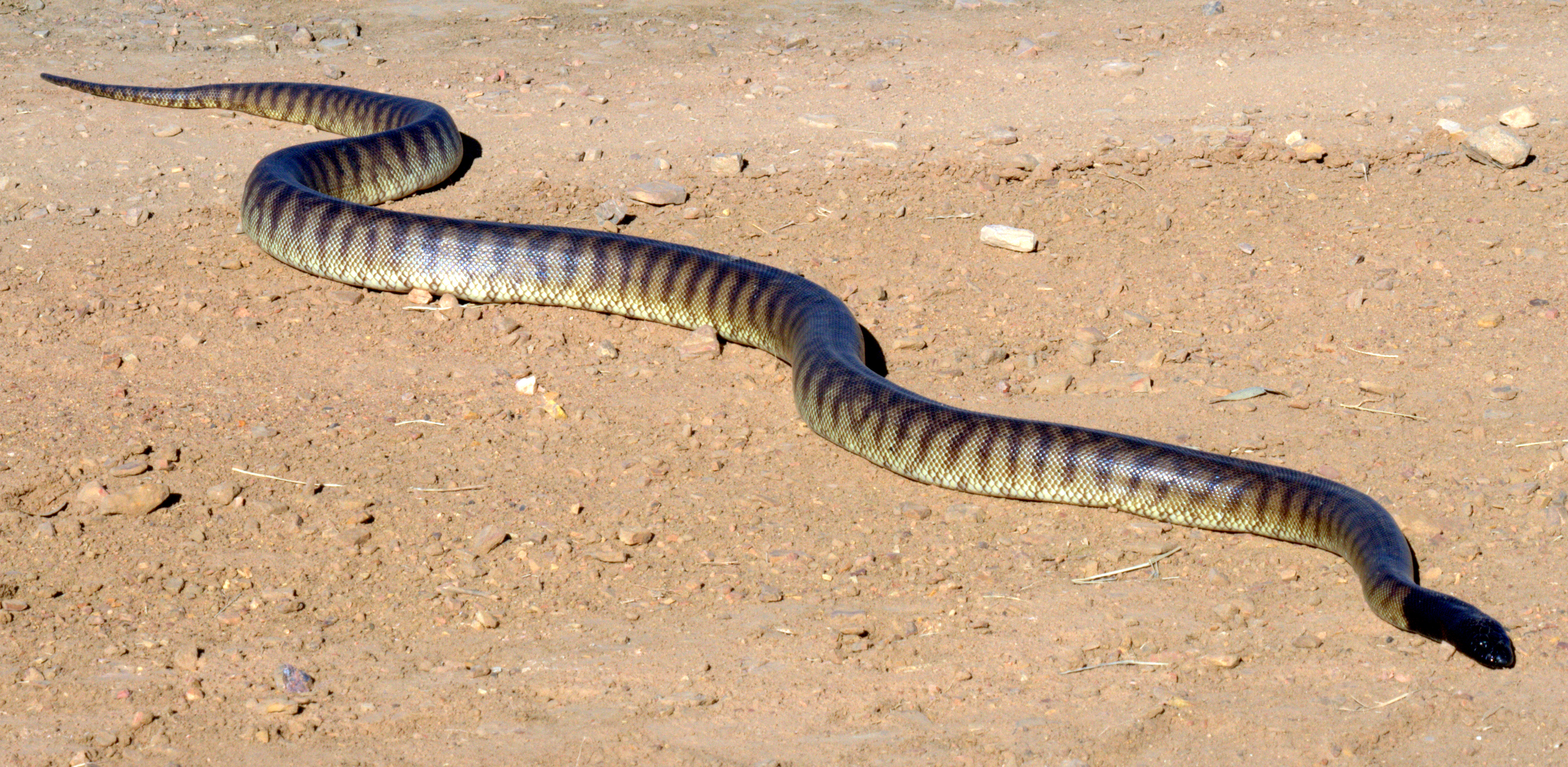
In terms of reptiles, keep a lookout for the iconic Frilled Lizard (or, as I know it, Frilled-necked Lizard) on the roadsides, Sand Monitor, Yellow-spotted Monitor, Merten’s Water Monitor (near water), Northern Blue-tongue Lizard, Black-headed Python (again on the roadsides, it eats other snakes, including our most venomous snakes), Freshwater Crocodile and, when near water, as always, keep an eye open for Estuarine (Saltwater) Crocodile.
In terms of the smaller lizards, I won’t go through them all, but I will mention some, simply because of their names are so wonderful. These are the Black-throated two-pored Dragon, Large-disced Litter-skink, Zig-zag Gecko, Tuberculated Ring-tailed Gecko, Excitable Dtella, and the Dubious Dtella! And we thought bird name were unusual! Imagine, for example, seeing the Dubious Button-quail.

Artemis Station
Artemis Station is one place you can see Golden-shouldered Parrot without impacting their conservation. Artemis Station is a working cattle station that covers a significant portion of the core range of the Golden-shouldered Parrot. To get there, turn off the Peninsula Development Road 96 km north of Laura (23 km south of the Musgrave Roadhouse) along Dixie Road, with the station entrance a further 1 km down the road.
Fortunately for birdwatchers (as part of the conservation of this species), the owners of Artemis Station have set up a predator-proof feeding station immediately before the property’s entrance, with a good number of parrots coming to feed each day. Consequently, you have a good chance of seeing them. If you are visiting the feeding station out of courtesy, it is worth popping into the station to let them know you are there.
The area around the feeding station is also a good spot to look for roosting Golden-shouldered Parrot, listen for the delightful soft, high-pitched parrot-like call. It is also good for Red-browed Pardalote (ssp. yorki), again listen for their lovely mellow call of five or six notes, Black-backed and Pied Butcherbird, White-bellied Cuckoo-shrike, Grey-crowned Babbler, and White-throated Gerygone, once again listen for their delightful violin-like call that sounds, to me, like dripping water.

The entrance to Artemis Station, with the bird feeders to the left.
For me, another birding highlight of Artemis Station is the presence of both Laughing Kookaburra and Blue-winged Kookaburra in one place. I have stayed in the cabins a few times at Artemis Station, and the dawn chorus is wonderful. The first birds to call are Laughing Kookaburra, with a large family laughing with raucous laughter! This is almost immediately followed by a family of Blue-winged Kookaburra, making a raucous cacophony of sounds that has been described as demonic and maniacal. It makes for a wonderful birding experience listening to these two crazy species of kookaburras declare their territories.
The other main target species for the area is Black-backed Butcherbird, one of the few Cape York bird endemics that occupy tropical woodland (rather than rainforest). Start looking for them in the woodlands from Laura onwards. A particularly good spot around the Laura Roadhouse, just south of town. There is usually a pair in the northern garden area of the roadhouse. They are distinguished from Pied Butcherbird, also common on Cape York, by their white throat and black nape band. Note that the roadhouse was closed the last time I visited, but you can still access the garden.
In general, while driving up Peninsula Development Road, the roadside woodlands are good for honeyeaters. Make sure you stop at a few places, such as by the side of a creek or river, and go birdwatching. For instance, you might see Dusky, Banded, Yellow, White-throated, Bar-breasted, Blue-faced, and Yellow-tinted Honeyeaters, as well as Pale-headed Rosella (ssp. adscitus), Red-winged Parrot, White-bellied Cuckoo-shrike, Grey-crowned Babbler, Squatter Pigeon (ssp. peninsulae, with a red-eye ring), Red-backed Fairy-wren, White-throated Gerygone, Red-browed and Striated Pardalote (‘Black-headed Pardalote’ ssp. uropygialis), Weebill, and Double-barred, Black-throated, and Masked Finch (white-eared Cape York ssp. leucotis), while Pied Currawong (Cape York ssp. magnirostris) is common in the streets of Coen.
Artemis Dam is a gorgeous tropical dam that can be covered in water lilies. It is located around a kilometre west of the Artemis Station entrance. It can be an excellent place for waterbirds and bush birds. It is the sort of dam where you see Magpie Goose, Green Pygmy-Goose Plumed Whistling-Duck, Pied Stilt, Brolga, Black-necked Stork, Comb-crested Jacana, Glossy Ibis, and Australia Darter, all fantastic birds. I have also seen Latham’s Snipe feeding on the edge of the dam. Woodland birds can be special; I once had a Red Goshawk flying over the road near the dam. I have also seen Red-winged Parrot, Pale-headed Rosella, Peaceful and Diamond Dove, Squatter Pigeon (once, and pretty much the northern extension of its range), Blue-winged and Laughing Kookaburra, Black-backed and Pied Butcherbird, Spangled Drongo, Dollarbird, Yellow Honeyeater, White-throated Gerygone, and, of course, there is a chance of Golden-Shouldered Parrot. Note the dam is viewable from the road but is located on Artemis Station, so has restricted access, and you will need to get permission from Artemis to enter.

Musgrave Roadhouse
After Artemis Station, it is usual to go onto Musgrave Roadhouse for some food, beer, and overnight kip. If you are staying at the Musgrave Roadhouse, Pied Butcherbirds will serenade you in the morning. Their melodious call is always a great way to start the day. There is a little dam behind Musgrave Station that can be quite good for waterbirds such as Plumed and Wandering Whistling-Duck, Magpie Goose, Green Pygmy-Goose and Radjah Shelduck and Brolga.

A area just west of the Musgrave Roadhouse is one of most accessible sites to see Cape York Rock Wallaby. The spot is on Artemis Station, so you need to ask for permission before you go looking for Cape York Rock Wallaby. To get there, take the Musgrave-Strathgordon Road (on Google maps it is just the Strathgordon Road) west out of Musgrave Roadhouse. After 9 kilometres you come to some low rocky hills. You will need to park and walk in. Look for them around 500 metres in, especially where there are areas of wallaby scat on the ground.

Lilyvale Road
From Musgrave Station, travel around 18 kilometres east along Lilyvale Road to the point where there is a road that turns north. The tall forest in this area is a potential site for the rare and endangered Red Goshawk. A large, powerful hawk, they will occasionally glide up and down this road. Once considered a true ‘goshawk’ in the subfamily Accipitrinae, they are now thought to be more closely related to the somewhat similar, Black-breasted Buzzard and Square-tailed Kite.

Other birds I have seen along Lilyvale Road are Red-winged Parrot, Red-browed Pardalote, Yellow-throated Gerygone, Yellow-tinted, Banded, Rufous-throated, and Rufous-banded Honeyeater, Channel-billed Cuckoo, Lemon-bellied Flyrobin, Little Woodswallow, Black-backed Butcherbird, and, one year, I came across a nesting pair of Black-breasted Buzzard.
Another feature of Lilyvale Road are the magnificent examples of mounds of the Magnetic Termite (Amitermes meridionalis). On one birding trip, I was showing my group of clients these mounds, elaborately explaining how they work, trying to sound like an authority on the subject, when a woman in my group gave a quiet cough and said, “You do know that my husband,” who was standing right next to her, “is the world’s leading expert on termite mounds.” “Oh,” I said. I then asked him to explain how they work. In his field, he, the termite expert, was quite famous. He said his major legacy was his research on termite mounds and farming, proving that farms that keep termite mounds in their paddocks are more productive than farms that remove termite mounds. That’s actually really interesting!
Some 23 km east of Musgrave Roadhouse (around 5 km past the Lilyvale Road turn-off), you come to the wetland of the Lotus Bird Lodge. This wetland can be teaming with waterbirds, including Radjah Shelduck, Wandering Whistling-Duck, Green Pygmy-Goose, Black-necked Stork, Magpie Goose, Comb-crested Jacana, Glossy Ibis, Royal Spoonbill, Little Pied Cormorant, Eastern Swamphen, and Eurasian Coot. Look out for macropods around the wetland edge. Both Agile and Northern Nailtail Wallaby drink at this wetland, and Sand Monitor roam its outer edges. Note that the wetland is privately owned. You can view it from the roadside without entering the property, or you could drive into the Lotus Bird Lodge and ask if you can have a look.

Along Lilyvale Road, there can be a lot of carrion, mostly dead Agile Wallaby. A butch of raptors were feeding at one carcass, with four different species: White-bellied Sea-Eagle, Wedge-tailed Eagle, and Black and Whistling Kite. The interesting thing about it was that a White-bellied Sea-Eagle feeding directly on the dead kangaroo, while two Wedge-tailed Eagle were to the sides of the carcass, perhaps 10 metres away, and the kites were hanging out around the edges, perhaps 20 metres away. What this told me was that the White-bellied Sea-Eagle was the dominant raptor, not the Wedge-tailed Eagle. I assumed it would have been the other way around. The Wedge-tailed Eagle would have been dominant, i.e., feeding on the carcass. Apparently not! Perhaps the answer is the talons. The talons of the White-bellied Sea-Eagle are huge! Well, you learn something new every day! Keep an eye open for Frilled Lizard and Black-headed Python, I have seen both along Lilyvale Road.

Rinyirru (Lakefield) National Park
Rinyirru (Lakefield) National Park is a vast national park (it’s well over 5000 000 ha), the largest on Cape York, and the second largest in Queensland. It protects a diverse landscape of grasslands, woodlands, coastal estuaries, mangroves, mud flats, wetlands, and sandstone hills in the south. Rinyirru (Lakefield) National Park has some sensational birding spots and is definitely worth visiting.
It is located 340 km north-west of Cairns, via the Mulligan Hwy. You can also access the parks by turning onto the Peninsula Development Road in Lakeland and heading up to Musgrave. To get there, from the Musgrave Roadhouse, drive east along Lilyvale Road, then continue to the Marina Plains Road until you reach Lakefield Road. From there you can head into Lakefield National Park (it is well signposted). The park begins around 38 km from Musgrave Station.
When visiting, I tend to stay at Musgrave Roadhouse or Artemis Station, although there are several good camping grounds throughout the park, including Kalpowar Crossing and Hanns Crossing Campgrounds. Lakefield Road (unsealed) runs through the middle of the park but is impassable through much of the wet season.

Low Lake (Rarda-Ndolphin)
One place to visit at Rinyirru (Lakefield) National Park is a wonderful wetland called Low Lake (Rarda-Ndolphin). Note that on Google Maps it marks it as Sweetwater Lake. You can get there via Lilyvale and then Marina Plains Road; the turnoff is located after Saltwater Crossing, around 50 km from Musgrave Station. Then it is a 4 km drive to the wetland. It is one of the most pristine wetlands I’ve visited in Australia, surrounded by rushes and reeds and covered in waterlilies.
On the occasions I have visited, there were waterbirds everywhere, seeing Comb-crested Jacana, Wandering Whistling-Duck, Rudjah Shelduck, Green Pygmy-goose, Pacific Black Duck, Hoary-headed Grebe, Glossy and Australian White Ibis, Brolga, Great, Intermediate, Little, and Cattle. In late spring and summer, the lake is also a good place for shorebirds, including Common Greenshank, Marsh Sandpiper, and Latham’s Snipe (in grassy areas bordering the lake).

On my first trip to Low Lake, from one tree on the edge of the wetland, Black-throated, Masked and Double-barred Finch flew down the water’s edge for a drink! Very nice! The Black-throated Finch here is the black-rumped subspecies atropygialis. The best time to see the finch is the dry season. Other woodland birds I saw around Low Lake were Black-backed Butcherbird, Pale-headed Rosella, Forest and Sacred Kingfisher, Lemon-bellied Flyrobin, Leaden Flycatcher, Rufous Whistler, Grey-crowned Babbler, Red-backed Fairy-wren, and Varied Sittella. The honeyeaters here were pretty and included Brown, Dusky, Banded, White-throated, Brown-backed, Yellow, Rufous-banded, and Blue-faced. The area also supports Papuan Frogmouth, which I have seen daytime roosting at the nearby Saltwater Creek crossing—another good birding spot—which is also a good place to see and listen for Large-tailed Nightjar and Spotted Nightjar (at you might flush them from the road), and look and listen for Southern Boobook and Barking Owl. Finally, Low Lake is a good spot to look for Northern Nailtail Wallaby, while Agile Wallaby is very common. Please note It that Low Lake has areas where access is restricted to protect significant cultural resources, so as a rule it is worth keeping to the car park and viewing areas.

Nifold Plain
The Nifold Plain is a wonderful sprawling grassy floodplain dotted with stately termite mounds and stands of Gebang Palm (Corypha utan), some as tall as 20 metres. The Gebang Palm, like others in the genus Corypha, only produces flowers at the end of its lifetime, a process known as monocarpy. When they do flower, however, they are spectacular, producing a massive inflorescence (flower head) as big as 5 metres tall containing as many as one million flowers! It is an area which, during the wet season (December to March), forms a vast network of floodplains. During the wet season, the Nifold Plain becomes inaccessible. Once the water recedes, the deeper permanent rivers and dams attract a great variety of birds.
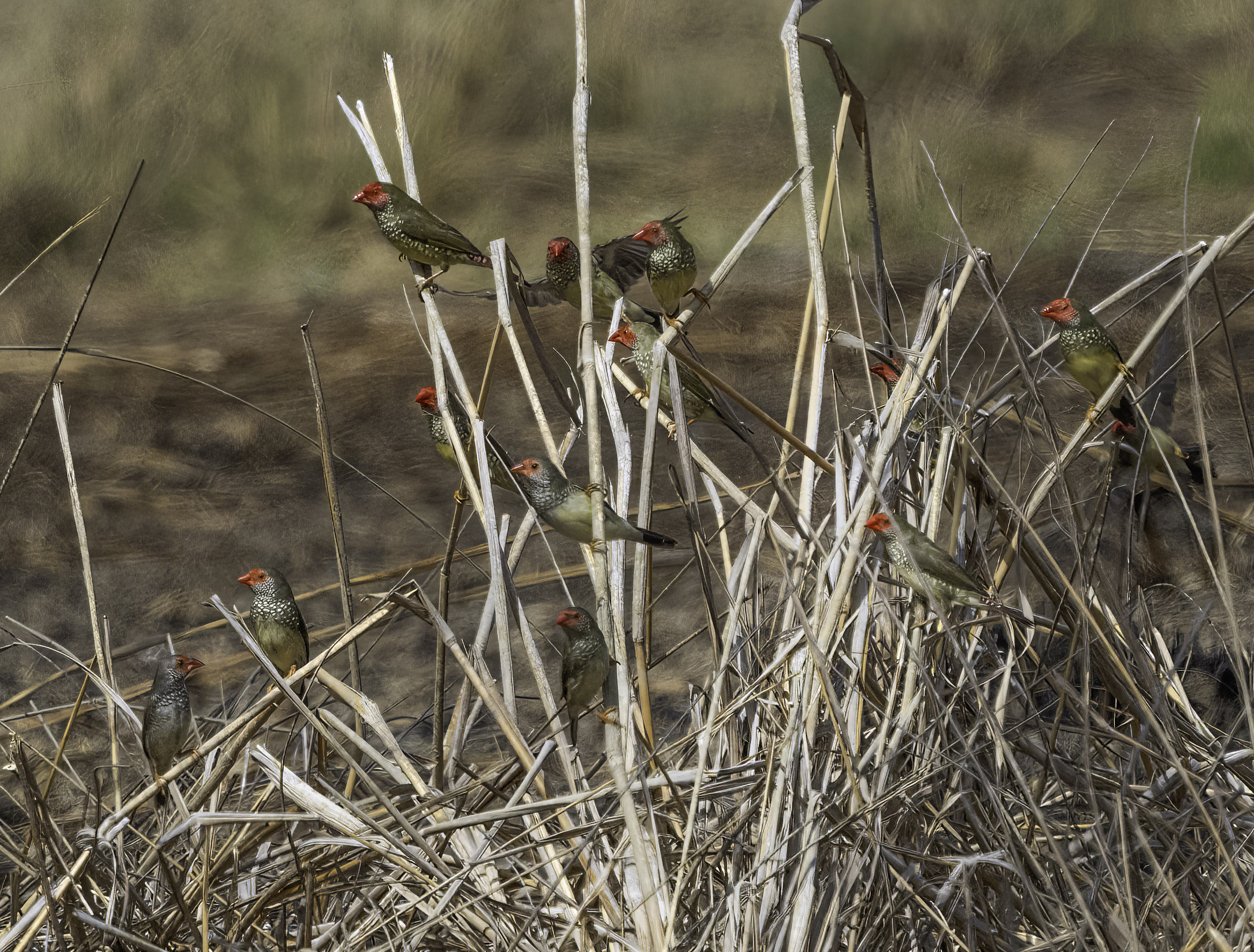
The Nifold Plain is an excellent place to see Star Finch. To get there, you need to continue east along Lakefield Road, continuing for around 5 km from the Low Lake turnoff/Sweetwater Crossing until you reach the plains and a raised viewing area over the plains. Next to this viewing area is a dam. During the dry periods of the year, I have seen several large flocks of around 50 Star Finch feeding and drinking here. The Star Finch is the northern subspecies clarescens. This population of Star Finch is patchy but stable.

The dam and the general areas around the Nifold Plain attract a great range of other birds, including Emu, Brolga, Sarus Crane, Black-necked Stork, Australian Bustard, Australian Pratincole (quite common right across the Nifold Plain), Swamp Harrier, Australian Hobby, Red-tailed Black-Cockatoo, and Black-faced Woodswallow, while looking in grassy areas for Horsfield’s (Singing) Bushlark and both Zitting and Golden-headed Cisticola.
Another target for Rinyirru (Lakefield) National Park is Eastern Grass Owl, with this area thought to be a stronghold for this rare species.Just at dusk, watch the grassland for the owl as it begins its night hunt. This area is one of the strongholds for this rare species. Other nightbirds to look for are Papuan Frogmouth and Large-tailed Nightjar. What a great place the Nifold Plain is!

Mariner Plains
On the first trip to Rinyirru, we accidently continued along Mariner Plains Road (rather than take the Lakefield Road turnoff). We ended up in the area around the Annie River campsites. These are located on the edge of Prince Charlote Bay and proved to be both interesting and challenging at the same time!
At our first stop near the Annie River campsite, we entered an area of tall tidal mangroves. As any birdwatcher knows, mangroves can be fascinating places and habitats that attract some interesting birds. Upon entering, we were immediately attacked by a wild swarm of a hundred million killer mosquitoes! It was like the scene from the movie The African Queen, where Humphrey Bogart and Katherine Hepburn pull their boat into shore on the Ulanga River and get attacked by mosquitoes. We ran as fast as we could out of the mangroves, running around where the car was parked, with an individual swarm of mosquitoes following each one of us. I managed to break free of my swarm, but I could see another member of our group was struggling. They would break free briefly, but then the swarm would catch up with them. After running around for a good few minutes, we all managed to break away from our own mosquito swarms. Phew!
Despite this, the Mariner Plains were a fascinating area, well worth an extended visit. It was a mixture of floodplain grasslands, open-wooded mangrove forests, termite mounds, and patches of the Cabbage Palm (Corypha utan), again an impressive palm with massive trunks. Brolga was common in the grasslands, along with a few Sarus Crane and Australian Bustard, and Emu. Along the banks of the Annie River, we saw Mangrove Gerygone—a bird species that is rare at Lakefield. Indeed, I think this was the first and, at the time, only record for Lakefield National Park. Other birds along the river were Large-billed Gerygone, Striated Heron, Torresian Kingfisher, and Shining Flycatcher.

Twelve Mile Waterhole
In the southern part of Rinyirru (Lakefield) National Park, Twelve Mile Waterhole is nestled among trees along both deep and shallow sections of the lagoon and near the junction with the Laura River. Common waterfowl to look for include Magpie Goose, Radjah Shelduck, Plumed Whistling-Duck, Green Pygmy-Goose, and, although I have not seen them there, there are regular reports of Spotted Whistling-Duck. Other waterbirds include Black-winged Stilt, Black-fronted and Red-kneed Dotterel, and Comb-crested Jacana. Nankeen Night-Heron, White-necked, White-faced, and Pied Heron, and Little, Plumed, and Great Egret. Another target species for Lakefield is the white-bellied form of the Crimson Finch (ssp. evangelinae), with the Twelve Mile Waterhole a good place to see them. Black-throated, Double-barred, and Red-browed Finch also occur here.
It is a great place to see honeyeaters; for instance, on one visit I saw Yellow-spotted, Yellow, White-gaped, Brown-backed, Rufous-banded Dusky, Banded, Blue-faced, White-throated, as well as Little and Helmeted Friarbird. It is also worth looking out for Lovely Fairy-wren around the wetland, while Red-winged Fairy-wren are more common there. Other birds I have seen include Azure and Forest Kingfisher, both Laughing and Blue-winged Kookaburra (with both the first to call in the dawn chorus), Yellow Oriole, Spangled Drongo, Fairy Gerygone, and raptors such as White-bellied Sea-Eagle, Eastern Osprey, and Brahminy Kite.
There are many other good birding sites in the southern section of Rinyirru National Park, such as the Hann River Crossing, Caulders Lake (2WD) and Horseshoe Lagoon (4WD), and there is a nice waterhole next to the New Laura Ranger Station. All are worth a look, and hold birds similar to Twelve Mile Waterhole. Good luck!

A site on the way up
Split Rock Art Site
On the way up to central Cape York, The Split Rock Art site is worth a stop. Not considered a usual birding locations, it can be quite productive particularly for honeyeaters. Of real note a White-streaked honeyeater was recently recorded here, a bird that is normally seen around Cooktown and the Iron Range. Split Rock is located around 14 kilometres south of Laura, but is badly sign-posted, so easy to miss. The artwork sites here are some of the oldest and largest galleries in the world, so very impressive. Dates of the art range from between 15,000 and 40,000 years old and are listed by UNESCO as being among the top 10 rock art sites in the world.
Have a good trip!
Tim Dolby
(1) Patrick Webster. Is the buff-breasted button-quail still alive? The Conversation, Feb 4, 2022.

The Peninsula Development Road.

 Tim Dolby's Birding Tours